Birding Wire

EDITOR AFIELD

Happy New Year and Welcome Back to weekly issues of The Birding Wire for 2026. While we hope you had a wonderful holiday period, I enjoyed some memorable avian observations, and photo opportunities, beginning back on Saturday, December 20th. After impatiently waiting for a month of days for a clear, sunny day to coincide with a day I had an open schedule to conduct my first SoDak winter raptor survey of the season. I've been doing this survey during winter months for 10 years now, during which I drive the same transect that is kinda centered at Pierre, South Dakota; counting raptors about 50 miles north and south of the capitol city.

Read Full Release →

A winter Merlin! At first it was a shadow, flying between 1 and 2 feet above the ground, barely discernable but I had a feeling as it dipped over the edge of a low hill just 20 feet away. Three Horned Larks suddenly flew up in reaction to the appearance of the little falcon that was right on their tails as they flew directly over the windshield of my car – with the silver-gray male Merlin spreading its tail broadly to show the alternating gray and white bands, and its long pointed primary wings feathers were clearly evident as it continued its lark pursuit.

Read Full Release →

Pyrrhuloxia? Pyrrhuloxia in the center of North Dakota? Pyrrhuloxia!! Two hours away! The first Pyrrhuloxia, a cardinal-like non-migratory desert bird that normally ranges from central Mexico to central Arizona to central Texas – and now, since December 1, rural North Dakota! Even upon arriving at the feeding station and seeing the long-tailed cardinal-sized bird flying to a tree branch before me, it was grossly out of place, especially with snow covering evergreen boughs surrounding the feeders, and turning the ground white as far as I could see.

Read Full Release →

Mowing lawn one day, shoveling snow the next; and 3 days later I was shoveling again as the temperature dipped into the teens for a high Saturday that seemed to be the last straw for the geese migrating high overhead, directly south, flock after flock. There was 10 inches of snow and only one lake remained ice-free. Even so, at least 3 huge Snow Goose flocks persisted relatively close to home, along with a few small flocks of Canada Geese numbering 25 or less – until Saturday night, when I heard what turned out to be the last geese migrating overhead from inside my warm home.

Read Full Release →

Seeing a new bird is exciting, seeing a rare bird is just as exciting; but seeing a Snowy Owl and sharing moments one-to-one is a whole different level of exciting, one that stays with you for days, and if you get photographs, they will remind you of the Snowy encounter for the rest of your life. Snowy Owls are among of my favorite birds, and I was a bit charged up after reading the new report from Project Snowstorm, described in the above Birding News article, that this should be a good winter to see Snowy Owls. As I headed west to Napolean Lake last Saturday afternoon, when least expected, I thought I saw a partly hidden, shadowy form that could be a Snowy Owl!

Read Full Release →

Thursday morning provided a Big Reveal as I began to survey a larger portion of the local area for birds, especially large flocks of waterfowl. My first stop was only a mile south of home where a huge flock of Snow Geese was feeding, and I arrived just in time to witness small flocks beginning to break away to relocate to a second harvested cornfield. Flock after flock, and multiple flocks at a time provided a classic goose migration feeding flight complete with beautiful morning sunlight and clear, fresh weather punctuated by the sounds of hundreds of Snow Geese and Ross’s Geese, although there were thousands in the feeding flock.

Read Full Release →

Big Freeze Monday initiated the first phase of the “big freeze,” which was obvious during a morning birding drive that showed the surface of most shallow marshes covered by ice. Although marshes have the potential to become ice-free again with temps warming into the high 40s and low 50s during the next few days, the deep lakes remain ice-free. The associated cold north wind pushed thousands of new Snow Geese and Ross’s Geese into the immediate area, so that now it’s hard to count individual flocks, or estimate the numbers of geese on hand, so I’m resorting to describing the volume of geese in the immediate area in the numbers of miles the mega-flocks cover.

Read Full Release →

Early flocks of migrating waterfowl, most notably Arctic-nesting geese and swans, continue to provide exciting birding action with big feeding flocks of Snow Geese numbering in the thousands touching down 4 miles south and 7 miles east of the office. It’s always a thrill to be close to a mega-flock as it provides surround-sound goose music with flocks of geese flying in Vs to join a goose haven on a lake or a harvested cornfield. As flocks pass by to the gathering area, it’s possible to pick out a few White-fronted Geese among the many Snows, along with fewer Cackling Geese and more Ross’s Geese.

Read Full Release →

Minnesota’s birds, forests, and lakes beckoned again last week, and Thursday’s weather couldn’t be beat as a cloudless blue sky, almost windless beautiful day in late October. Common Loons would be the centerpiece of the afternoon – again – with a surprising number on hand at Little Pelican Lake, all single birds. And best of all, the second loon was a young dancer and prancer that gave the 3 of us a new level of excitement and appreciation for loons, if that was possible. Andy, Craig, and I reveled at the activity level and what seemed like the enthusiasm of the “dancing loon.”

Read Full Release →

After a couple windy days, Sunday morning was pretty calm and while my birding drive 15 miles east was mostly uneventful, as I turned back a V-shaped flock was winging across “hawk valley.” A binocular view revealed the flock was made up of about 25 Sandhill Cranes, as were the next 11 flocks that followed in a long line of migrating flocks, all voicing their classic calls. I estimated a total of 170 Sandhills, and 3 miles to the east I intercepted 2 more flocks of cranes that added 90 more to my total (260). After turning south I checked on another flock that turned out to be 35 White-fronted Geese – what great migration sightings!

Read Full Release →

Minneapolis was calling to me from 350 miles southeast last Thursday, and while I was hoping for some avian excitement along the way, the highlights only included sightings of a Sharp-shinned Hawk and a late flock of about 45 Long-billed Dowitchers in southeast North Dakota, plus a pair of Trumpeter Swans in Minnesota. But the following day I planned to visit my hotspots for Wood Ducks, Bald Eagles, Common Loons, and other Minneapolis birds. Even so, you never know what lies ahead as you are driving down the road headed for the next birding location.

Read Full Release →

There was a more noticeable fall migration this week, to the point that migrating birds actually spilled into my yard – exciting birds like the first of fall Harris’s Sparrow, the first White-throated Sparrow, and the first Dark-eyed Juncos, all feeding together Monday morning. A Ruby-crowned Kinglet, Yellow-rumped Warbler, and a returning White-breasted Nuthatch were evident during the afternoon, and the previous day, Sunday, the first 2 fall flocks of Yellow-rumped Warblers filtered through my trees a few hours apart. The earlier flock was led by a White-breasted Nuthatch, while the latter warbler flock also contained a gem – a Brown Creeper.

Read Full Release →

Fall migration continues to be a trickle in the northern Great Plains, but it’s been complimented by some interesting new birds including Belted Kingfishers, Blue Jays, and American Kestrels in addition to Killdeer, Ring-billed and Franklin’s Gulls, Mourning Doves, American Robins, Northern Flickers, and Red-tailed Hawks. Kestrels may actually be more than a trickle for this area, numbering 12 Thursday and 10 Friday along what I am referring to the ‘Kestrel Route,’ which is an abbreviated portion of the ‘Southeast Raptor Route.’

Read Full Release →

Surprise, Surprise! The weather forecast for Duluth changed, so I quickly revised my plans and drove east immediately after publishing last week’s issue. Wednesday would be sunny with only a hint of a breeze as hawks, eagles, and falcons poured across the Northwoods sky above Hawk Ridge as I stood below them with about 50 other excited birders. There was a full migration in process with jays, warblers, waxwings, robins, and native sparrows, along with small flocks of Sandhill Cranes, White Pelicans, Canada Geese – 58 species total! It was quickly plain to see that this would be a record-breaking day for this fall migration!

Read Full Release →

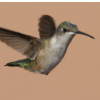
Hummingbirds and Bald Eagles made Friday a special day, not just to see them, but to photograph them too. During a break in my editorial planning session, I stepped outside with my camera to photograph hummingbirds at and near my nectar feeder – until mosquitos chased me back inside. Later I enjoyed surveying an especially broad birding circle that included some favorite local birding hotspots like Charo Marsh, but also some bigger birding sites to the southeast like the Border Marshes, Hecla Marsh, and Sand Lake National Wildlife Refuge.

Read Full Release →

As we approach International Hawk Migration Week, which officially begins Saturday, I waited out a couple unseasonably cool days with especially strong wind before a break in the clouds and a lull in the wind provided a chance to do some quality birding Saturday afternoon. That’s when I began what has become a weekly birding drive along my Raptor Route to count hawks and to get an idea of local changes in avifauna in the area after the dramatic weather change. Essentially, some new birds arrived to fill in for species that headed south.

Read Full Release →

The Labor Day holiday weekend often seems to be a peak period for raptor observations, as Swainson’s Hawks are still on territory with some fledglings still appearing, and Red-tailed Hawks on the move from their nesting territories. Of course, there is the potential of finding other raptors too, so after a couple cloudy days, when the sun began to break through Sunday afternoon I was excited for the chance to take a birding drive break along my Raptor Route. The “rarer” birds of prey were a Merlin, a male American Kestrel, and a recently fledged Northern Harrier, but the total count for the drive was actually 47 raptors!

Read Full Release →

Minnesota has been calling me for a couple weeks, and planned to head to Lakes Country Wednesday in search of birds and photo opportunities. So when my friend Linda called me from Big Cormorant Lake later Tuesday night, how could I resist the chance to visit an entirely different environment from my Great Plains surroundings. Ah, the air always seems fresher in the Northwoods and Lakes region of Minnesota, and the birds are different too – Common Loons, Trumpeter Swans, Bald Eagles, Eastern Bluebirds, Wood Ducks, Common Ravens, Belted Kingfishers, Pileated Woodpeckers, maybe an Osprey, and the possibility of migrating warblers!

Read Full Release →

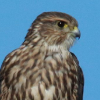
Merlins made a surprising appearance in the area last week, with the first perched 13 miles south of my office last Tuesday evening. Merlin number 2 surprised me 10 miles northwest after I checked on the Burrowing Owl site – still no sign of the owls – but the mini-falcon made up for that in a big way. I drove by the spot just 15 minutes before, but on my return, there she was, a young tan-colored Merlin that permitted me to park near its perch and photograph at will. Like the Prairie Falcon a couple weeks before, the Merlin did little more than turn its head, but that was enough to excite the heck outta me as I composed portrait photos in the 8pm sunlight.

Read Full Release →

As I was finishing last week’s issue, it rained 4 inches in 2 hours, which changed the complexion of the landscape and flooded out most of the shorebird habitat in the region. An hour later there were White Pelicans searching for fish where days before about 60 Long-billed Dowitchers foraged in the shallows of Bobby’s Bay. Similarly, the next day ducks were already overwhelming a former shorebird pond 3 miles south where only a long-legged American Avocet persisted in the deeper runoff water. The following day, the variety of ducks were joined by 9 White-faced Ibis and about 20 Franklin’s Gulls – quite a change.

Read Full Release →