
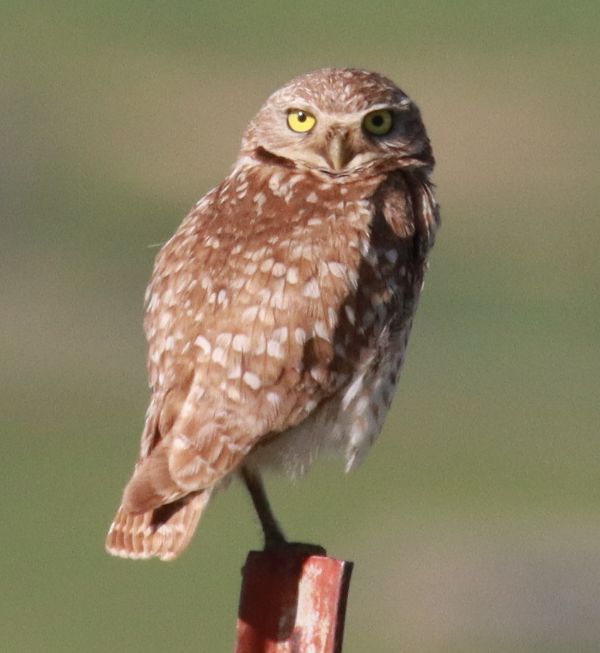
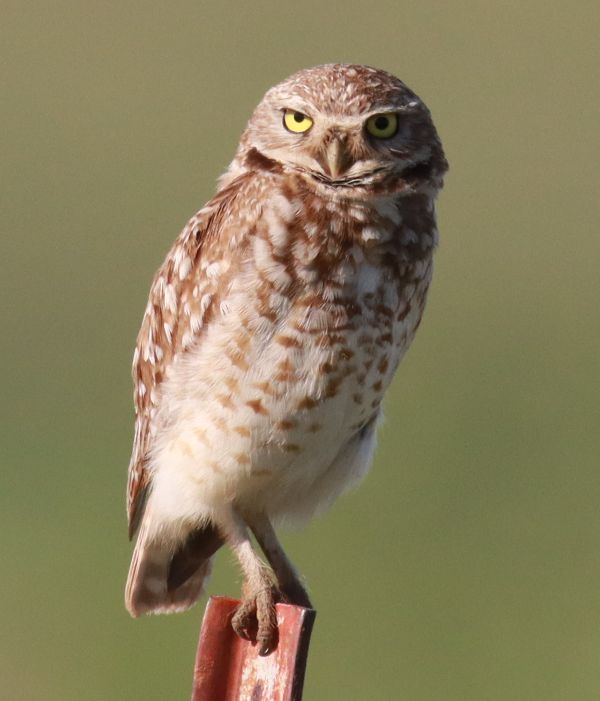
At a seasonally beautiful bright green prairie where I find Chestnut-collared Longspurs, Bobolinks, and Grasshopper Sparrows, a new grassland ambassador was on board – a welcome surprise of a Burrowing Owl that provided some shared time and a few photos as it perched in the open sunshine. During this evening drive Ring-necked Pheasants made themselves very obvious, with males strutting and 1 crowing, while several females were prominently featured with 1 displaying to a male and another leading the first newly hatched brood I've seen this season. After a cloudy weekend with rain, Monday's clear blue sky and sunshine seemed to make the rolling hills glow green, enlivening the variety of birds in Dakotaland.
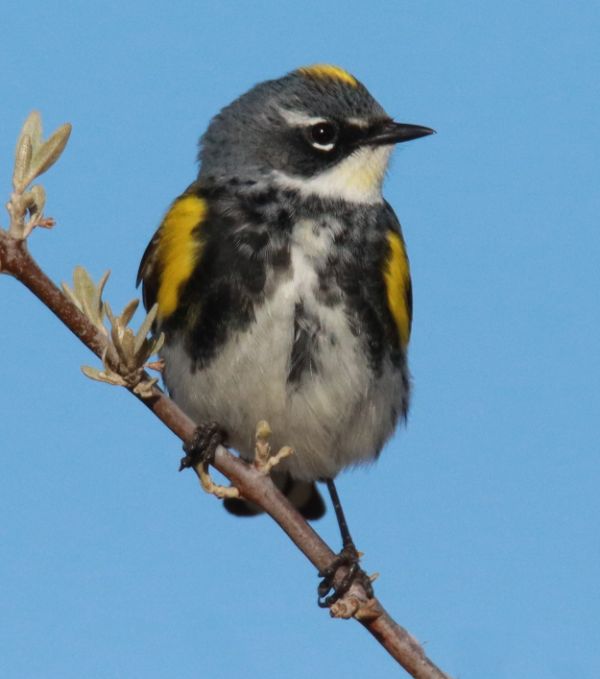
Over the weekend, the periodic rain showers seemed to quiet nearby Melody's Grove, but Monday morning revealed a similar group of birds to those I observed Friday – 3 or 4 male Yellow Warblers, a Warbling Vireo, an Orchard Oriole, and several Least Flycatchers. However, there was one big surprise songbird among them: A Connecticut Warbler suddenly popped its head out of the now-thick wall of leaves, then hopped onto an open twig as it turned its back to me, raised its head, and popped out of sight quick and easy. It was only the 4th Connecticut Warbler I've seen anywhere, and the 3rd I've recorded at The Grove.
The Connecticut Warbler was just the kind of "late" songbird I would almost expect to see during the last days of spring migration here, but others really should have included Magnolia Warblers, American Redstarts, more Blackpoll Warblers, and more Mourning Warblers; but being on the western edge of these birds' migration ranges, you never know how spring songbird migrations will turn out each May. The 2 Yellow-breasted Chats I reported last week were definitely songbird standouts – the 2nd chat for Melody's Grove and the 1st for my yard – and they were the 2nd and 3rd for the state for me. After a couple banner May migrations, 2 years ago was probably the least best songbird migration turnout, with this year close behind with the exception of the remarkable Yellow-rumped Warbler migration stopover the first week of May.
In addition to the Connecticut Warblers in the past, the locally rarest species that have graced Melody's Grove included a Golden-winged Warbler, Blue-winged Warbler, Cape May Warbler, a Lazuli Bunting, a Great Crested Flycatcher, an Olive-sided Flycatcher, a Yellow-throated Vireo, and a Chestnut-sided Warbler. However, last year The Grove experienced the only Chestnut-sided fallout that I have witnessed, which was a remarkable parade of these eastern warblers throughout the day in the midst of several other rarer migrants – quite a thrill. It is also noteworthy to point out that for the first time, usually common Swainson's Thrushes turned out to be quite rare during this migration, but the shorebirds truly shined during May, as I described in the last couple issues.
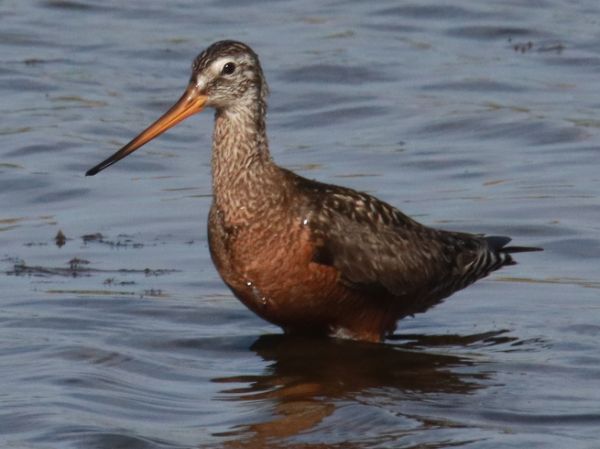
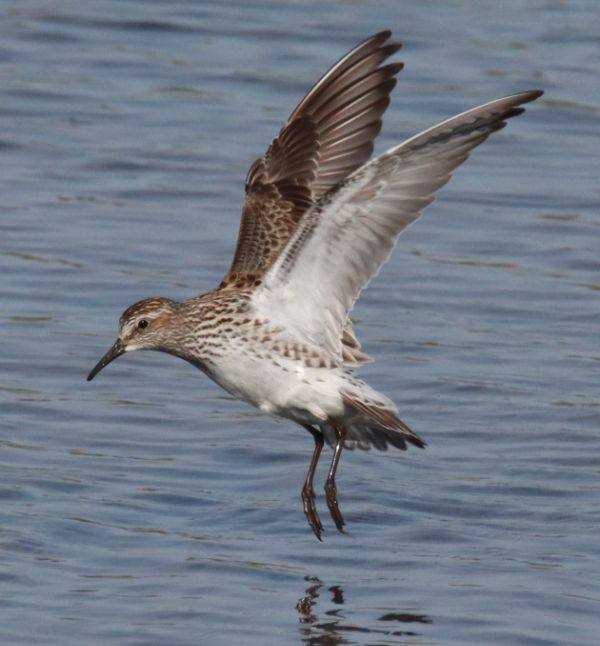
There were still some of the rarer shorebirds on hand last week, including the lone fully colored Hudsonian Godwit that frequented 3 marshes within a square mile just north of my office during at least 8 days through last Wednesday. In the same area, the big flock of more than 100 Ruddy Turnstones continued through last Tuesday at Bobby's Lake shore (north of Bobby's Bay), moving into an adjacent ag field to feed by the tens and tens of turnstones. Thursday morning what seemed to be the last of the turnstones were present on the southeast corner of Carlson Lake, where I found 3 Ruddy Turnstones, 2 Sanderlings, and 4 White-rumped Sandpipers; and there were about 200 White-rumps in the western shallows of Dean's Lake. Thereafter, there seemed to be only widely scattered White-rumped Sandpipers in 1s and 2s, but I observed a flock of about 60 White-rumps at Rainy Marsh on Monday morning and another 60 or so at Dean's Lake late Monday.
The Yard Birds: Periodically during the past week I have observed 2 male Orchard Orioles at once at my feeding station, but there may be more. The initial male and female Baltimore Orioles seem to be becoming summer residents and they were pretty inseparable earlier in the week in ways that bode well for potential pairing and nesting. Thursday evening a female Orchard Oriole approached the feeding station as a male was feeding, and she returned before sunset but didn't feed on jelly or orange; she returned Friday morning, but not since it seems.
A male Ruby-throated Hummingbird was a nectar feeder visitor Friday and Saturday, and a female and a male were on hand Monday with a male feeding periodically Tuesday morning too. House Finches continue to be regular feeding station visitors, and an occasional female Downy Woodpecker and male and female Hairy Woodpeckers stop by too; but the orioles are the obvious daily visitors. In the sky overhead, Chimney Swifts were evident Sunday, and 3 White Pelicans flew above my house headed south; and Monday's visitor of note was a Least Flycatcher that perched among the sumacs and elms for insects.
Before finding the Burrowing Owl Monday evening, I checked on the nesting Ferruginous Hawk pair that has been successful in raising young annually at a nest about 26 miles northwest of the office. As I arrived I could see an adult standing on the edge of the nest looking down toward the back of a small white downy nestling as it moved in the nest – probably among 2 or 3 siblings. And not to forget, the female Hooded Merganser usually can be seen making a flight through Melody's Grove, which suggest she has a nesting cavity with eggs in one of the big cottonwoods. Monday seemed to be a true turning point from the spring migration season to the advent of summer, and being the first day of meteorological summer on (June 1st), that makes sense. And with a full moon rising that evening, one can only imagine the coming days will provide more exciting birds for all of us!
Article and Photos by Paul Konrad
Share your bird sightings and photographs at editorstbw2@gmail.com