
Friday felt like the first warblers should have arrived overnight, and with flowering cottonwood trees setting the stage I searched for Orange-crowned and Yellow-rumped Warblers, convinced they should be on hand. But there was no hint of their presence at my 2 best warbler stopover sites – nearby Melody's Grove and the more distant Country Schoolhouse Grove. Even so, Friday's new birds of spring were a Say's Phoebe, the first flycatcher of the season, and Red-throated Grebes, 2 pairs and a single in 2 locations – the 5th and last species of grebe to arrive in this area of southeast North Dakota.
When checking BirdCast, the previous night's bird migration in the area was good, but the following night – Friday, May 1st into the 2nd – was the best migration to date this spring, so I was excited to check on area birds, but not until after the intense west wind of the day died down a bit. I noticed that many kinds of flying insects hatched, so that important food source should be attractive to hungry migrants that stopover – especially songbirds, flycatchers, and swallows. During late afternoon I drove south to check on hawks and everything else that might appear, and 3 "first of spring birds" were obvious, an Upland Sandpiper, a Dunlin, and a few Bank Swallows in spite of the poor birding conditions due to the wind.
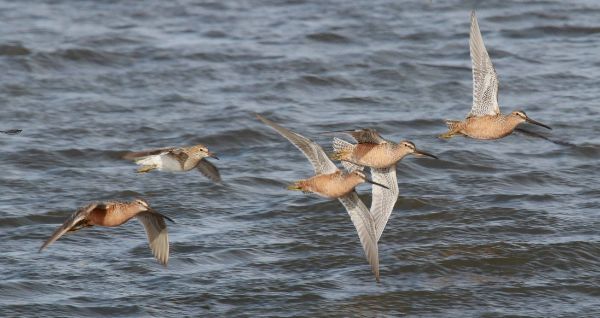
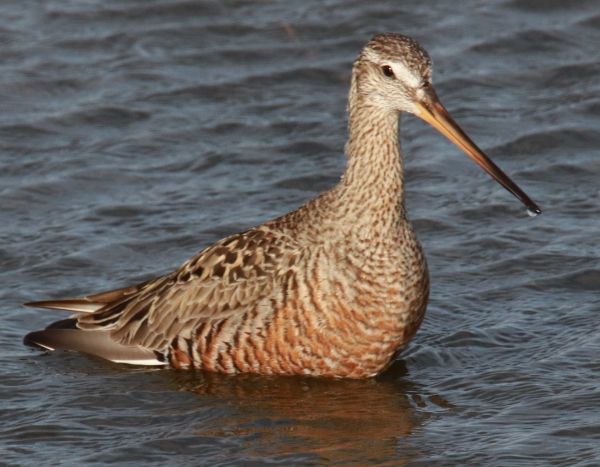
Sunday was quite a fine birding day, and despite the wind the birds were impressive with new species including a couple flocks of Long-billed Dowitchers numbering about 20 and 60, pairs of Wilson's Phalaropes at 3 area marshes, the first male Purple Martin, a Chipping Sparrow, and a Snowy Egret. But another big prize was a pair of Hudsonian Godwits 2 miles north at Bobby's Bay. Despite my worry that the water was too high with no bare shore to be attractive to shorebirds, the sandpipers continue to funnel in there, including Pectoral Sandpipers, American Avocets, Marbled Godwits, the pair of Hudsonian Godwits, Willets, a pair of Wilson's Phalaropes, and the flock of 60-ish Long-billed Dowitchers, plus Killdeer. My other shorebird hotspot on the northwest side of Charo Marsh has been active too with a similar variety of species, plus Baird's Sandpipers and Saturday's Dunlin (but minus the Hudsonian Godwits).
Last week it was very obvious there were more single male Northern Pintails than paired Pintails, with Mallards headed in a similar direction with about 1/3 of the males unpaired, which simply means the hens are incubating or egg laying or visiting another male or males – a duck version of a soap opera, ha-ha. Franklin's Gulls have been passing through in long flocks that probably number in the hundreds, and there have been a couple flocks of about 100 and 200 Franklin's resting on area wetlands. Sunday there seemed to be more Common Terns and Tree Swallows moving through, and even flocks of male Yellow-headed Blackbirds appeared to be extending their migrations north.
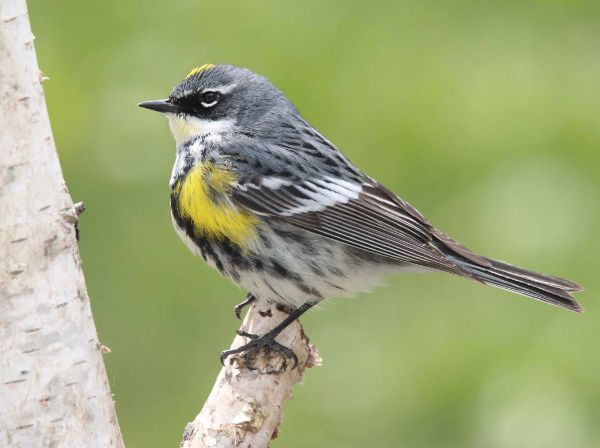
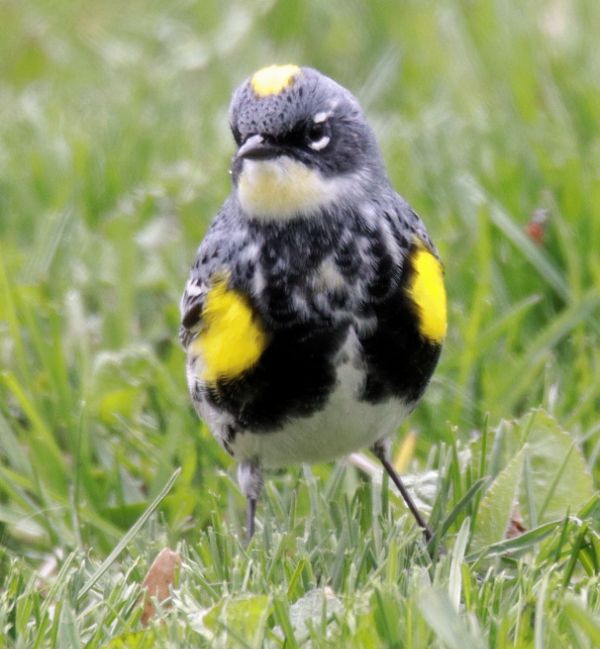
New Yard Birds: Hooray! The first bird of Monday morning, sighted in the elm tree just outside my bay windows, was the first warbler of spring – a beautiful male Yellow-rumped Warbler was a delightful sight. The long-awaited warbler was followed by more of its kind despite the intense northwest wind. A variety of warblers will follow, peaking here the third week of warbler month, and the variety of warblers will be joined by a variety of vireos, flycatchers, orioles, thrushes and thrashers, and more – Hooray!
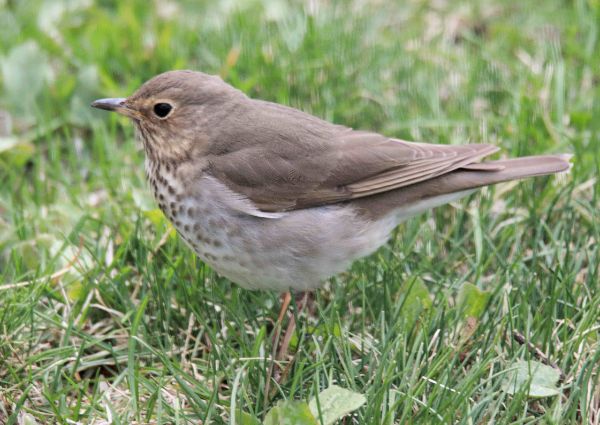
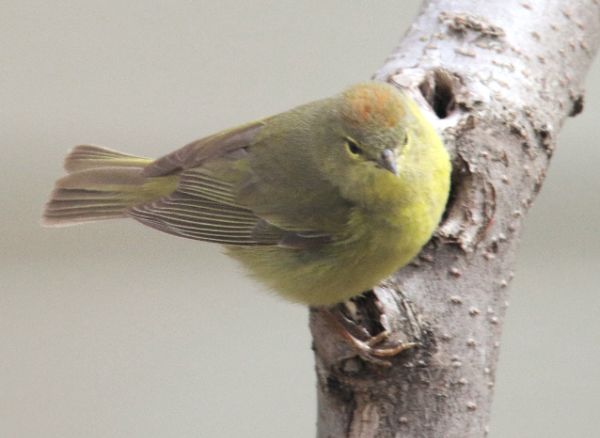
While occasional Yellow-rumps continued to flash into view, a couple hours later a small Hermit Thrush appeared in my front yard and worked its way around my landscaping, when an even smaller Least Flycatcher suddenly zipped to a low perch. In spite of the 30mph wind, insects were active low to the ground, which kept all the birds low, except the male Black-and-white Warbler that circled trunk of the ash tree, but eventually moved to ground level too, along with 3 colorful male Yellow-rumps, a Hermit Thrush, and a White-throated Sparrow – and I considered that to be the official start of the first neotropical songbird fallout! Many more Yellow-rumped Warblers followed, spiced a bit by the first male Orange-crowned Warbler – a beauty – and the first White-crowned Sparrow appeared too.
She did it! The female Hairy Woodpecker really surprised me last week, when after weeks of being mentally(?) unable to utilize the feeders, and almost never leaving the ash tree adjacent to the feeding station during her short visits, she made a big adjustment and actually began flying to the suet cage and pecking suet whenever she visits the ash tree – usually a few times per day. Up to this point, the female Hairy has been unique in 'avoiding' the feeders, so it's quite a breakthrough for her.
Continuing with the topic of the suet feeder, I've tried a new ploy recently to get better views of birds as they feed on suet at my feeding station. Like most birders, I buy small square "suet cakes" that come in a plastic holder that leaves 1 side open. The last time I replaced a suet cake, after removing the cellophane wrapper I placed the suet in the simple suet cage feeder I use, but that time I left the suet cake inside the plastic holder. This way, only 1 side of the suet cake is available for feeding, which forces the birds to feed on the open side that I faced toward the bay windows – and it worked to make it easier to see the birds feeding on suet. Too often, woodpeckers, nuthatches, and others tend to favor the backside of the suet feeder, which obscures the view of the bird, and even the female Hairy Woodpecker quickly figured out the 1-sided suet feeder in a moment – ha.
I am glad to have 2 new White-breasted Nuthatches that joined the new Red-breasted Nuthatch at the feeders and trees in my yard. The regular Downy and Hairy Woodpeckers and House Finches are the other feeding station birds, and yard visitors are American Robins, Mourning Doves, White-throated Sparrows, and the new Yellow-rumped Warblers and Hermit Thrushes! Another recent bay window sighting included 4 White Pelicans that revealed their soaring flight when their huge shadows passed across the yard. And flocks of Franklin's Gulls swept low overhead Monday and Tuesday, breaking the quiet afternoons with their characteristic calls.
Hawk Watch: Thursday afternoon I headed south to check on the progress of the territorial hawks, and at the closest nest – the Swainson's Hawk nest – I was excited to see 2 adults perched in the Alaska Grove for the first time. With the nest built up nicely in Swainson's fashion, the stage is set for a full nesting agenda. Similarly, both of the pair were perched facing the nest when I passed by Friday evening, and ditto 48 hours later. The Krider's Red-tailed Hawk at the south end of what is now my "Hawk Nesting Route" was perched, then soaring near his partly constructed nest and farther east, but there was no sign of a female in the area – again.
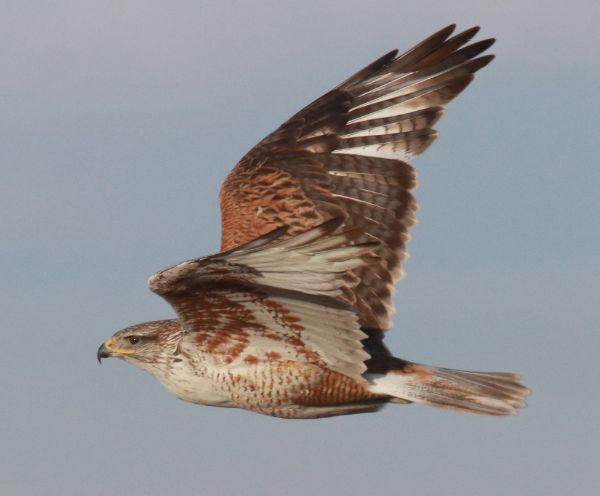
A mile north of the Krider's territory, the Ferruginous Hawk pair was present in the area surrounding their nest, 1 perching in a tree nearby, and 1 standing on the ground beneath the south tree. One of the Ferrugs also spent a bit of time soaring overhead during my short observation period from a distance. When I returned Saturday afternoon during the strong west wind, one of the Ferruginous Hawks was perched quietly on a low hill immediately west of the nest. A bit farther south, the Krider's male was perched near his slightly improved nest, and I also took a detour to check on the Red-tail pair north of White Lake, where an adult was standing low on the extra-large nest built up over several years.
More Migrants: After the neotropical surprises Monday, in spite of the intense wind I checked a couple locations within 2 miles of my office. Melody's Grove held similar species of neotropical migrants – but there was a Blue Jay on hand and didn't see a Black-and-White Warbler during a short observation period. At Melody's Marsh, in addition to a few pairs of Ring-necked Ducks, a couple pairs of Lesser Scaup and Blue-winged Teal, and a male Northern Pintail there was a flock of 30 Long-billed Dowitchers and a pair of American Avocets.
Two miles north at Bobby's Bay, a flock of about 20 Long-billed Dowitchers was still there, along with 2 Pectoral Sandpipers and 2 pairs of avocets, 3 Common Terns, 9 Blue-winged Teal, 2 pairs of Northern Shovelers, a pair of Mallards, and a pair of Gadwalls. There was also a surprising number of Tree Swallows that may have reached more than 100 individuals spread out across the larger section of the lake, flying about 2 feet above the water surface, presumably feeding on hatching insects in flight – and I saw 1 Barn Swallow among them – the first of spring. With so many new arrivals and short-term stop-over species adding to every May day, I hope the weeks ahead are especially exciting for you – Happy Birding!
Article and Photos by Paul Konrad
Share your bird sightings and photographs at editorstbw2@gmail.com