Birders from across the continent, including people of all ages and experience levels, are choosing the day of their choice between September 15 and October 15 to identify as many bird species as you can. In this way, birders will be helping to raise funds to support the work of Point Blue Conservation Science's work to advance the conservation of birds, wildlife, and ecosystems through science, partnerships, and outreach. Formerly the Point Reyes Bird Observatory, you can join Point Blue's month of Bird-A-Thon events in-person or on-line to learn about planned activities and to connect with fellow birders.
Birding News 2
Timed so you can be ready for hawk and falcon observations during fall migration, you can participate in a live raptor flight ID presentation next Wednesday, September 9th at Noon EDT. Join hawk counter Josh Haas as he shares an overview about how to identify raptors in flight, and especially how Josh's video clips can help you learn to identify raptors in flight. Josh will show clips from his movie Hawks on the Wing to illustrate his innovative way to learn how to identify raptors in flight. The program features side-by-side videos of raptors in flight, which makes mastering the technique faster and easier.
The early signs of raptor migration across North America and funneling into Mexico began showing loud and clear last week as northern hawkwatch sites from New York to Minnesota began seeing ever-larger numbers of Broad-winged Hawks, Bald Eagles, and Red-tailed Hawks. At the same time, Texas count sites featured impressive migration flights of Mississippi Kites and Broad-winged Hawks. It all becomes very clear when you refer to the Hawk Migration Association's exceptional resource – HawkCount – where you can see daily totals of each species at 29 count sites to date, with more checking in as migration progresses.
We all pay attention to weather reports and forecasts, sometimes daily. Now there is a seasonal excitement about bird migration generated by BirdCast, in which weather radar is used to monitor the volumes of birds migrating during spring and fall migration seasons across the continental United States. Will birders soon be watching television broadcasts or YouTube presentations of migration forecasts similar to weather forecasts? The first such broadcast has already been created as a precursor to what may soon be one of our newest resources!
To expand on the information provided daily via radar, BirdCast also provides a number of information sources that describe more insights into the process of monitoring bird migration while increasing our understanding of how birds migrate. The BirdCast Science Center provides a wealth of background information about Bird Migration, as well as Applications of Radar Technology, such as how radar data is turned into information that describes migrating bird numbers, flight directions, flight speeds, and migration altitudes to expand our understanding of migratory bird movements, especially at night.
In woodlands, forests, and even in our yards, trees continue to provide life after death; snags provide nesting sites, food, and cover for owls and a variety of cavity nesting birds. The life of a tree doesn't end when it dies, it simply transforms. Owls are a special family of birds that depend on dead trees – snags – owls that range in size from Great Gray Owls to Screech Owls benefit from snags across the United States and Canada. And by protecting a snag or a number of them, we provide an area of habitat for an interacting web of life that extends from forests to open woodlands, and even our backyards.
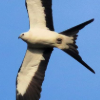
On their multi-generational cattle farm near Newbern, Alabama, the Joe family was hosting an excited group of birders who watched as father Cornelius Joe drove his tractor through his hayfield, cutting alfalfa and grass to harvest, and stirring up insects in the process. This activity usually attracts the attention of Swallow-tailed Kites and even Mississippi Kites that arrive and dive after airborne insects – sometimes at eye level right in front of the visiting group of birders! This is an interesting insight into how the Joe family is leading the way in showing how ecotourism can benefit the Black Belt of Alabama and birds in the region.
Join Liz Clayton Fuller for her free live bird sketching event that's sure to be a blast! Sketch moving birds along with Liz as we watch the stars of the Cornell Lab FeederWatch Cam – or just sit back and enjoy watching Liz create bird art live online. Liz will talk about her work, answer audience questions, and explain her techniques for sketching birds from live encounters. Whether you are interested in becoming a better sketcher, curious about the artistic process, or an artist yourself, you are sure to have a lot of fun if you participate next Monday, July 20, at 2:00pm Eastern Daylight Time, 11:00am Pacific.
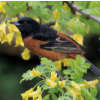
During the past 40 years, a steady range expansion at the northern limits of the nesting range of Orchard Orioles has been studied in Ontario using the annual Breeding Bird Atlas surveys as the basis to monitor this colorful species' expanding nesting range in southeast Ontario. Information reported by Birds Canada indicates that Orchard Orioles have a remarkable ability to adapt to the fragmented landscapes that are increasingly present across southern Ontario, such as scattered groves of trees and city parks. These spaces mimic the open woods and woodland edges that Orchard Orioles select for nesting, highlighting the value of prioritizing high-quality greenspaces in towns and wooded areas.
Visit Alabama's storied and historic Black Belt region to attend the Black Belt Birding Festival, scheduled for July 31 to August 2nd. Organized and conducted by Alabama Audubon, this region is a premier destination for birding in the Southeast that features open prairie grasslands adjacent to forests and bottomland swamps. These varied habitats provide festival attendees a variety of opportunities to observe many exciting species of birds in pristine settings. As the Southeast's largest prairie ecosystem, it is the only place you can find Wood Storks and Swallow-tailed Kites along with Painted Buntings, Dickcissels, and Scissor-tailed Flycatchers.
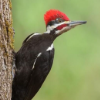
Drumming is an important form of communication for woodpeckers, and hearing a rapid rat-a-tat-tat-tat can help you identify which species is drumming. Similar to learning to identify songbird calls, with a little practice you can identify some woodpeckers by the speed, cadence, and rhythm of their drumming. Woodpecker drumming may not be as immediately distinctive as bird songs, but by carefully listening to duration and rhythm of the drumming – even the perceived loudness of the woodpecker with reference to its location – you can still tell many species apart.
A birder recently pointed out that "Birding has changed my life. Not only has birding made me more observant and patient, but it's given me a sense of belonging to the Earth. Birds remind me that I am part of nature – not separate from it. The beauty of birding is that there is no 'right way' to do it. Birding is a personal activity, and the way you enjoy birding can vary any time you plan an outing."
Most Birding Festivals held across the United States and Canada have a long and successful track record, with some continuing for more than 2 decades and a few prospering more than 4 decades! Each year, new communities and interested groups continue to start their own Birding Festivals to serve local and state birders, while also engaging the community. It seems that birding fests are destined to grow year after year with local citizens, businesses, and wildlife groups finding a sense of community in the events, while visiting birders generate impressive economic benefits.
Celebrate the arrival of your favorite birds this spring and learn answers to common questions about how they make the migration from wintering areas to your neighborhood tomorrow, May 14th, presented by ornithologists from the Cornell Lab of Ornithology. This is a reminder to register for this informative presentation that emphasizes that bird migration isn't just a continental phenomenon, it is also super-local, and it is happening all around you now. Mid-May is prime time to enjoy the spring migration spectacle! Some of the new birds you see are just passing through during a short migration stopover, while others will be with you through the summer.
As we enter the most active period of bird migration, you can check live migration maps and other valuable information provided by BirdCast across the contiguous United States. This daily information is filed to be available to refer to anytime for any given night or day – and it's all free and available online 24-7. Using weather radar to detect the numbers and flight directions of migrating birds, BirdCast provides information to birders in a number of different ways, most notably on their Live Migration Map and Local Migration Dashboard. There are also 2 migration forecasting programs: Migration Forecasts and Migration Alerts, both of which look 3 days into the future.
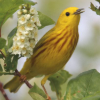
Just as the spring migration of warblers is beginning, you can download and print a free full-color Warbler Identification Guide from the Bird Academy. Warblers can be among the most challenging birds to identify due to varied plumage colors and patterns between species, sexes, age groups, and the seasons, so this timely guide provides a source of information that will improve your warbler ID IQ. There are actually 3 pages of warbles included in this excellent Warbler ID Guide, divided into Eastern, Western, and Widespread Warblers found in the United States and Canada. Print the .pdf pages and study them at home and take them with you in the field.
How do you choose just one birding festival out of this list of remarkable opportunities for birders to enjoy some social birding at a Birding Festival? May could be named Birding Festival month considering all the birding festivals available for people to attend across the United States and Canada. Each birding festival is different, but they are all created with opportunities for experienced and novice birders in mind. There is truly so much to enjoy during Birding Festival events, such as guided field trips, family friendly activities, informative workshops and presentations, photo-oriented birding trips, featured speakers, a birding marketplace, art exhibits, and other attractions.
Adjacent to the Lake Erie Marsh Area in northwest Ohio is an area known as the "Warbler Capitol of the World," which offers some of the most intense and enjoyable spring songbird migration experiences in North America! The Biggest Week in American Birding will take place May 8 to 17 to celebrate the peak of spring songbird migration during 10 days of birding events and activities hosted by the Black Swamp Bird Observatory. During this period the Magee Marsh Wildlife Area stands as one of the best birding destinations, and it is bordered by Ottawa National Wildlife Refuge and Oak Harbor – and admission is Free!
While birding this spring, be sure to look for bands on the birds you observe. Although a very small percentage of birds we observe are banded, if you do see a banded bird, especially a bird with colored bands, try to record all the information you can – and start by taking a photograph of the bird and its band(s). Bird banding has provided a wealth of information about the birds of North America and beyond, and while biologists can use much more sophisticated methods of monitoring bird migrations and behavior in the form of telemetry, bird bands continue to provide new and interesting information.
An apparent breakthrough that should be instrumental in protecting birds from crashing into windows and tall buildings when migrating at night. Photometrics AI, a street-lighting optimization company, is now using bird migration forecasts as part of its lighting management platform. Cities can now use the Photometrics AI platform, which provides an automated feature that dims lights when information from the Cornell Lab of Ornithology's BirdCast bird migration monitoring system signals a big migration night that poses high risks for bird-window collisions. Their new AI technology helps to protect birds by automatically dimming lights when it matters most.