
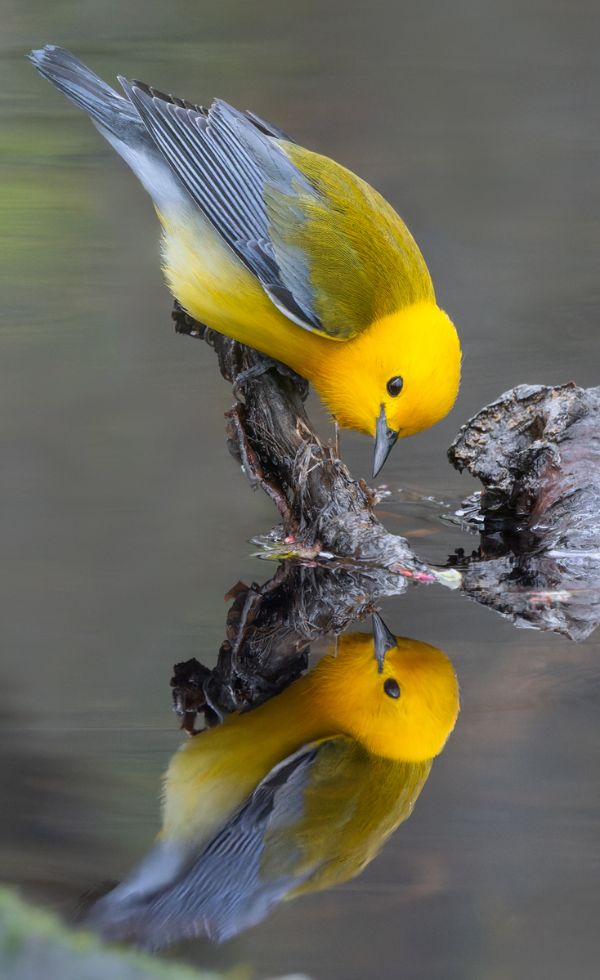
Just as the spring migration of warblers is beginning, you can download and print a free full-color Warbler Identification Guide from the Bird Academy. Warblers can be among the most challenging birds to identify due to varied plumage colors and patterns between species, sexes, age groups, and the seasons, so this timely guide provides a source of information that will improve your warbler ID IQ. There are actually 3 pages of warbles included in this excellent Warbler ID Guide, divided into Eastern, Western, and Widespread Warblers found in the United States and Canada. Print the .pdf pages and study them at home and take them with you in the field.
To download the free Warbler Identification Guide, simply fill out the form at Free Warbler ID Guide PDF
The Cornell Lab also provides the following tips to help you find warblers nearby:
- Discover the variety of warblers and other migrants during late April and throughout May.
- You will find a greater diversity of warblers in layered woodland or forest habitats.
- Some warblers prefer ground-level, others like lower to mid-level positions, and most seem to prefer higher levels in woodlands.
- If it is windy, warblers will be in lower positions; when it's calm, many forage higher in trees.
- Start your observations at woodland edges and scan the foliage for small-sized birds that make quick movements.
- Listen for singing birds and watch for movements in that direction.
- Focus on one warbler at a time to become familiar with it.
- The kinds of warbler species you will find will change throughout the migration period because some warblers migrate during early migration periods, middle, and late-season periods.
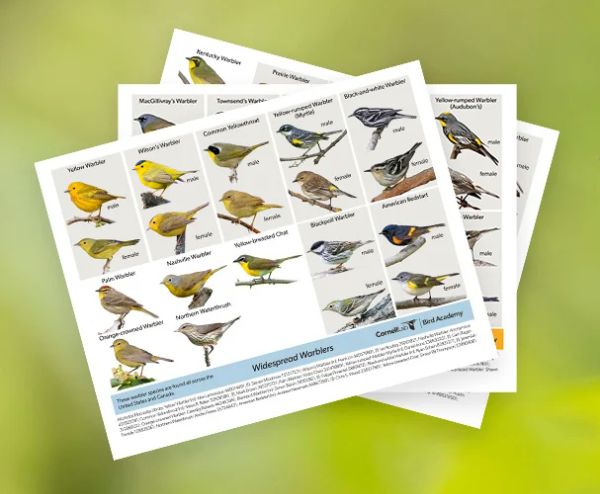
You can print a copy for home, and a copy for your pocket when in the field this spring – or refer to the PDF on your computer or cellphone – thanks to the Bird Academy.