
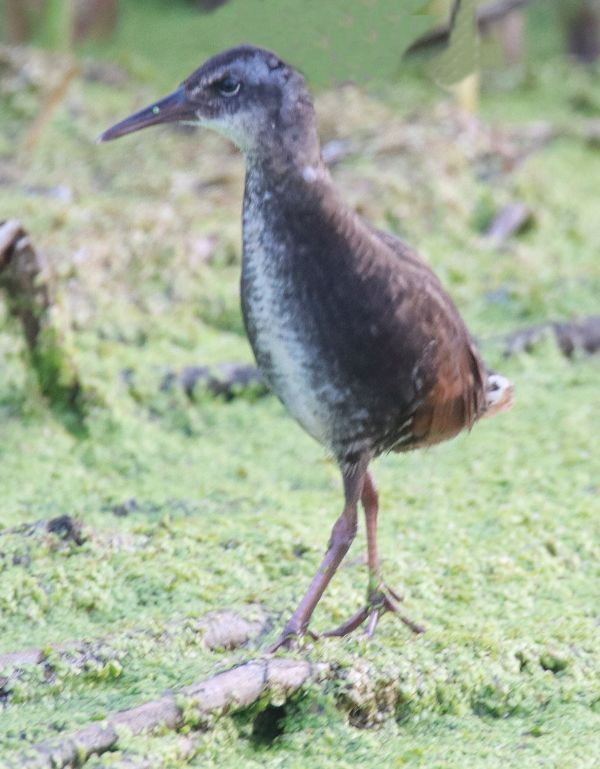
It's always exciting to see new birds, especially when you can find them within 4 miles of home. Although Virginia Rails are not new-new, observing and photographing fledgling Virginia Rails foraging in and out of the cover of cattails in shallow water covered by duckweed was a new experience indeed. I don't see a Virginia Rail every summer in this area, and rarely see more than one, so this was a great sighting all-around to start the week. The young rails were very nervous, but didn't mind when I positioned and re-positioned, and while one was a little larger than the other, they kept aware of one another and the smaller one seemed to keep its distance from the other by 5 to 15 feet.
That was Tuesday after I put the finishing touches on last week's issue of The Birding Wire, and young rail observations topped off a nice evening drive that yielded sightings of the first 3 Semipalmated Plovers down from the Arctic in the company of 5 Pectoral Sandpipers and 2 Baird's Sandpipers, along with Killdeer that included a couple late but recent Killdeer hatchlings and an American Bittern that provided a couple low-light photographs a couple miles before I sighted the young Virginia Rails. During that area drive I thought about the lack of large shorebird sightings the past couple weeks – namely American Avocets, Marbled Godwits, and Willets – where did they all go?
Last Thursday I took a quick trip a dozen miles south to Charo Marsh, where I was surprised to find the birds a bit subdued – until I saw an adult Bald Eagle flying east beyond the northeast area of the marsh. There was a new brood of 8 Mallard ducklings, but most broods seemed to be in hiding. I saw another brood at Hille Bay, about halfway to Charo, where a Gadwall hen was leading a scattered brood of about 9 new ducklings. There were many newly hatched Eared Grebes at Grebe Marsh about 3 miles to the south, along with several Western Grebe family groups with large downy young.
At the duckweed shallows where I found the young Virginia Rails, I thought I spied one peeking out of the wall of cattails, but the similar-looking bird's beak was more conical and yellow – it was a young Sora, another rail that is hard to get a look at, but adults often heard calling in season. Thereafter, as I approached Charo Marsh late Friday afternoon, 2 hawks were soaring overhead – a Swainson's and a Red-tail. Several Lesser Yellowlegs and Wilson's Phalaropes were scattered along the shore, and among the many ducks and duck broods described at Charo last week, the first tiny brood of 7 Ruddy Duck ducklings stayed close to the female.
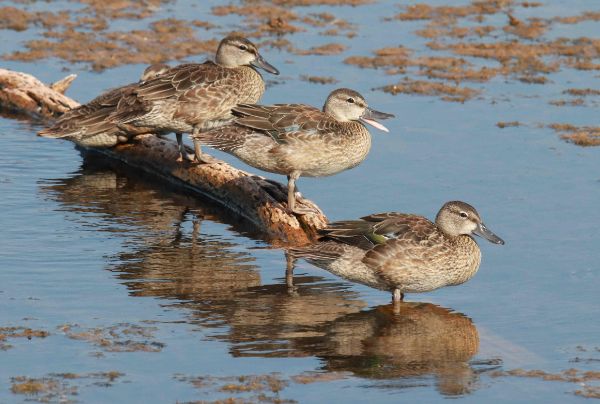
I was actually on the way to Hecla Marsh & Sand Lake Refuge, expecting to see many duck broods at Hecla Marsh, just south of the border that divides the Dakotas, Great Egrets and Eared Grebes were the dominant birds at Hecla, the grebes in family groups in which adults were feeding 1 or 2 downy young. There were White-faced Ibis and 3 Black-necked Stilts too, along with a variety of molting ducks – mostly Mallards and Blue-winged Teal with an obvious cohort of molting Wood Ducks, mostly males. There were newly arrived shorebirds including Long-billed Dowitchers too, but no new duck broods were evident.
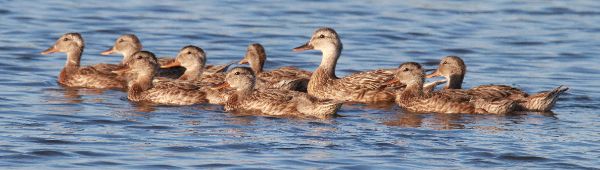
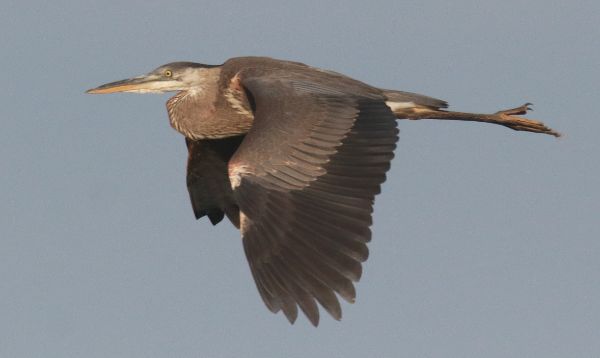
A little disappointed with the sightings at Hecla, I continued a bit farther south to Sand Lake National Wildlife Refuge, which seemed relatively empty aside from a scattering of Great Egrets and Great Blue Herons in one area that also revealed a large brood of nearly fully feathered Gadwalls that swam in tight formation with the female in their midst. There was one more marsh to check as I began returning northward – Erickson Waterfowl Production Area, and that turned out to be the best birding site of the evening. There was a mix of ducks and shorebirds on hand, with a surprising number of American Avocets in attendance.
About 60 avocets were feeding in 2 groups along the still shallows, some in full color and others showing more basic plumage on their neck. There were also 2 pairs of avocets that were casually attending 2 developing young – 1 pair had 2 half-grown, half-downy hatchlings that were busy foraging on their own, and the other pair had fledgling-age young that were still closely associated with the adult pair. There were about 25 Long-billed Dowitchers a distance away, and a scattering of Pectoral Sandpipers, Least Sandpipers, and Lesser Yellowlegs along the shore.
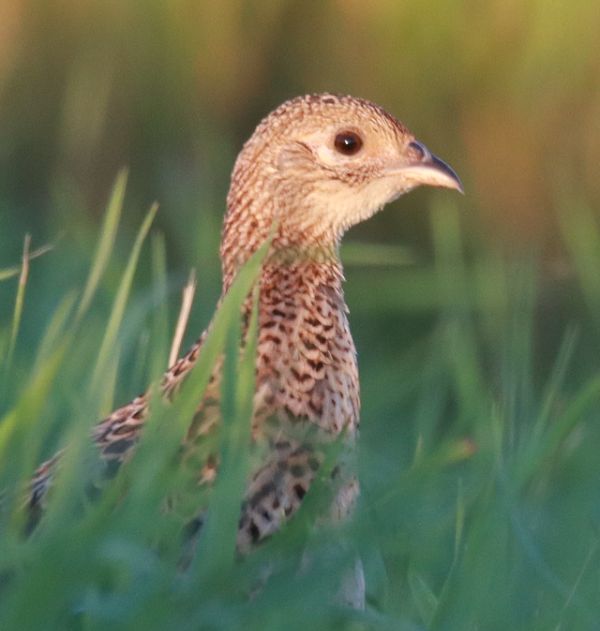
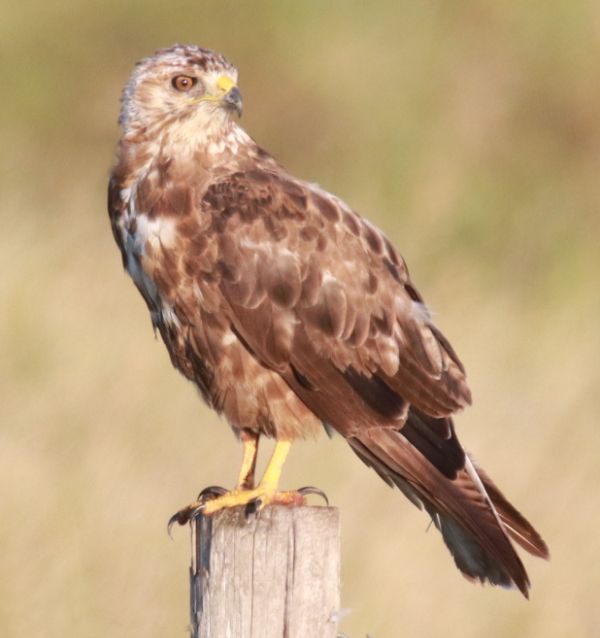
As I headed for home, a couple Red-tailed Hawks caught my attention, and I stopped to photograph a yearling Swainson's Hawk – a relatively rare sighting, although adults are common in the region and new fledglings will appear in upcoming weeks. A few miles ahead, I was short-stopped by a female Ring-necked Pheasant with 3 2-week old hatchlings feeding roadside as the sun was low in the western sky. I stopped at a position so I could try photographing, and appreciated seeing 3 more small pheasants pop their head above the short green grasses. I managed a few photos of individuals, including the female, but limited my activity so I didn't displace the feeding brood. About 4 miles from home a hawk-looking bird flew into the half-light of dusk, and as I managed a better look I realized it was an adult Great Horned Owl, another species I haven't seen for several weeks.
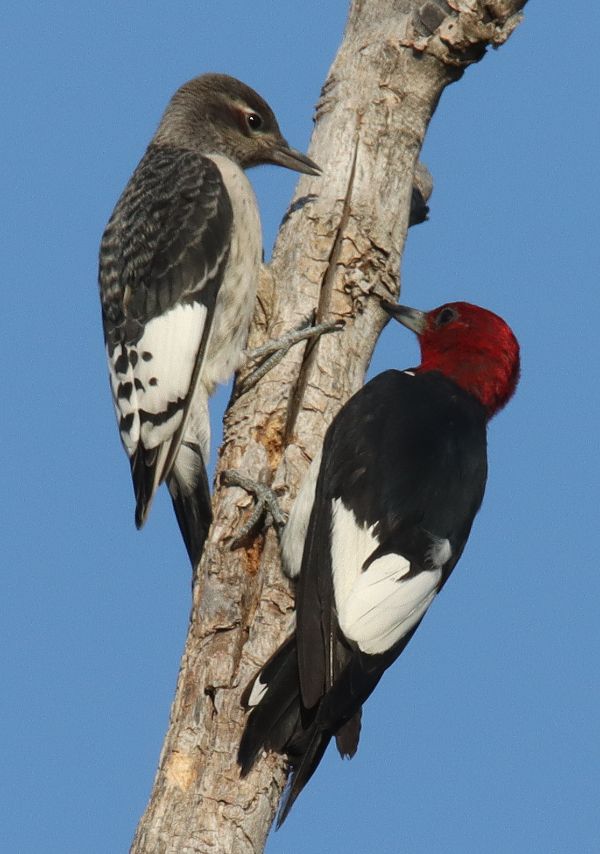
Closer to Home: During a late afternoon and evening birding drive Saturday, I was glad to find a number of cavity nesting birds that included some recent fledglings on the open edges of tree groves just east of the Coteau escarpment. These birds included 3 family groups of Red-headed Woodpeckers, each composed of at least 1 adult and at least 1 fledgling. Four Northern Flickers were also observed as 2 single birds and 2 feeding near each other – possibly including 1 or both as recent fledglings. There were also 3 sets of 2 American Kestrels that could well have been fledgling nestmates, although it was hard to tell if an adult or 2 was involved in the duos.
There was an obvious change in the avifauna between the Missouri Coteau and the Drift Plain, but the habitats are different as is the landscape, but the Coteau rarely attracts nesting Red-headed Woodpeckers or American Kestrels like the Drift Plain does, and very few Northern Flickers are present. On the crest of the escarpment that divides the 2 geologic subregions I encountered 3 nearly grown and fully feathered Ring-necked Pheasant fledglings, and in the scattered marshes of the Coteau I also found newly hatched duck broods that included a female Mallard with 5 ducklings and a female Blue-winged Teal with a brood of 9 tiny ducklings.
Yard Sightings: After more than a week without seeing a different bird beyond the regulars at my feeding station, Saturday noon a Northern House Finch was foraging in the sumacs and elms nearest my feeding station. Within the hour a male American Goldfinch flew in to feed on the seeds of a sage plant, and a quarter-hour later a White-breasted Nuthatch caught my attention as it foraged around the bark on the trunk of the old ash tree adjacent to my feeders and birdbath. And moments later a young female Downy Woodpecker was active at almost the same location on the ash tree as well as some adjacent branches. Thereafter, there were only a few of the regular window birds as I worked at my desk – back to normal for the rest of the week.
Aside from that, the regulars remain the same – the male Orchard Oriole, the male Ruby-throated Hummingbird, 1 or 2 American Robins, and House Finches. But Saturday the robins that appeared to be taking jelly back to a second brood began acting territorial outside my front door, perhaps signaling that the young robins left the nest and repositioned nearby. But as of Tuesday, when I was putting the finishing touches on this issue of The Birding Wire, there have been no signs of young robins and the adults have only rarely visited the feeding station. Similarly, the Orchard Oriole is making far fewer feeder visits and he is not exiting the jelly feeder along his usual route to the northwest – flying east instead, which suggests the potential that new fledglings have repositioned from the nest site. (It's hard not to speculate when I see such obvious behavioral changes in individuals and pairs.) And at noon Tuesday (yesterday) a Northern Flicker was making contact calls nearby, another breakthrough voice to add to birds in the neighborhood.
August is an exciting period when some birds begin to expand their areas of interest beyond their nesting territories and early summer residences. New birds are arriving in local habitats, ranging from summer residents to species returning from nesting areas in the Arctic tundra and boreal forests to the north. The movements of many birds will increase, as will the numbers and diversity of the birds involved. Many early migrants linger a little longer during southbound movement than they do during spring migration when they are driven by reproductive interests. In some cases birds and flocks of birds take time to spend significant stopover periods to feed on abundant foods in marshes, grasslands, tree groves, and towns along the way. It's exciting to remember past August visitors, and new birds are already beginning to appear in all quarters from our yards to more remote areas and all points in between. Enjoy the changes these August days bring for you and birders everywhere.
Article and Photos by Paul Konrad
Share your bird sightings and photographs at editorstbw2@gmail.com