
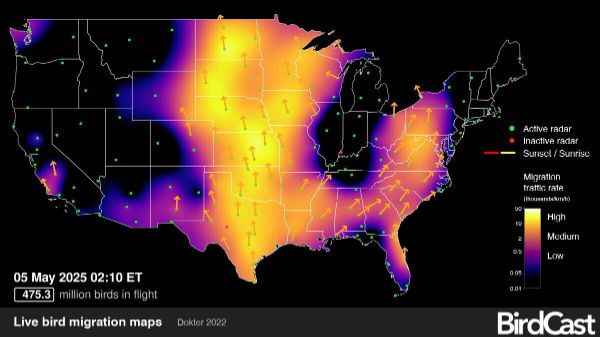
BirdCast uses weather radar to detect the numbers and flight directions of migrating birds to provide information to birders and biologists while supporting bird conservation and expanding our understanding of migratory bird movements. During recent years birders have used BirdCast's remarkable resources that include live migration maps that show how many birds are migrating and the direction they are flying in real-time as detected by the US weather surveillance radar network. Now BirdCast is announcing their newest resources to explore, including the Science Center.
The beating heart of BirdCast continues to be their migration webpages: live maps and local migration dashboards, which are remarkable resources for every birder to use. Plus, you can check into migration forecasts and migration alerts for additional information. All these helpful and interesting programs are working 24–7 online now! Although bird migration activity is currently light during the early spring season, it is interesting to monitor migration periodically during March and early April to get a feel for how and where migration begins, and especially to prepare for the exciting peaks of spring bird migration ahead.
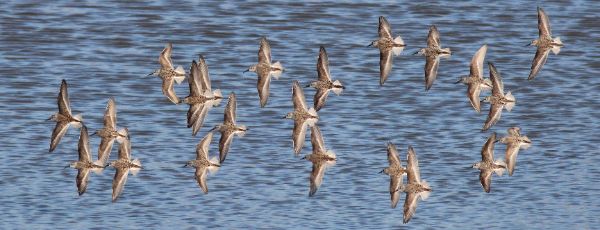
Most birds usually begin to migrate 30 to 45 minutes after sunset, with the greatest numbers in flight 2 to 3 hours later, although there are obvious deviations from this pattern night to night and day to day. During spring migration, most birds pass through the contiguous United States from mid-April throughout May, but radar graphics are beginning to show steadily increasing numbers of birds migrating across the Lower 48 States as migration activity builds.
This year it is exciting to bring to your attention that there is new BirdCast information available: The new Science Center provides one place where all the background information is available that covers the field of radar aero-ecology and the study of bird migration. Now you can also get detailed insights into the peak migration periods for every county in the contiguous United States. In addition, the new section Protect Birds! offers practical guidance about how to help migratory birds get safe passage during migration, especially in urban landscapes, which is made possible through generous contributions from the Bird Collision Prevention Alliance.
You can learn more about BirdCast and all it has to offer throughout spring and fall migrations annually at Spring Migration 2026 Begins – With a Fresh New Look – BirdCast