
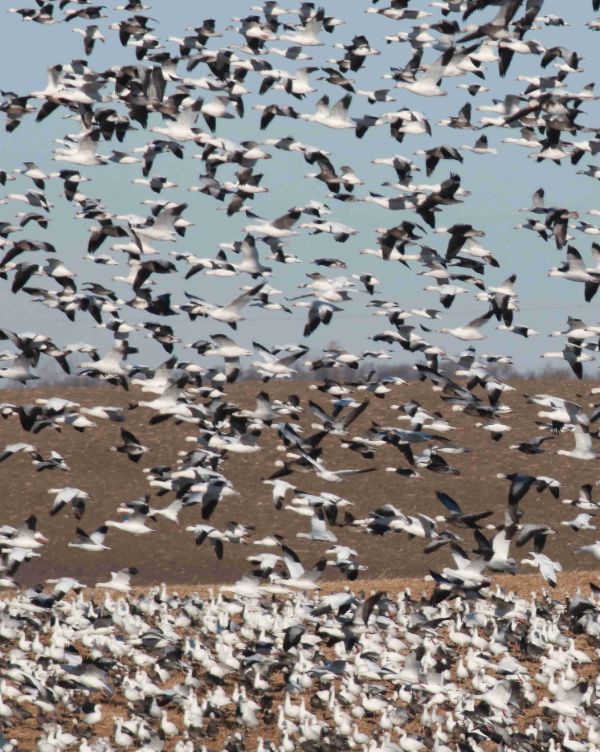
March migration concentrations of geese, ducks, swans, cranes, eagles, shorebirds, and other bird groups can be spectacular, and positioning yourself in the midst of a concentration area at just the right time is easier now when you use the information provided by eBird at "Hotspot Explorer" and "Explore Regions." You can use Hotspot Explorer on the eBird website to find late winter and early spring concentrations of birds in your area, or to find new birding locations you may want to travel to as birds begin to make their way to new migration stopover sites.
The eBird Hotspot Explorer lets birders zero in on the best birding locations, and the "High Count" tool allows you to see the largest number of birds recorded in a single eBird checklist in a given state, province, county, or country. It's great if you are looking for concentrations of birds but don't know where to find them.
Hotspot Explorer allows you to zoom in on a map to locate color-coded pins positioned at popular birding locations. Filter reports by month to see what sites are best during any month of the year – March for example – and click on the pins to see a list of all the birds seen at that location, with the most recent sightings at the top; see eBird Hotspot Explorer
You can also use the "Explore Regions" section to check into some March concentration areas. To get the swing of it, you can begin by taking a look at one or more of the following sure-fire birding hotspots: Loess Bluffs National Wildlife Refuge in Missouri, Middle Creek Wildlife Management Area in Pennsylvania, Sacramento National Wildlife Refuge in California, Bear River Migratory Bird Refuge in Utah, and Montauk Point State Park in New York to name a very few; see Explore Regions. Of course, you may also wish to locate individual bird species, by using Explore Species and other helpful eBird sources of birding information.