
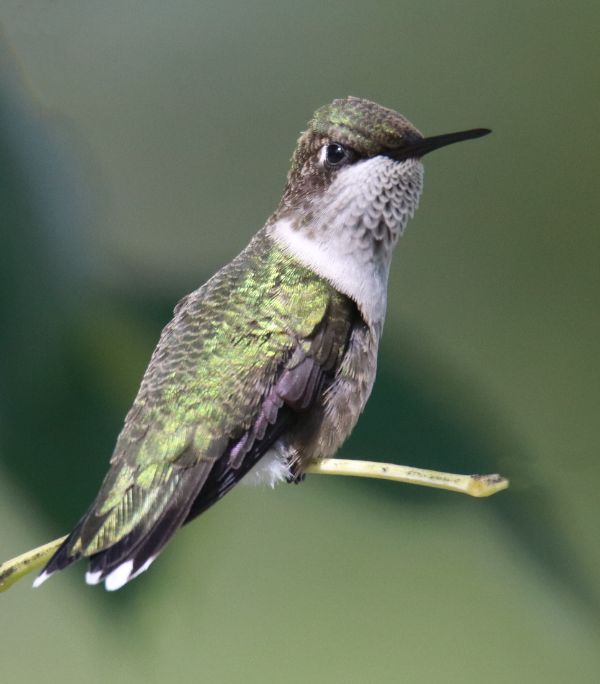
Each winter it is especially interesting to learn about the wayward hummingbirds that find themselves wintering in Louisiana. A core of Louisiana birders keep their nectar feeders active to provide supplemental food for unexpected hummingbirds during winter, and as of the end of January they have documented 8 species of hummingbird – and the numbers of individual hummingbirds is quite remarkable! For example, the totals include no less than 57 Black-chinned Hummingbirds, a species that winters in west-central Mexico – normally – and that's just 1 of the 8 species.
Compiler Erik Johnson recently reported that in addition to the 57 Black-chinned Hummingbirds, Louisiana birders have reported 58 Ruby-throated Hummingbirds, 23 Buff-bellied Hummingbirds, 6 Calliope Hummingbirds, 4 Broad-tailed Hummingbirds, and a whopping 133 Rufous Hummingbirds or Allen's Hummingbirds (a few of the total are Allen's Hummingbirds that are hard to distinguish from Rufous, especially the females). There was also 1 standout report of a Broad-billed Hummingbird, which are very rare in Louisiana and most American states, especially during winter.
Erik has been instrumental in developing a communications network among Louisiana birders who provide sugar-water nectar for wintering hummingbirds. There is a little extra effort to providing nectar during the coldest days of Louisiana winter, and Erik shares that it's especially important not to let the nectar freeze, which happens when the temperature drops below freezing, or more accurately at about 28F degrees and below.
To avoid having nectar freeze, especially overnight, some birders use a combination of feeders so they can periodically switch a cold one for a warm one, or some even position a heat lamp near the feeder. (The standard nectar mix is: 1-part white cane sugar to 4-parts fresh water.) Johnson points out that hummingbirds may need to feed even before first morning light, so if a birder brings their nectar feeder indoors for the night, it is important to make sure the feeder is repositioned outdoors to provide the critical first sips before the first light of day.
And don't worry, hummingbirds usually migrate when they are ready – they won't stay longer than they should because of you keep your feeder active. Usually, a hummingbird that stays north of the species' range has made a mistake in some way, perhaps migrating in the wrong direction, or not reacting to seasonal prompts. Then too, hummingbirds wintering beyond their normal range are not limited to Louisiana, so if you spot a hummingbird ahead of their expected spring migration period, you can use the above information to help supplement their feeding resources while enjoying the thrill of "out of season" hummingbird observations, for a short period, or longer.