
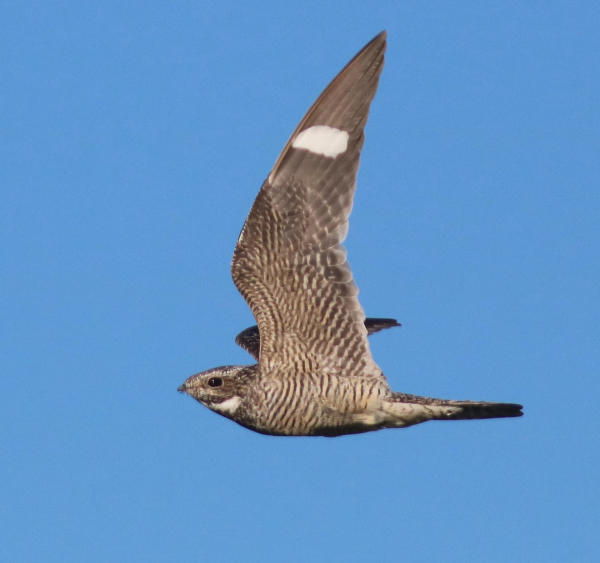
 The sight of a Common Nighthawk in flight is a favorite summer image. 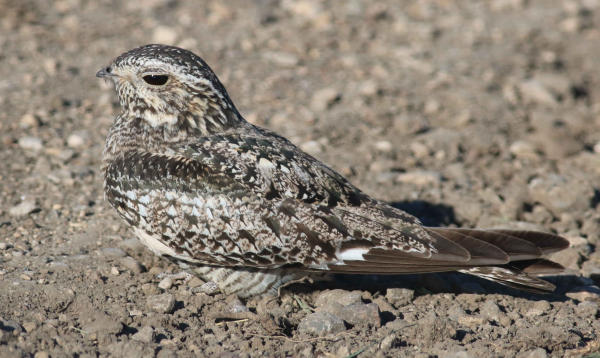 The detail of the cryptic coloration of the plumage of a Common Nighthawk provides an especially interesting image. |
Our success as bird photographers can be tied to the level of trust an individual bird provides us. Birds have individual personalities just like people. Some flush at the slightest sign of motion from a person or vehicle, while others are wary, but they may permit you to approach them to a point, to the edge of a “flight zone” let’s call it. When you approach within the flight zone, they make a hasty escape.
Because only a small percentage of most birds are trusting, I am always on the alert for a trusting bird that will permit me to photograph it within telephoto lens photo distance, and maybe a little closer. I refer to these trusting birds as ambassadors of their species, for they allow us to photograph them and share their images with fellow birders and other people interested in birds and bird photos.
My ambassadors of the week were some beautiful Common Nighthawks. These interesting birds are so cryptically colored that it is genuinely hard, if not impossible, to pick them out as they rest on an open space of ground – even for my well-trained eyes.
Some of the nighthawks looked like adults with brand new plumage, but they were newly fledged nighthawks. As trusting as some adult nighthawks are, the fledglings were super trusting. The results were some of my favorite images of the summer. At the same time, I photographed some of the adults flying over the beautiful wide-open prairie hills along my remote hideaway, the lost road wilderness.
With any bird, it’s best to take an initial photo or two, then try to approach a little closer for another photo. Your approach can be key to your success. I tend to take five steps, stop and photograph, then repeat the process. I try not to walk directly at the bird – instead, I walk at a diagonal in its general direction. Limit your movements aside from your legs; and even then, take each step slowly and be careful not to step on dry grass or leaves or twigs that may scare the bird. With the nighthawks positioned on the ground, when I was close I slowly bent down low to get on their low level rather than photographing downward at them.
The other option was to approach the nighthawks with my mobile blind (van), and that slow sideway approach worked better yet to get even closer to the birds. I always try not to make birds flush due to my approaches. Even when using my van approach, the best feeling is to get some fine photos, then back up to leave the nighthawk undisturbed in its original position - then thank the bird for the opportunity.
Now it may sound a bit hokie that I would thank the bird, but when you spend a little time with an animal, you tend to feel a certain connection, and you want to be an ambassador too – so that bird knows people are individuals too. And while we wish to be closer to birds at times, we are not – at least I am never – a threat. It’s a matter of mutual trust, and respect.
Article and photographs by Paul Konrad
Share your favorite bird photos and photo tips at editorstbw2@gamil.com