
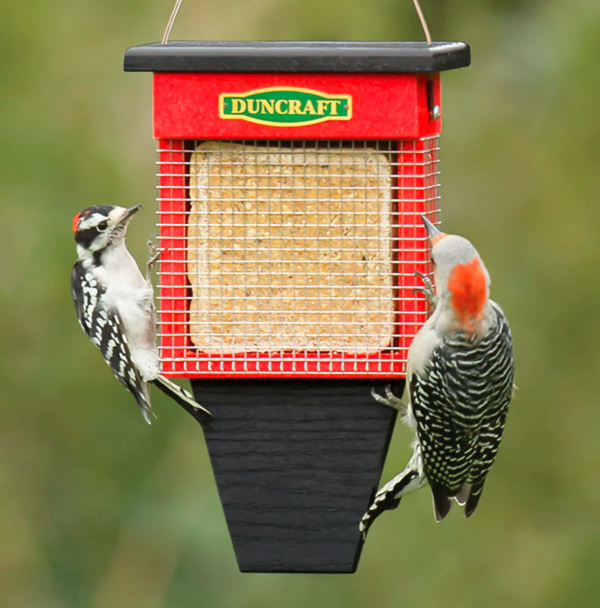
 The new Duncraft Woodpecker Suet Shield Feeder is a good example of a Tail Prop suet feeder that provides extra tail space for woodpeckers, nuthatches and other birds.
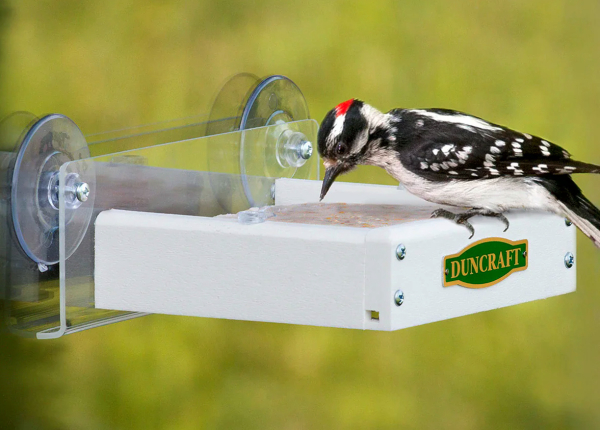 The Touch-Free Window Suet Feeder by Duncraft will bring smaller woodpeckers and nuthatches extra close to your favorite viewing window.
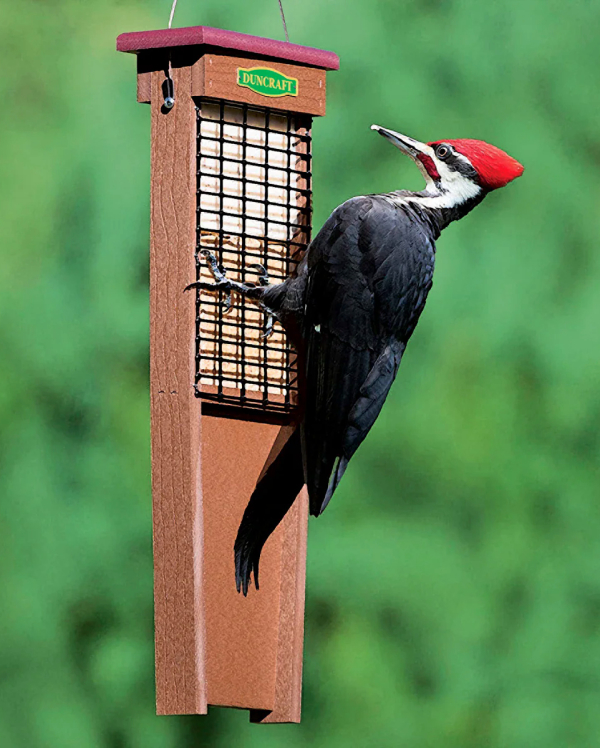 The extra-large Duncraft Eco-Strong Tail Prop Suet Feeder is large enough for a big Pileated Woodpecker, and it holds 2 suet cakes.
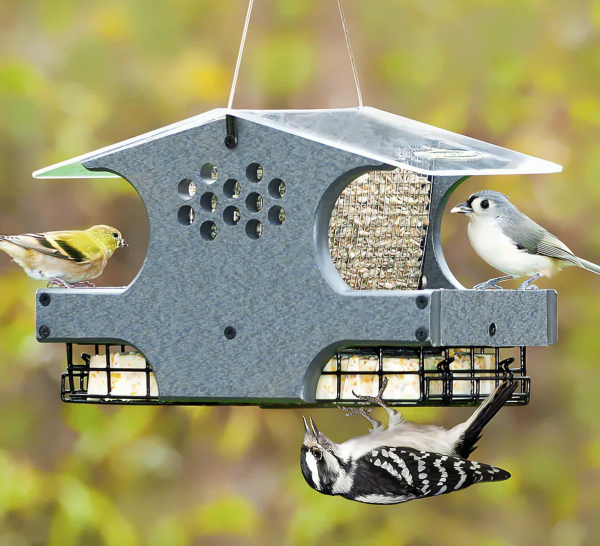 The Duncraft 3-in-1 Bird Feeder is a hopper feeder to provide seeds, along with 2 convenient upside-down suet cages.
|
Suet is a staple bird food year-round, but it becomes particularly important for birds that spend winter months in colder latitudes where they need high-calorie foods. Suet is so easy to provide, its especially economical – and suet is so important for birds seeking high-energy food. Suet is the first standard food we suggest for any feeding station. Even if you don’t want a full feeding station, we encourage people to add a suet feeder to a location where they can watch the attraction it has for birds during winter, and year-round.
Everyone enjoys seeing woodpeckers, nuthatches, chickadees, titmice, jays, and a variety of other birds – even an occasional warbler or finch. In addition to an important part of any feeding station, it’s worthwhile to add a stand-alone suet feeder to another location that provides a view from your home, maybe with a second suet blend to see what suet birds prefer.
Wherever you live, during every week of the year, suet should be a standard at any feeding station. Most birders prefer the simple square suet “cakes” that are easy to replace – we usually only need to add a new one every week or two, but it depends on the number and size of birds that are feeding on the suet. No-melt suet is a preferred option for many birders, and there are a number of different suet ingredients you can choose from ranging from berries to nuts, seeds, and more.
The no-melt suets are a bit of a deviation from the traditional animal fat suet offerings, but we found that the white suet can smear onto the plumage of birds, especially woodpeckers, turning white plumage a slightly greasy yellow – so white fatty suet is no longer an option for us. We switched to a no-melt suet, which tends to be a cleaner, better option. It still has beef fat as a major ingredient, but it’s blended into a dough-like mix of protein, corn, and soy dried into the traditional cake form. Most important, we haven’t seen any reduction in suet use. During hotter months traditional suet tends to melt, which is an even better reason to switch to a no-melt suet, even if it’s only during the warmer months or in warmer areas.
The creation of “hot pepper suet” has added another dimension to suet options for birders who have “squirrel problems,” because it is the answer to keeping small mammals away from your suet offerings. The hot pepper additive is unpalatable for squirrels and other mammals, while birds are not affected. It’s appearance on the market was a positive turning point for many birders who were overrun by squirrels, or who preferred to limit their bird feeding to birds.
At the same time, it’s important to watch out for filler additives in suet, such as cracked corn and milo seeds that tend to provide low food value to birds but attract squirrels and House Sparrows that many people prefer to avoid. Just as it’s best to avoid cracked corn and filler seeds in seed mixes, the same goes for suet.
Wild Birds Unlimited has a unique product that may be the best suet-like bird food – Bark Butter. It’s a unique blend of suet, peanut butter, and other quality ingredients that can be spread on tree bark – hence its name. But Bark Butter is also available in dry pellets that can be provided in a platform feeder or even a hopper feeder, and it is said to have attracted 162 different species of birds to date!
Types of Suet Feeders
There are a variety of suet feeders available, and the standard suet feeder is also the simplest and least expensive suet feeder – a standard wire suet cake feeder that only costs a couple bucks and holds a square suet cake. But there are some useful options from the standpoint of the birds feeding on suet – the best of which is a Tail Prop Suet Feeder. Because a variety of woodpeckers tend to be the most common visitors to suet feeders in most areas, the added length of a tail prop at the bottom of a suet cage makes a big difference for the accessibility of woodpeckers, nuthatches, and other birds.
When you watch a woodpecker eating suet at a cage feeder, you can see how they seem to struggle with where to position their specially adapted tail feathers that woodpeckers use as an important balancing feature as they forage on tree trunks, branches, poles, and feeders. Tail prop feeders are available in a couple different sizes, and if you are lucky enough to attract the largest woodpeckers – Pileated Woodpeckers – there are suet feeders with an extra-long tail prop that a Pileated can use comfortably, along with all other woodpeckers and suet eating birds.
The newest suet feeder option is an “upside-down suet feeder,” that positions a suet cage horizontally under a roofed top. These specialized suet feeders are popular among birders who have a problem with starlings dominating their suet offerings – starlings will not hang upside down to feed, while many other birds do.
There are even a few options for you to add a “window suet feeder” if you wish. And another suet feeding option is to use a “combination feeder” that features 1 or 2 suet cages attached to the bottom or sides of a hopper feeder – something of a self-contained feeding station all in one feeder.
Feeding suet shouldn’t be an after-thought – it should be an important element in your yard now and throughout the year. For more information about suet and suet feeders, refer to Suet Feeder & Seed Cake Feeders: Suet Feeders, Wild Bird Suet, Squirrel Proof Suet Feeders (duncraft.com), and learn more about Bark Butter pellets at Bark Butter
Share your backyard birding experiences and photographs with The Birding Wire at editorstbw2@gmail.com