
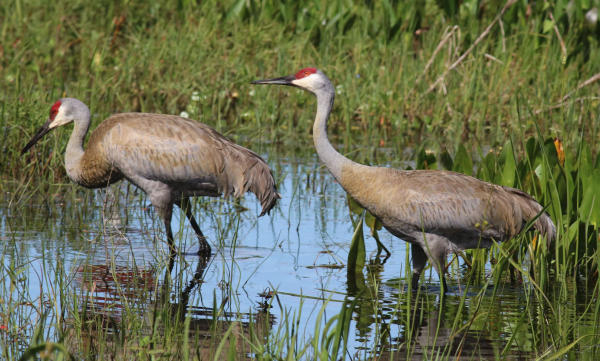
 Florida Sandhill Cranes |
Nestled in the southwest corner of Florida at the north end of Myakka River State Park, the 1,143-acre Triangle Ranch teems with birdlife. Christmas Bird Counts conducted since the 1940’s have recorded more than 280 species on the property and surrounding areas, including such exciting birds as Florida Sandhill Cranes, Wood Storks and Crested Caracaras.
Thanks to the vision of the local philanthropist-turned rancher who purchased the property, leadership from the Conservation Foundation of the Gulf Coast that secured funding to purchase a conservation easement on the land, and a grant from the Healthy Watersheds Consortium, this property is now protected forever from development. Its natural features and ranch lands will provide habitat for birds and help keep water supplies clean for people and nature.
Triangle Ranch is part of the Myakka Island Conservation Corridor Project, one of dozens of watershed protection programs underway across the United States that is supported by the Healthy Watersheds Consortium Grant Program. This partnership includes the U.S. Environmental Protection Agency, the U.S. Department of Agriculture’s Natural Resources Conservation Service, and the not-for-profit U.S. Endowment for Forestry and Communities.
During the first three years of the partnership, $8.4 million has been awarded to 47 projects in more than 30 states. With just three projects completed, more than 25,000 acres of watersheds – habitat for birds – has been protected. The partnership is planned to continue for at least three more years.
The watershed protection program is focused on helping local organizations protect the freshwater ecosystems and watersheds upon which their communities depend. Healthy, well-managed watersheds keep drinking water supplies clean, abundant and affordable. These same lands may contribute to local economies by supporting jobs associated with forestry, agriculture and nature-based tourism while birds and other wildlife thrive in the protected habitats.
Partnerships between government agencies and private organizations are an effective and efficient way to maximize financial resources to benefit people and birds. Sometimes land is protected primarily for birds and their habitats. In other cases, land is conserved for other reasons, and birds benefit secondarily.
People, birds and all of nature depend on the same landscapes. By focusing on mutual benefits we increase the chance that the natural systems necessary for survival are protected for future generations.
Article by Peter Stangel
For more information, see the Healthy Watersheds Consortium Grant Program at http://www.usendowment.org/healthywatersheds.html and the Conservation Foundation of the Gulf Coast: http://www.conservationfoundation.com/