
 |
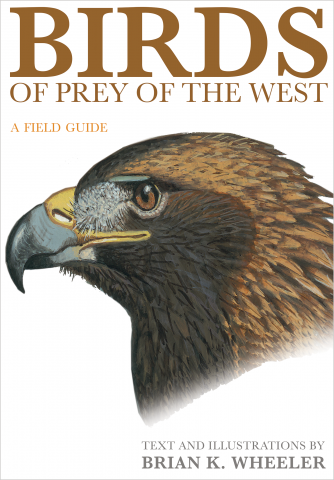
I have long been a fan and follower of Brian Wheeler, and this book can be counted as his best, especially when combined with its sister volume Birds of Prey of the East. Not only is this now the definitive field guide for birds of prey, but it provides a great wealth of information about raptors that readers can glean with gusto. At the heart of this new field guide are the beautiful yet functional illustrations by the author – Wow!
While the entire book is spectacular, my go-to birds for this book were the two eagles and two Red-tailed Hawk variants – the Krider’s and Harlan’s Red-tails. The Golden Eagle plates are most impressive, and the age divisions are especially helpful – the best ever and something needed by birders and biologists. Same for Bald Eagles; the illustrations and information about the different age plumages provide guidance that no other field guide has fully addressed for immature plumages.
Krider’s Red-tailed Hawks are a favorite of mine, and the coverage of the plumage variations perched, flying and tail by tail is excellent and unique. The Harlan’s plates are nothing short of amazing; just check out the remarkable plates that show variations of Harlan’s tails. In fact, the illustrations of the different variations of tails throughout the book are remarkable and highlight the level of detail Brian Wheeler has provided throughout this impressive book.
(Expect the American Ornithologists Union to return Harlan’s to full species status again soon.)
The range maps are very detailed and up to date, but they only show half the continent due to the west-east split of the books. The detail of the descriptions of the birds and their plumages and distribution throughout this book add appreciably to the dynamic illustrations – making this and its sister East volume hard to ever match or improve upon. These books are historic.
Three reflections about the book are mostly personal: a) The type is the smallest I can recall for any field guide, which makes using it especially tough in the field. A bigger book size would permit using larger type for each page as well as enlarging the impressive illustrations, both of which would make the book more reader friendly. b) I have never appreciated the division of east-west volumes. I often live in the center of the continent, as I do now, so how does this help me? Plus I often travel east, west, south and north – which book do I take? (Would a north–south split be any better?) c) I have always wondered why vultures were ever lumped with legitimate birds of prey, especially now that they are far-removed by classification.
Any minor personal concerns for this impressive book are far outweighed by its huge addition to our knowledge, understanding and appreciation of raptors. Brian’s considerable enthusiasm, expertise, experience and talents are all on full-throttle in this book, page after page – congratulations and thanks for your years of dedicated efforts! Please also permit me to acknowledge and thank Princeton University Press for their dedication and expertise in providing years of high-quality publications about birds worldwide.
I encourage all birders to buy a copy, or better yet, both West and East volumes, and digest them from beginning to end.
Review by Paul Konrad
For more information, please contact https://press.princeton.edu/titles/11292.html