
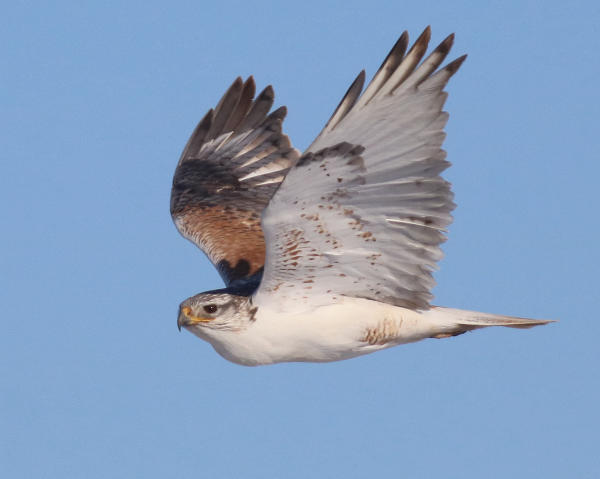
 Ferruginous Hawk photo by Paul Konrad 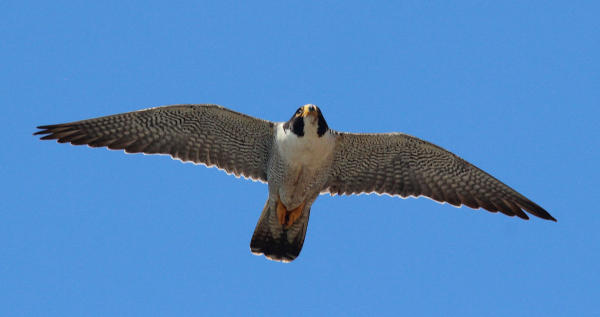 Peregrine Falcon photo by Paul Konrad |
This landscape is as wild as the Northern Goshawks that nest there. Perched along the northern border of Grand Canyon National Park at an elevation of 6,000 feet, Arizona’s Kaibab Plateau typifies the rugged beauty of the American Southwest. The Kaibab contains the largest tract of old-growth ponderosa pine in the Southwest and one of the densest nesting populations of Northern Goshawks in the region.
Desert bighorn sheep and pronghorns roam the surrounding rangelands, and goshawks are one of 20 species of raptors found in the area. Recently, endangered California Condors have been re-established there, added another point of excitement in the sky. Until recently, this haven seemed destined to fall victim to water development, fire suppression, overgrazing by livestock and other ills that have degraded nearby habitats.
Fortunately, this won’t happen. In 2005, The Conservation Fund and the Grand Canyon Trust purchased the ranchland that controls an 850,000 acre grazing allotment that includes large portions of the Kaibab Plateau. This acquisition was possible in part by a grant through Walmart’s Acres for America Program, which permanently protects the forests that Northern Goshawks inhabit. Through science-based management programs implemented by the Trust, the habitat will only get better, thereby improving the fortunes of goshawks. Birds of prey drive a passion for protection across the continent, and beyond.
Research Rescues Raptors
Peering down into Idaho’s Snake River Canyon, we trained our binoculars on a Prairie Falcon below us. Against the dark hues of the river and its bordering vegetation, the falcon’s plumage came to life with colors and patterns I’d never experienced. Previously, I only had a couple Prairie Falcon sightings, and those Prairies were departing like jets from an airport and usually backlighted, thereby offering little more than a racy silhouette.
This southern Idaho location is part of the Snake River Birds of Prey National Conservation Area, which was established in 1993 to protect one of the densest nesting concentrations of raptors in North America. It is vast – some 600,000 acres – but birds of prey are everywhere. Sixteen species nest there and eight more migrate through or winter on the mix of federal, state and private lands that comprise this vast raptor refuge. An estimated 800 pairs or birds of prey nest in the area, including such exciting western icons as Golden Eagles, Prairie Falcons, Ferruginous Hawks, Swainson’s Hawks and more.
Early federal programs encouraging conversion of natural lands to agriculture threatened the raptors. Falconers and raptor biologists with the University of Idaho worked with state and federal agencies, especially the Bureau of Land Management, over the years to get 482,000 acres of federal land designated for protection. Morley Nelson, a passionate supporter of raptors and this important raptor region, led the charge and his name lives in the Morely Nelson Snake River Birds of Prey National Conservation Area.
Raptor Migration Hotspot for Conservation
Hawk Mountain Sanctuary is renowned worldwide for daily fall flights of birds of prey that thousands of people enjoy each year. They are also leaders in world-wide efforts to conserve birds of prey, particularly at sites where raptors concentrate during migrations. Hawk Mountain employs more than a dozen professional biologists and educators who are joined by hundreds of volunteers annually. It’s especially impressive that since 1976, no less than 360 students from six continents have studied and trained at Hawk Mountain. Each year, thousands of visitors from around the world visit the sanctuary, pumping money into the local economy and giving surrounding communities a mighty incentive to take pride in this national treasure.
Today, the Hawk Mountain Sanctuary is one of many such hawk watch conservation sites where birds of prey are counted and birders and other interested people gather to share an exciting annual event of nature’s fall season. For more information about raptor migration hotspots, see our Birding Lifestyles article in this issue.
Downtown Peregrines
McPherson Square, a tiny park in downtown Washington, DC, is a great place to enjoy lunch outside and perhaps spot a Peregrine Falcon perched on a nearby office building. If you’re really lucky, you’ll see one violating all traffic laws in hot pursuit of a pigeon.
It’s hard to believe, but in the concrete canyons of many of our cities, Peregrines nest and remind us just how resilient nature can be if we give her half a chance. Once teetering on the edge of extinction, the Peregrine Falcon flew off the list of federally endangered species in 1999. Thanks to leadership from Cornell University, The Peregrine Fund, and other important groups, Peregrine populations continue to increase. Along the way, thousands of volunteers monitored and safeguarded the birds as they returned to many of their former wildland haunts, and in some North American cities. Sightings of these remarkable raptors, considered the fastest birds in the world have increased appreciably across the continent to the delight of birders – and everyone, really.
Don’t Stop Now
Raptors represent some of our most impressive conservation success stories, but they will always need our stewardship. You can help. Becoming a member of organizations such as the Hawk Mountain Sanctuary Association and The Peregrine Fund and support their important efforts and put you in touch with the latest in raptor conservation news. Be sure to purchase a duck stamp each year to help conserve land used by birds of prey and many other species. Educate your friends and children and anyone you come in contact with in the field about birds of prey and their important roles in our environments. Share your interest in raptors through your words and photos and actions.
Article by Peter Stangel
Learn more about the Acres for America program at http://www.nfwf.org/design-test/Pages/content-page-copy.aspx
For information about the Snake River Birds of Prey National Conservation Area, visit https://www.blm.gov/programs/national-conservation-lands/idaho/morley-nelson-snake-river-birds-of-prey and refer to The Peregrine Fund at www.peregrinefund.org,
Introduce yourself to The Conservation Fund at www.conservationfund.org and the Grand Canyon Trust at https://www.grandcanyontrust.org/