Wednesday, December 10, 2025

An Australian’s Description of Birders

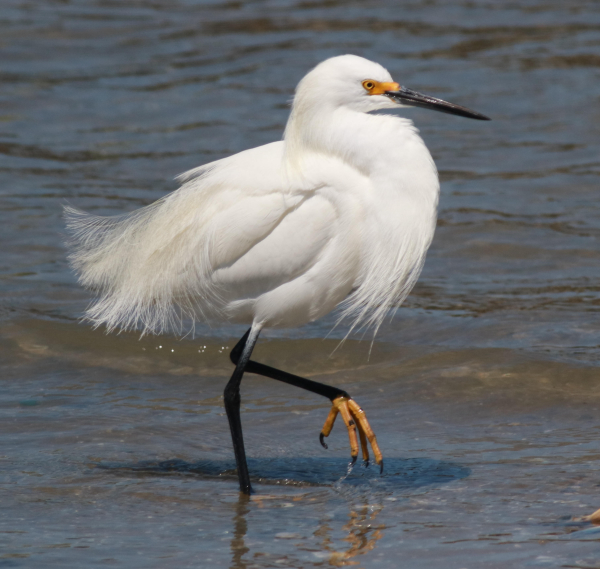
A displaying Snowy Egret would catch anyone’s attention, but birders would study its every move (photo by Paul Konrad).

They are bearers of universal mysteries, holders of ancient wisdom, seekers of the wildest animals – they are birders. Focused, intense, devoted; they speak in reverent tones and hushed whispers and can walk with surprising silence across a bed of leaves. They wield binoculars with nonchalance and speak in a code-like vocabulary that birders use among themselves – species, plumage, nape, talons, pishing, magnification, wing bars, big days, big sits, and big years. They have lists in notebooks or online lists of birds they see and hear. They use field guides and computer apps on their cellphone to help identify the birds they see, and even birds they only hear; they have zoom lenses and digital photo files – they are birders.

Birding isn’t a mere hobby, it’s a lifestyle. Birders are the world’s most unwavering optimists. They believe, against all odds, that somewhere out there is a bird they have never seen before, until now. And they will keep looking, one step at a time. They dress muted tones, often khaki, tan, or brown with the most comfortable waterproof shoes. Their social calendars are governed by migration patterns and their conversations are peppered with whispered phrases like “Did you hear that trill?”

They are dealers in wonder and awe, masters of birds and ecosystems, and one should never underestimate the power, joy, and influence of birders. Indeed, they may just be humanity’s greatest source of inspiration and hope.

A birder can be anyone: The neighbor who is committed to their backyard feeders, the co-worker who goes mysteriously quiet any time they see a movement outside the window. They are everywhere, quietly cataloging the avian world, one hawk or finch at a time. Birding is an invitation to connect with the natural world in profound and unexpected ways. And while it might start as a solitary pursuit, birding is actually an enormous community of caring people, a movement rooted in the simple yet transformative act of witnessing and safeguarding the world’s natural wonders.

Birders occupy the curious cultural space of being wholly earnest, yet sometimes incomprehensible to outsiders. Birders are everywhere. Birding, as it turns out, is gloriously addictive. At its heart, birding is an act of quiet rebellion. It is the gentle act of noticing, the willingness to see the world around us; and this simple act is, in itself, revolutionary. In a world that often teaches us to look past the natural areas, birding demands slow attention - to pause, listen, see, and care.

Birding is never just about birds, it’s about everything that sustains them: The soil, the grass, the trees, the water, the wind. Soon birding evolves into understanding the delicate interplay of the many elements in an ecosystem; a single bird becomes a prism through which we view the entire ecological web, a window into the world, a thread connecting us to nature.

It’s no longer possible to see a forest as a commodity or a wetland as an inconvenience when these spaces are home to creatures whose existence depends upon these habitats. Birders understand, perhaps better than most, the fragility of the natural world. They see hope: In the return of the California Condor from the brink of extinction, in the rise of the Whooping Crane after tireless conservation and protection efforts, in the fierce resilience of nature when given the chance to heal.

So, here’s to birders, the optimistic custodians of wonder and joy and passion. Because sometimes it is as simple as opening your eyes, stepping outside and looking upon the world around you. And once you see – once you really see – you cannot unsee, and there is nothing you wouldn’t do to protect this fragile, extraordinary world filled with birds.

The editors wanted to share this interesting description of birders by Australian author, a description that was edited and embellished just a bit from an article published in The Guardian, gleaned from the book, Nature’s Last Dance, written by Natalie Kyriacou.