
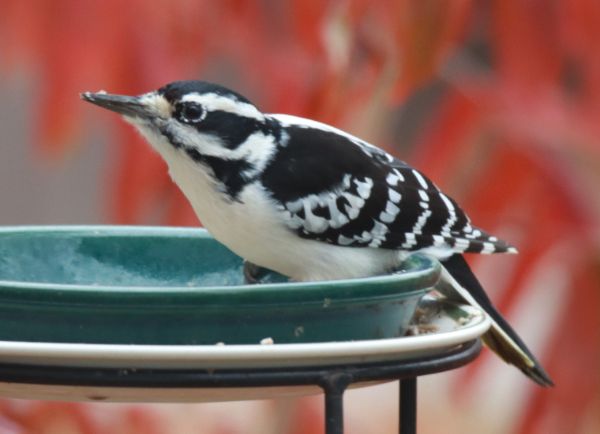
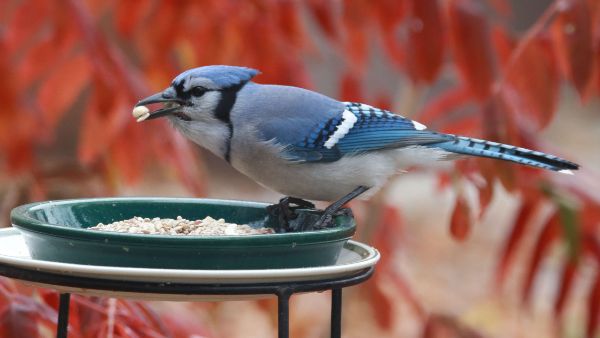
After the last hummingbird left, my feeding station was all but deserted for a month aside from occasional Hairy Woodpecker visits. But last week a dramatic change happened without advanced warning. It began when a Blue Jay finally found my small initial offering of shelled peanut halves mixed with shelled sunflower seeds. As simple as that sounds, it was the beginning of a flood of activity by a surprising variety of birds – so exciting that I wanted to share the story of that initial week of fall feeder activities with you. And almost immediately, my observations transitioned to photo documentation.
After a quick review of some initial photos, it was evident that there was a need for a temporary transition to enhance the background of the feeder bird photos. I have been trying to take photos of birds among autumn colors, as I do every fall without much luck over the years. With that in mind and with the adjacent sumacs colored bright red throughout the week, within the first 20 minutes I moved my platform feeder to a position that provided a background of colorful sumac leaves, and that proved to be a nice change that emphasized the fall season while adding a rich background color to set the birds off as I photographed them when they perched on the feeder. I actually improved my feeder too, by adding a new glazed pottery dish to hold the mix of shelled sunseeds and peanut halves.
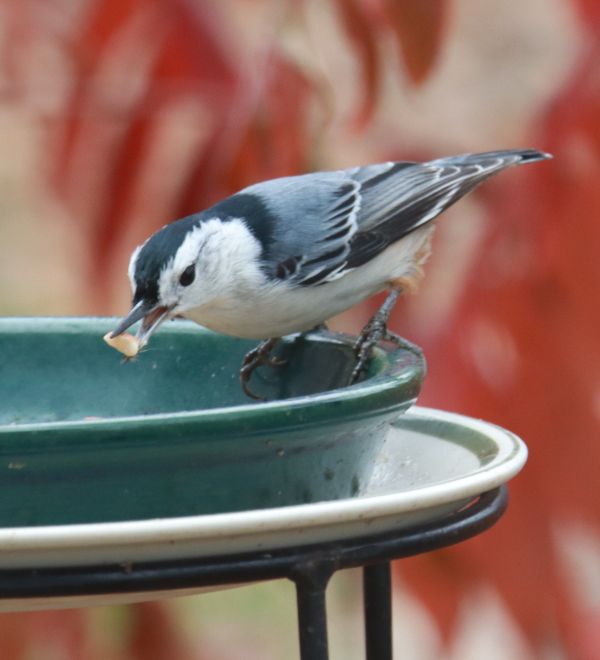
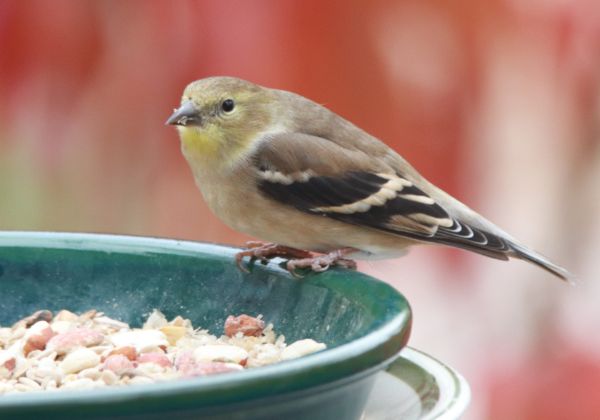
While it was the colorful Blue Jays that inspired my initial photographs, I was compelled to photograph as many species as possible at the new feeder-based photo setup. As soon as a couple jays began visiting my feeders, a surprising variety of birds followed their lead, including 2 American Goldfinches in basic plumage, 2 Pine Siskins, a female Purple Finch, White-breasted Nuthatches, female and male Hairy Woodpeckers, and eventually, a female Downy Woodpecker. That's a pretty busy feeding station, and during short periods when I photographed, oh what fun I had focusing on the assortment of birds!
Give It A Try! Perhaps you already photograph birds in the field and in your yard with a digital camera with a zoom capability. In that case you are ahead of the game and are probably already taking some nice photos of birds at your feeders, birdbath, and adjacent perches. If you aren't already photographing some of the feeder visitors that catch your eye, this is a great time to give it a try as new birds arrive in your yard. You can try using a camera you have on hand, and if you have a digital camera that can zoom in on your feeders you are in business. I'm afraid that using a smart phone camera will only disappoint you, but even if you have the slightest interest in photographing birds, that spark can go a long way toward expanding your interest in birds and the joy you get from birding.
One thing you might enjoy trying is to invite a friend or family member who has a digital camera to come to your yard or home to photograph – and to show you how they do it. This may include some aspects of using a camera and zoom lens, how to position yourself with respect to lighting, and how to avoid disturbing birds as you try to photograph them. It really doesn't take much time either; you can devote 15 minutes and get some initial results that will probably surprise you – by all means, give it a try. Also, consider buying a used camera with a zoom lens – often at a much more affordable price point – and whatever you pay for the used equipment, you can sell it for a like amount when you are ready to upgrade after you experience the joys of bird photography.
There are a few tips to help you become more successful quicker: I usually emphasize the importance of positioning yourself with the sun behind you to illuminate the birds before you. At the same time, watch for shadows on the birds, which you want to avoid when possible – sometimes, waiting for the bird to turn its head or body is all it takes – but shadows you see will be darker and more obvious in your photos, so become more aware of them when photographing. Also be aware of the background in your photo frame. Sometimes, after taking a couple initial photos it is worth taking a step or 2 right or left to improve the look of background vegetation or other elements. You can also zoom in or out to emphasize the bird in the photo frame and compose as you are photographing.
Try not to disturb the birds by keeping your distance and minimizing any movements. Try to stabilize the lens on something in the room or outdoors, and I always hold my breath when actually taking a photo to minimize "body shake." Because every photo location is different, including backyard photo sites, it can be most appropriate to do a little trial and error at your location during different times of the day to see what works best, and when lighting conditions are best. I also provide more information about the past week's photo sessions in the Bird Photography feature at the end of this issue. And to top it off, I will also refer you to my go-to list of 50 bird photography tips for beginners and advancing bird photographers alike. It's not necessary to read the entire list – zero in on specific topics that interest you or that may help to improve your own photo process – all at My List of 50 Bird Photography Tips | Birding Wire
The main takeaway here and now is to try photographing at your feeders, birdbath, or another avian attraction and see how your interest grows and your photos improve. Before long, bird photography may become a welcome addition to your birding repertoire – Good Luck!
Article and Photos by Paul Konrad
Share your backyard birding experiences and photos with The Birding Wire at editorstbw2@gmail.com