
A feeding station is the central point of most backyard birding activities we birders enjoy. Food makes the station attractive to birds, but is it attractive to you, your family, and your neighbors? Fall is another point in the annual cycle to do a review of our feeding system and plan; a time to consider how we might expand or simplify elements, make visual improvements, add or match feeder colors, reconsider the positioning of feeders, and appreciate the sight lines we view bird activities from. Most feeding stations are rather unique, based on personal preferences and choices, including what birds we want to attract and benefit.
Today, let's start from the beginning, and consider the variety of feeders and associated backyard gear that birders use to create and maintain a bird feeding station. Some birders may provide a large feeding station to accommodate as many different species as possible, while others may prefer to concentrate on a providing a more focused feeding site, but it's important to know the options at hand, and choose the elements that provide the greatest reward for you personally – and for birds that you can benefit season to season. Here we provide a list of feeders, starting with tube and platform feeders and working our way through a list of options.
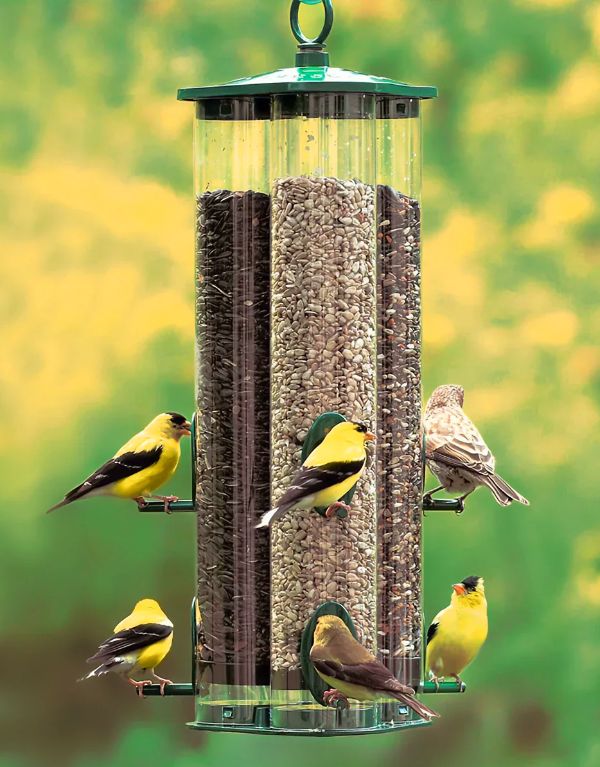
Tube Feeders – Probably the most popular type of seed feeders, tube feeders come in a variety of sizes, colors, and designs. As their name implies, they are tubes with open feeding ports positioned beside a number of perches along the sides of the tube. Some tube feeders also have a tray attached to the bottom of the feeder to catch seeds that fall, while providing a perching rim. Some tube feeders are made for larger seeds, like black oil sunflower seeds, but others are built to provide smaller seeds for smaller birds, such as nyjer thistle seeds for small finches and like-sized birds.
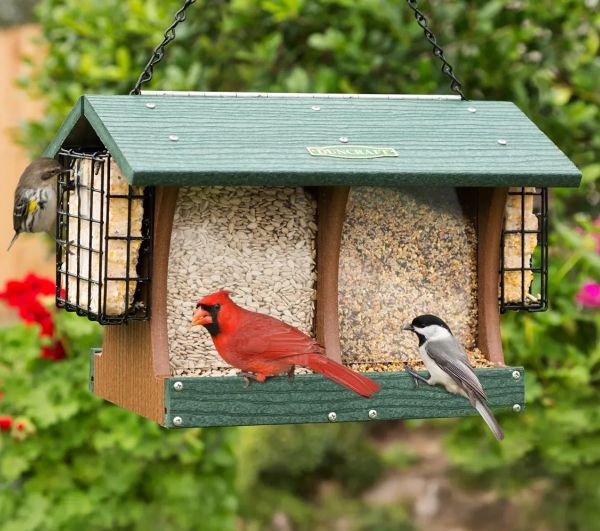
Hopper Feeders are a close second to tube feeders in popularity, and they come in a variety of shapes, sizes, and colors. They are mostly used to offer larger seeds like black oil sunflower seeds, Seeds are typically added from the top of a hopper feeder and they filter down to openings at feeding perches or a platform at the bottom of the hopper.
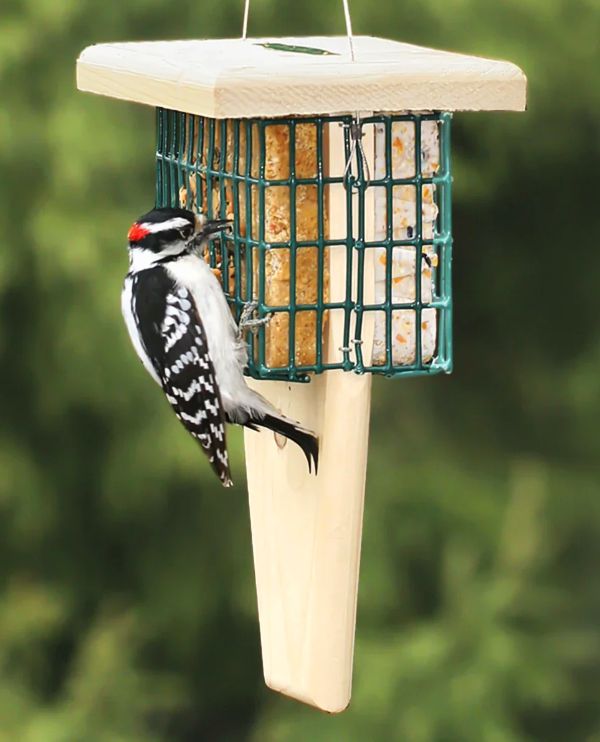
Suet Feeders are a standard for every feeding station year-round, and the simplest suet feeders consist of a wire cage that holds a standard suet cake, sometimes 2. Better yet are suet feeders that include a tail prop that extends from the bottom of the feeder, which is helpful for woodpeckers that get better balance when propping their tail against the extended wood or recycled plastic extension.
Platform Feeders are the most basic type of feeder, often home-made, and consisting of a simple open square of wood with a bordering rim to keep seeds from falling out. But platform feeders can also take the form of a circular ceramic or clay bowl with a surrounding rim. Platform feeders can be mounted on a post, or suspended by chain or rope hangers. They are considered a non-selective feeder type because almost any animal can access food on the platform. Because they are easily accessed by almost any birds, large and small, as well as squirrels, chipmunks, mice, rats, deer, and others.
Combination Feeders have become especially popular in recent years, because they essentially are a 2-in-1 or even a 3-in-1 feeder. Most models combine the utility of a hopper feeder, or even a 2-sided hopper feeder to provide 2 types of seeds; plus a suet cage affixed to one or both ends. A combo feeder may even have a tray positioned below it that effectively acts as a platform feeder addition that will also keep seeds from falling to the ground.
Squirrel-proof Feeders: Squirrels can dominate bird feeding stations, and if that's part of the fun for you, by all means enjoy the squirrels and other small animals that visit. But squirrels tend to dominate feeders and keep birds at bay while charging up you seed and suet bills. many birders prefer to squirrel-proof their feeding stations. This can be done by using baffles that prevent squirrels from climbing to feeders, or by buying individual Squirrel-proof Feeders. Some squirrel-proof feeders essentially have a cage built around the feeder, although this obstructs your view of the birds you wish to see when they visit the feeder. Better yet are squirrel-proof feeders that use a bit more technology to keep squirrels from accessing seeds, nuts, or suet – like the Squirrel Buster bird feeders.
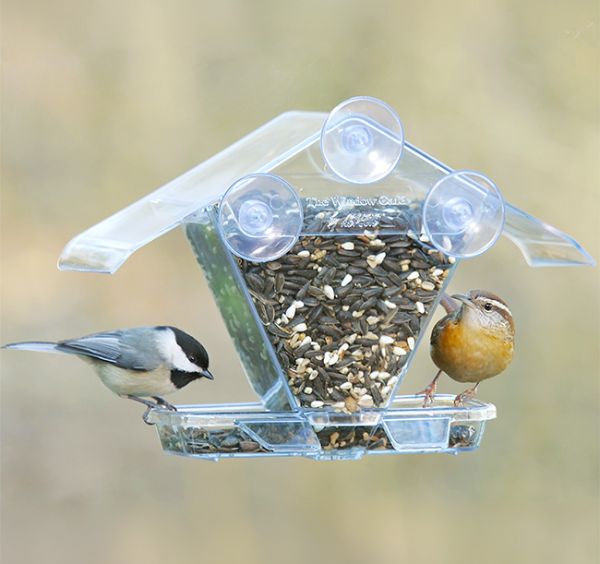
Window Feeders: You can bring birds even closer by adding a smaller window feeder that you can position on a favorite window with attached strong suction cups. Usually a simple small platform feeder that you can fill with seeds, there seems to be no end to the kinds of window feeders available these days, with some specialized window feeders for suet, hummingbird nectar, and even grape jelly for orioles.
In the Sunbelt, even during winter a Hummingbird Feeder may be a primary element of a feeding station to provide nectar for resident hummingbirds. In southern Texas and locations in Florida, you may also keep an Oriole Feeder, active with grape jelly and orange halves on the menu. This while birders in other area need to wait until late April or May to enjoy the return of hummingbirds and orioles to their feeding stations.
Water: While fresh water is not a food, per se, it is a most important component of any feeding station, and it can be offered in a traditional birdbath or in a hanging ceramic dish. Water can attract more birds, and a greater variety of birds, than any foods, so to really act as a place of refuge, every feeding station should provide fresh water. When selecting a waterer, keep in mind that you want to provide a shallow level of water, so small birds can drink and bathe – less than 2 inches deep. As colder weather approaches in many regions, there is also the option of heating your water source to keep it from icing up. And, of course, there is the potential to provide water in a decorative water feature that may include a natural spring-like trickling movement that runs into a small pool, that may or may not include a small fountain – water features constitute a next step in yardscaping.
To organize a number of different feeders, most birders utilize Feeder Poles and Hangers. A single pole with a few hangers spaced on opposite sides can be a big plus when you create an ultimate feeding station. You can also install a shepard's crook or 2 for additional hanging feeders as needed. And there are some impressive all-in-one poles that even include a built in platform feeder and an attached birdbath to provide water.
While this list of potential feeder choices is all-inclusive, it is always up to you to choose the right feeders to offer foods for the groups of birds you wish to attract and feed. You can specialize, or try to attract as many species as possible. Design elements may also enter into your choices as you choose a color theme, or all-wood feeders for example. Feeding stations evolve with the seasons and feeders come and go over the years with the feeder choices you make and the birds you wish to attract and benefit. Enjoy your options, and enjoy the birds you attract daily.
Share your backyard birding experiences and photos with The Birding Wire at editorstbw2@gmail.com