
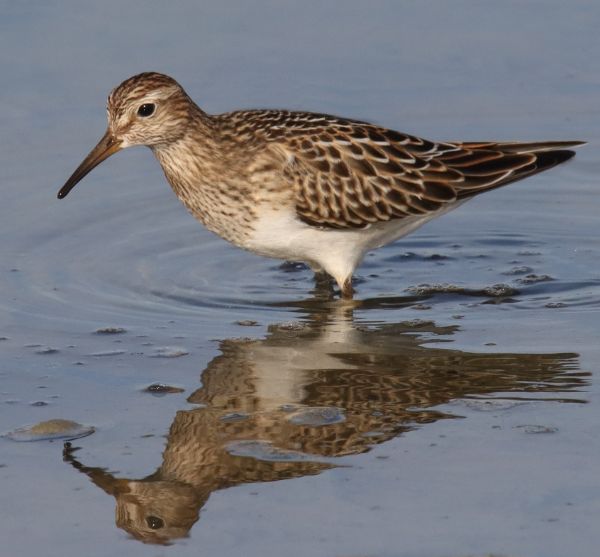
Shorebirds are delightful to observe, but identifying them can be a challenge. To help you identify sandpipers, plovers, and similar shorebirds, there is now a way to learn the relative sizes of shorebirds with a new downloadable ID guide: The Shorebird Yardstick. Because the 47 species of shorebirds regularly found in the United States and Canada often show similar shapes and color patterns, estimating their size is one of the most important clues to help you identify each species. Rather than sizing them by inches, biologists have found it is easiest to try to measure shorebirds relative to each other – by comparing a common species to the bird in your binocular view.
This new shorebird guide – The Shorebird Yardstick shows you how 47 species of shorebirds regularly found in the United States and Canada measure up to 5 common and easy-to-recognize reference species:
- Least Sandpiper
- Semipalmated Plover
- Killdeer
- Greater Yellowlegs
- American Oystercatcher
Knowing where each species falls in comparison to these 5 "yardstick species" can really help you with tricky shorebird IDs. You can download your Free copy of The Shorebird Yardstick, courtesy of the Cornell Lab of Ornithology at The Shorebird Yardstick - Downloadable Shorebird Guide
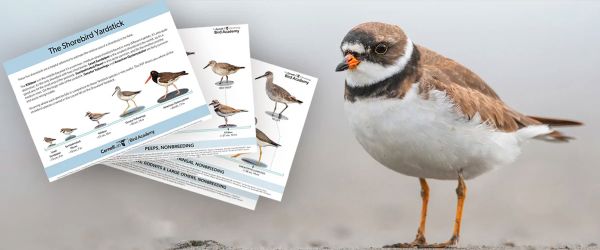
At the same time, you can take a look at the interesting and helpful Bird ID Quiz, to test your shorebird identification skills. Plus, in case you wish to take shorebird instruction to another level, there is information about how you can learn even more about shorebirds through the Bird Academy's self-paced, online instruction course, which is on sale now at Be a Better Birder: Shorebird Identification. However you prefer to learn more about shorebirds this fall, enjoy searching for these interesting birds and the birds that share their shallow water, grassland, and tundra habitats.