
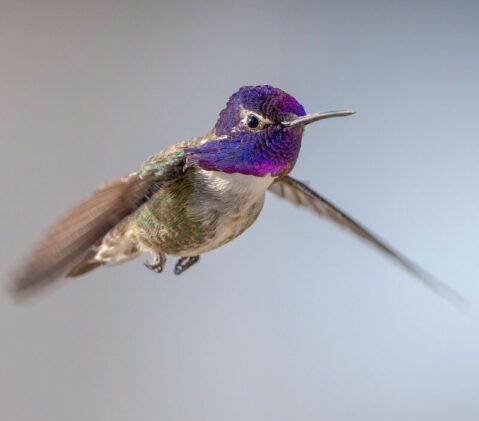
You may have been enjoying the company of hummingbirds in your yard from spring into summer, but like many other birds, some hummingbirds are now on the move. And there are more of them with a new cohort of fledglings joining the populations that migrated north this spring. But the movements and migrations of late summer and early fall don't have the same intensity as spring, and hummingbirds aren't in a hurry south considering there is a seasonal peak of flowers and tiny insects in mid-continent climes. We can also easily provide supplemental food in a nectar feeder that may help to keep individual hummingbirds returning to your yard a little longer – possibly weeks longer.
Providing sugar-water nectar in a feeder for hummingbirds is one of the simplest things we birders can do to attract these impressive little birds to our yard. And you may even be lucky enough to have more than one species visiting your yard considering there are more than a dozen species of hummingbirds that range north of Mexico. For birders living in the eastern half of the United States and southern Canada, Ruby-throated Hummingbirds will probably be our only feeder visitors. The other species are found in the West, with the potential of seeing the most variety in the mountains of southeast Arizona bordering Mexico.
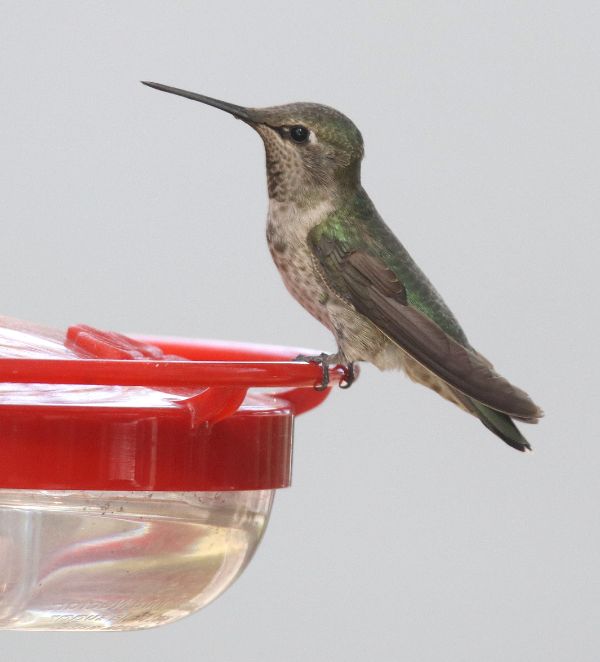
Attracting any species of hummingbird is pretty standard – it only takes a hummingbird feeder filled with fresh sugar-water nectar that is mixed in a solution that mimics the natural nectar produced by flowers. Simply mix the water and sugar in a 4-to-1 ratio – 4 parts water to 1 part sugar – using only white pure cane sugar. Pour the sweet solution into a clean nectar feeder for hummingbirds, and all you need to do thereafter is wait for the arrival of the next hummers.
Any flowering plants that produce tube-shaped flowers that you have already planted will be attractive to hummingbirds too, especially red tube-shaped flowers. Hummingbirds are attracted to red flowers because they produce nectar with the highest sugar content. With that in mind, now you may want to add a few more plants with red tubular flowers that are already showing abundant flowers from a local greenhouse. It's just that simple to attract hummingbirds during this time of year, and the surrounding landscaping and flower gardens provide places for these tiny dynamos to search for tiny insects to add needed protein to the diet.
You can make this late summer hummingbird migration period one to remember for you and your family. After the nesting season is complete and as they disperse and begin early migration, hummingbirds certainly enliven our feeders and yards, providing exciting observations throughout August and September in most states and southern areas of Canada's provinces. Hummingbird visits will also continue through the winter months in some portions of southern states from southern California and Arizona to south New Mexico, Texas, and Louisiana. That certainly puts a new twist on the idea of "winter bird feeding."
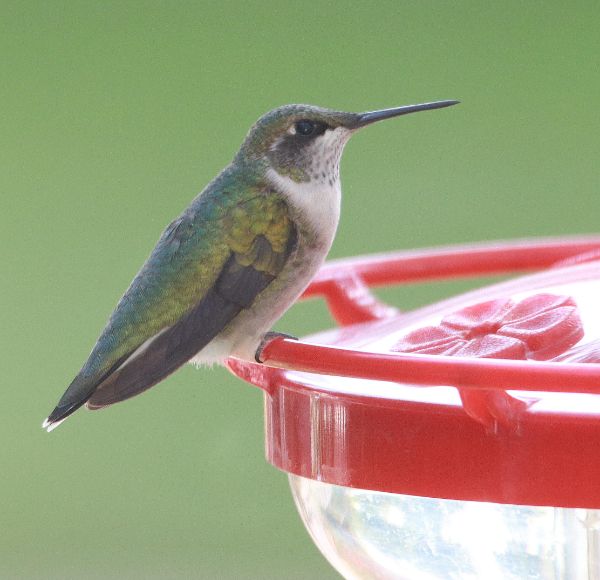
If more hummingbirds arrive that you expect, you may want to consider adding another nectar feeder, perhaps providing one in a sunny area and one in the shade, or positioning one in the frontyard and one in the backyard at favorite viewing locations. A second feeder can also be a good option when one or more hummingbirds become overly territorial at a feeder. Then, simply separate the feeders visually to improve feeding opportunities for other hummingbirds during their migration stopover. You may also want to consider adding a window feeder, with the idea of seeing hummingbirds even closer. It's a great way to interest children or entertain seniors, and you will impress visitors too while you enjoy closer looks at some hummers.
As always, be sure to keep your feeders clean and provide fresh sugar-water nectar every few days, especially when it is hot outdoors. Don't mix old and new nectar when refilling your feeder – replace fresh nectar after cleaning the feeder during each refill.
Although you might think of hummingbird photography as something that should be left to the pros, but by all means give it a try. It is fun to try to photograph hummingbirds at your feeders and while they visit your flowers for nectar. To begin with, try to photograph hummers as they perch at a feeder, or at an adjacent perch; then try to photograph these quick mini-birds as they hover. You will probably be surprised by the quality of photos you are able to take, especially if you are using a digital camera rather than a cellphone camera.
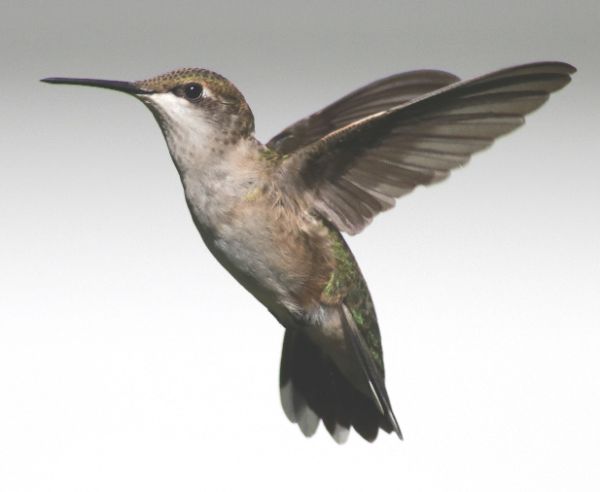
As with any bird photography, position yourself between the sun and the bird, and emphasize photographing during morning and late afternoon into early evening, but you will become aware of the best times of the day to photograph in your yard. It's easiest if you use a nectar feeder as a central element of a "hummingbird photo studio." Obviously, these birds are quick, so you need to be quick too, and even try to anticipate movements as you try taking photos with the feeder included, and when hummingbirds are hovering adjacent to it.
Another simple thing you can do during this period of increased hummingbird numbers is to share your hummingbird interests at work or school. Adding a hummingbird feeder at an office or business setting, or even at school is easy and unobtrusive – as long as you keep it clean and you keep it filled with fresh sugar-water nectar. Undoubtedly, other people will become interested in viewing these birds and learning more about hummingbirds.
We also encourage everyone to read more about the variety of hummingbirds and their natural history and ranges from Alaska to Florida at All About Birds at 9 Hummingbird Species to Look Out for This Summer | All About Birds All About Birds.
Did you know that there are 363 different species of hummingbirds, all found in the Americas from Canada to Argentina – and they are all spectacular! You can learn about each species in the hummingbird family, Trochilidae, at Birds of the World; start at Trochilidae - Hummingbirds - Birds of the World. Most of all, enjoy the birds around you, including our variety of marvelous hummingbirds!
Share your backyard birding experiences and photos with The Birding Wire at editorstbw2@gmail.com