
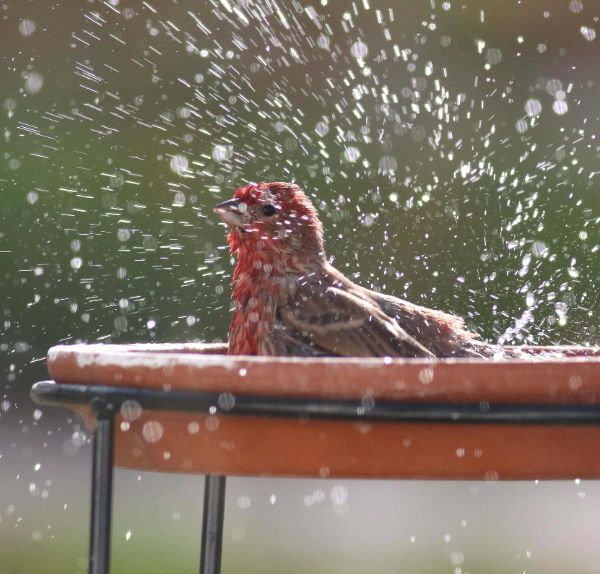
Ranging from hummingbirds and warblers to woodpeckers and jays the first autumn migrants are arriving, with many, many more are on the way to lands south of our border. It's time to refresh our yards and feeding station to attract the greatest variety of birds as they make their way across the land from nesting ranges southbound. It's also fun to try to attract new birds to stop and stay a while when they find out there is a predictable source of favored foods and fresh water on the edge of backyard habitats.
Fresh Water – The most important thing you can do to attract and benefit the greatest variety of birds, including migrating birds, is to simply provide fresh water. That's easy! And if you add the sound of moving water by adding a mini-fountain or dripper, more birds are sure to find your birdbath.
Sugar-water Nectar – A hummingbird feeder filled with sugar-water nectar can be the most active spot in your yard during this period of late summer. Making fresh nectar is easy and cheap – simply mix 1 part white cane sugar with 4 parts of water to provide the preferred mixture that most closely resembles flower-generated nectar.
Flower Nectar – Speaking of flower nectar, another way to attract hummingbirds is to visit your local nursery to pick out some plants that are producing red tubular flowers in a hanging pot, or a tray of red flowering plants that you can transplant near your feeding station – or in pots that become mobile hummingbird magnets in your yard. Red trumpet flower vines may be the best bet, along with red salvia, butterfly bush, bottle brush, petunias, and other red tubular flowers. Buy plants that are already blooming and you should get immediate results when hummingbirds arrive in your area.
No-melt Suet – As always, it's paramount to provide a suet option throughout the year. Your best bet, especially during warmer weather (but year-round too), is to provide a no-melt suet blend. No-melt suet is less messy, and often provides more food value than traditional suet. At the same time, we prefer to use a hot pepper no-melt suet, which is attractive to birds but repels mammals including squirrels. If only woodpeckers visited for suet it would be worth it, but you will have nuthatches and a variety of other birds favoring suet too.
Bark Butter – One of the most versatile bird foods is Bark Butter, a marvelous suet and peanut butter secret blend created by the originator of Wild Birds Unlimited, Jim Carpenter. Bark Butter comes as a spreadable peanut butter-like paste you can spread on tree bark, or as no-mess pellets (Bark Butter Bits) – also available in hot pepper form to repel squirrels. This high-energy food is known to have attracted more than 150 species to date, so wherever you live, you can't go wrong by providing this super-food during peak migration through your area.
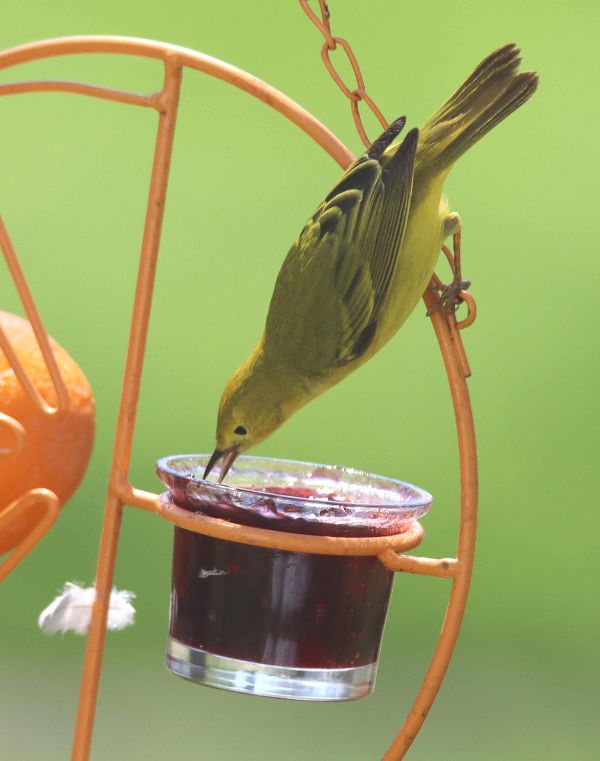
Grape Jelly & Orange Halves – Although orioles have already vacated portions of their nesting range, jelly and sliced oranges are true oriole magnets that may also attract other migrants such as warblers, tanagers, grosbeaks, and some finches. And while we are on the subject, try testing other Fruits too. For example, try offering a slice of banana, a preferred food at many tropical feeders favored by tanagers, orioles, warblers, and other "wintering" species. A secondary bird food may be created by providing these fruits too, in the form of small insects that warblers, hummingbirds, and flycatchers will take advantage of.
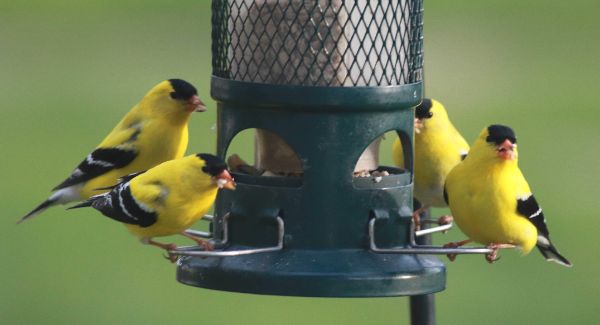
Seeds – Gear up for finches, juncos, native sparrows, and a variety of other birds feeding at your seed feeders too – nyjer thistle seeds for goldfinches and siskins, and the mainstay of shelled sunflower seeds that is everyone's favorite ranging from goldfinches to winter finches, nuthatches, woodpeckers, doves, jays, and many more. We add some shelled peanut halves or pieces too, which tend to be something of a treat for some of the larger species.
Landscaping – In some cases your landscaping may be providing an initial attraction to your yard, with berry-producing bushes and trees, seed-producing plants, and nectar-producing flower gardens providing food and cover for birds to rest in and forage for bugs among the foliage.
In addition to birds you can count on arriving during late summer movements, it is also the best time to watch for a new yard bird – a species you haven't seen before, or a really rare bird that might be one of only a handful of birds sighted before in your state or province. Then too, keep in mind that you are in many ways setting the stage for late fall and even winter, so think ahead, plan ahead, but enjoy the coming weeks with the birds you see in your yard and neighborhood – as well as in countryside hotspots you visit.
Share your backyard birding experiences and photos with The Birding Wire at editorstbw2@gmail.com