
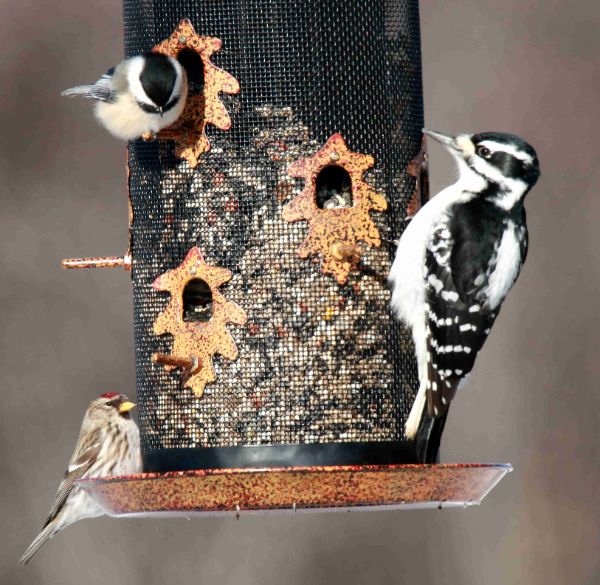
Backyard Birding is an especially enjoyable segment of Birding that keeps us in tune with the cultured nature in our yards, with plants and landscaping, and foods that birds react to and are attracted to – usually time and time again. Birding doesn't begin when we leave home, nor does it end when we return home. Backyard birding is an interesting opportunity to create our personal bird habitat to attract certain birds – through landscaping, gardening, and the presentation of fresh water and a selection of foods. At the same time, this bird habitat is created by you, and it is very personal and attractive, as only you can imagine.
Backyard habitats for people and birds tend to evolve year after year, decade by decade, as long as you live in your home. We enjoy the maturity of our yard more each season, and our yard changes season by season, summer by summer. When we plant our garden and buy flowering plants, we tend to choose different colors of flowers, although our flower choices tend to be similar these days. We like landscape plantings that define different sections of our yards, emphasizing different shades of green and varied elevations of vegetation, mostly deciduous with some conifers, and some berry-producing plants.
By the first days of summer, our yard may seem a bit overgrown, but in a maturing way that has attracted nesting birds and provides leaves and branches and tree trunks where birds forage – or hide as they rest. Rather than overgrown, we prefer to describe the growth as luxurious, and we culture and trim and plant to provide a beautiful mix of "controlled nature" of our own making; and it gets better every year!
To attract birds to our yard more directly, we provide birdbaths – one in the backyard and one in the side yard adjacent to the feeding station. Our birdbath in the backyard is a bit more ornamental and is positioned in near an area with ferns and chokecherries, and we inserted a solar mini-fountain in the center that adds a little water action and sound to make new birds aware of it and to see if that makes a difference in attracting new species. Actually, it seems to attract different birds on sunny days when the fountain is operating than it does on cloudy days when the fountain is silent. Providing fresh water is a daily activity for us as we prefer not to wait for the water level to fall or turn less than fresh – it's fresh every day. By the way, it is best to provide a shallow birdbath because songbirds can't bath in water more than 2 inches in depth for bathing – we keep ours about 1½ inches deep.
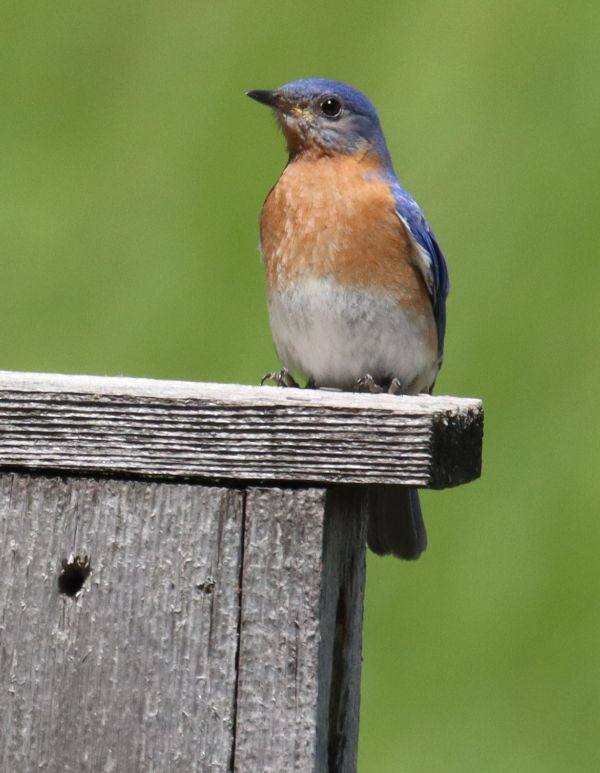
Nest boxes & birdhouses can also be an enjoyable part of your landscaping, adding an important option for cavity nesting birds like wrens, chickadees, and if you have an open habitat, maybe even bluebirds. It is best to learn about the importance of providing a birdhouse that is appropriate for the certain species you wish to attract, whether it is a small birdhouse for wrens, or a big nest box for screech owls, and we refer you to NestWatch to learn all about how to buy or build the right size of nest box with the best features to protect the incubating birds and nestlings that will eventually become short-term residents in your yard (All About Birdhouses - NestWatch).
Feeding Birds is the most common backyard birding activity, and it attracts a variety of birds to a central location – outside a favorite window or windows where you can observe birds as they come and go and interact, some common birds, some rare, but all exciting to monitor from a comfy chair, an office desk, or a reading nook. A feeding station can also be located adjacent to an outdoor patio, a deck or balcony – wherever you can enjoy the action the most, and watch most often.
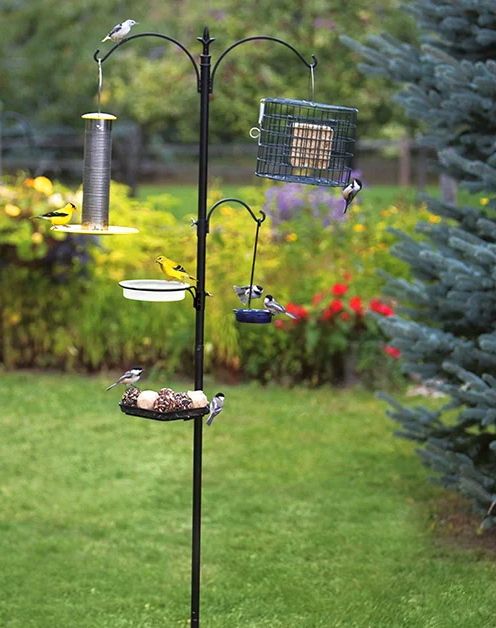
Feeding birds can be very selective in the case of providing a hummingbird feeder or a suet feeder, but most birders opt for an all-inclusive feeding station that provides a variety of foods. And like landscaping and flower gardens, feeding stations evolve with the seasons, and year to year with birders adding new feeders, replacing other feeders, or adding a new look with an anchored all-in-one feeder pole with movable hangers and a predator/squirrel baffle.
A nectar feeder for hummingbirds and a grape jelly feeder for orioles and other songbirds are summer season standards. Throughout the year, a suet feeder is key to attract woodpeckers, nuthatches, chickadees, and other birds. We prefer to use "no-melt suet," and more specifically, hot-pepper no-melt suet. The hot pepper suet mix repels small mammals like squirrels, which we prefer to keep from dominating our feeding station.
With all the above food options in mind, most people associate feeding birds with seeds – and seeds tend to truly be the basis for any feeding station. There are a variety of seeds available to offer, but we have narrowed seed options down to 2 types of seeds that attract and benefit all seed-eating birds – nyjer thistle seeds for small finches and shelled sunflower seeds – black-oil sunflower seeds to be more specific. These 2 seed types provide the best food qualities of any seeds, especially important proteins and fats, but they also attract all kinds of seed-eating birds and it prevents wasted seeds that will accumulate below feeders when using packaged seed mixes that have a lot of "filler seeds" and cracked corn.
We use shelled sunflower seeds, so everything in the bag is edible and there is no mess to clean up beneath your feeders or around your feeding station. It is also said that an accumulation of sunflower shells kills the grass or other plants beneath feeders. During periods of migration and during winter we occasionally add one more food treat – shelled peanut pieces or halves, offered especially to attract jays, woodpeckers, and nuthatches.
Of course, there are a variety of seed feeders to use, depending on your personal preferences: tube feeders, hopper feeders, platform feeders, window feeders, and combination feeders – all in a selection that includes a variety of colors, designs, and themes. We currently have a green feeder theme during cold-weather months and a red-and-orange feeder theme during the spring and summer hummingbird and oriole season. Some feeders on the market are whimsical in nature, others can add a classic flare to a quiet corner or create a point of interest – selecting feeders is a personal and always a fun part of backyard birding.
The above description of backyard birding options is our example of the many ways you can create an ever-more bird friendly yard that will bring daily delights for you to share with the birds around you, while providing your own contribution to a growing backyard conservation movement to benefit the wildlife around us. Enjoy this bountiful summer season!
Share your backyard birding experiences and photos with The Birding Wire at editorstbw2@gmail.com