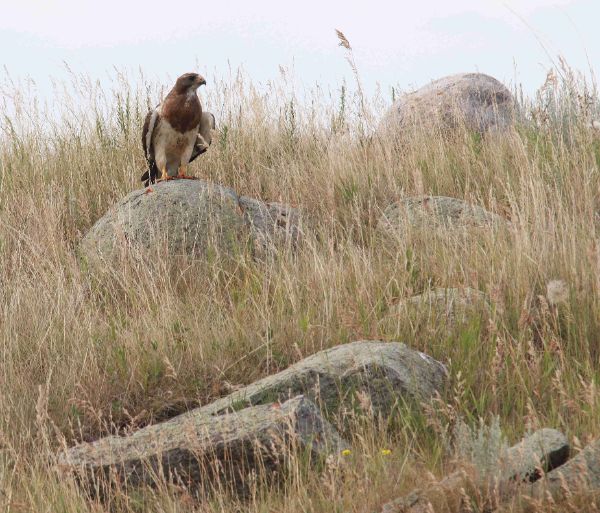
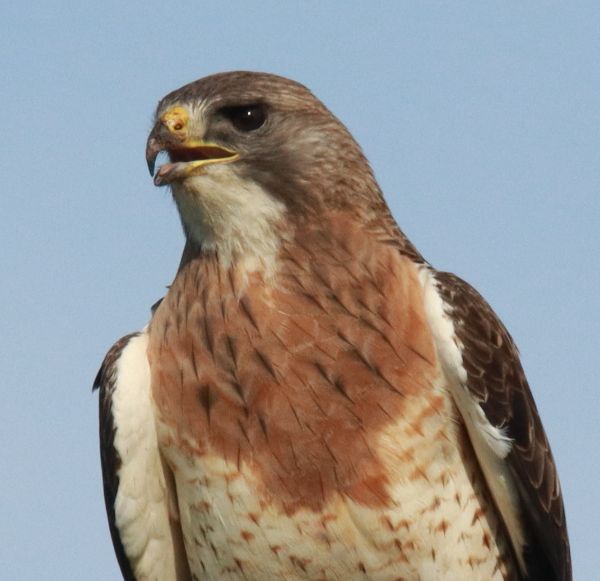
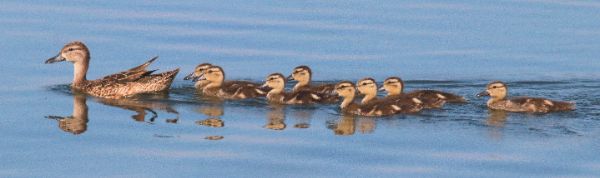
Saturday turned into a beautifully calm evening that provided good looks at a variety of duck broods on nearly still waters across prime duck nesting and brood rearing habitat – mostly Blue-winged Teal, Mallard, and Gadwall broods with a few Northern Shovelers too. Swainson's Hawks were especially obvious – more than during any summer birding drive to date, observed as singles and pairs along the way. In the area of the Ferruginous Hawk nesting territory 25 miles northwest of my office in south-central North Dakota, regular sightings of White Pelicans, Double-crested Cormorants, Ring-billed Gulls (including new fledglings), Great Egrets, and rarer wading birds including a Snowy Egret and late flights of groups Western Cattle Egrets – a species I don't see elsewhere in the region. One marsh had a few Western Grebe pairs with small and medium-sized downy young, and it was nice to sight a tiny hatchling riding the back of an Eared Grebe too.
Now that 3 of the Ferruginous Hawk fledglings are flying confidently, they have moved from the trees adjacent to the nest to the recently cut hayfield – prime rodent hunting habitat. This is where the adults are hunting ground squirrels and pocket gophers while they continue to protect and provide food for the 3 fledglings. Last Wednesday it was interesting to watch a fledgling practice catching and dispatching the carcass of a Richardson Ground Squirrel – part of the fast-paced all-important process for it to learn how to fly and hunt during the post-fledging period. I provide more information and some action photos of this activity in the Bird Photography article in this issue.
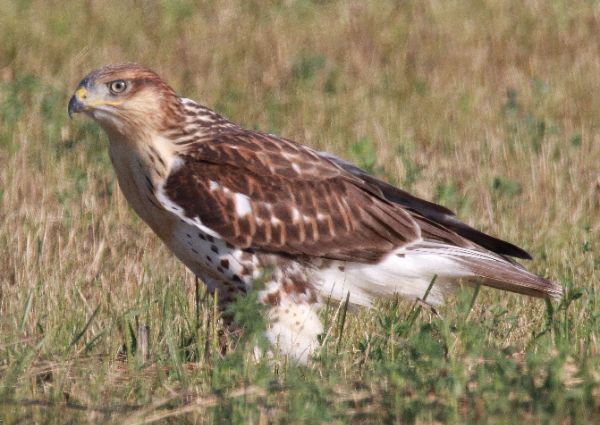
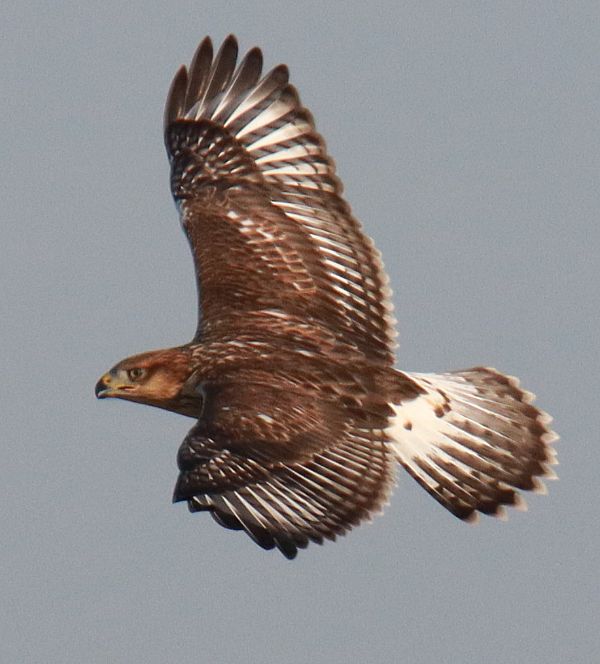
During my visit to the hayfield Saturday evening, the 2 adults were present but no fledglings were sighted; however, when I returned a half-hour later 2 fledglings were perched in a mostly hidden location when approached from the east, but they were obvious when returning from the west. Ten minutes later they moved to open fence perches, eventually taking flight together, first flying to displace the closest adult from her perch, which provided an opportunity to observe the 3 hawks in sweeping gliding flights. The fledglings moved to favored elevated perch used by the adults and fledglings – a long row of large round hay bales in the center of the recently cut hayfield.
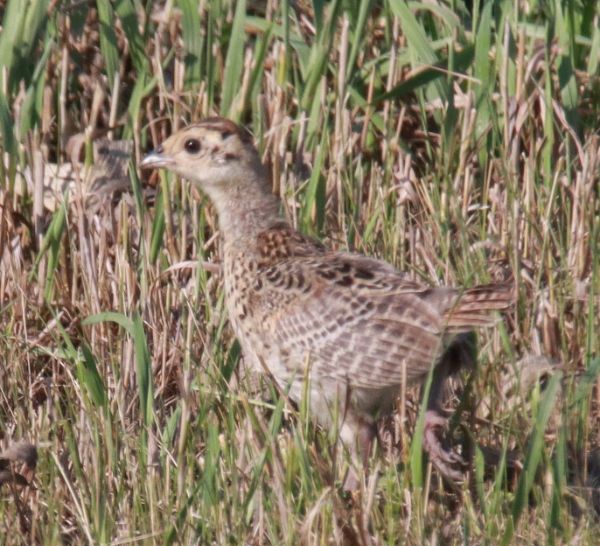
Closer to Home, Friday I observed the first Stilt Sandpiper to return from the Arctic as it foraged in the shallows of a marsh with a Greater Yellowlegs and Lesser Yellowlegs, near 2 Blue-winged Teal broods resting on the shore. Black Terns are active throughout the region, as are scattered Ring-necked Pheasants, including occasional young broods that even included what appeared to be a family group, complete with an adult male and a female. I also observed an adult Sharp-tailed Grouse with at least 5 hatchlings recently. I know I tend to emphasize rarer or larger birds in my reports, but throughout the area there are an abundance of American Robins, Mourning Doves, Eastern and Western Kingbirds, Western Meadowlarks, Yellow-headed Blackbirds, Red-winged Blackbirds, and Common Grackles, along with occasional Orchard Orioles, American Goldfinches, Upland Sandpipers, and Barn Swallows.
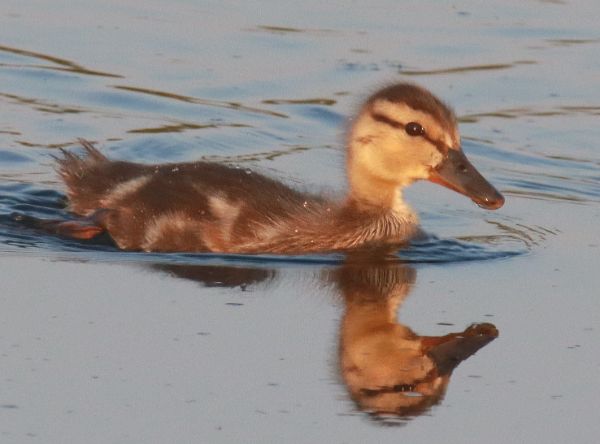
Seeing a brood of 6 newly hatched Redhead ducklings following a protective female – only the second of the season – suggests it may be the start of the hatching period of diving ducks that should include Canvasbacks, Lesser Scaup, and Ring-necked Ducks, but as noted in the opening paragraph, the surface-feeding ducks are reproducing in remarkable numbers with broods ranging from 3 to 11 ducklings. Redhead and Canvasback ducklings are especially attractive with bright yellow down covering them, while Scaup and Ring-neck ducklings are equally attractive in their dark-brown down colors that look black in lesser sunlight conditions. I look forward to seeing them all soon.
In my yard, at this point the male Ruby-throated Hummingbird and the male Orchard Oriole are the only May arrivals that remain among my summer feeding station visitors, but actually that's pretty good for 8+ weeks after arrival. American Goldfinches provided background songs Sunday and a male eventually began feeding on flower seeds near my feeding station, but the most interesting observation was a Northern House Wren searching for bugs on the trunk of the ash tree adjacent to my feeding station, giving it a look that resembled a small creeper. A female Northern Flicker was the rarest Sunday sighting adjacent to my feeding station, and a male goldfinch was the lone yellow bird to visit my birdbath Monday. Robins and House Finches are the most common jelly feeder visitors and robins make the most of daily fresh water. And to end my week's sightings, a pair of Mourning Dove fledglings vied for food brought by an adult over and over again in my front yard Tuesday (yesterday).
During July, temperatures have climbed into or near the 90s almost daily, with less rain than optimal, but it's July, and birds have continued their fast-paced nesting activities with evidence of an especially productive season in the Dakotas and Minnesota – and hopefully across North America and beyond. The fact that I get more than 1 bird photograph a week to share with you is evidence of just how exciting and rewarding my birding escapades have been, and I hope your birding activities and observations have been especially rewarding. Enjoy a dose of birding daily, or as often as you can – it adds to the joys of life every day – and get a little exercise in the process. Onward and Upward …
Article and Photos by Paul Konrad
Share your bird sightings and photographs at editorstbw2@gmail.com