
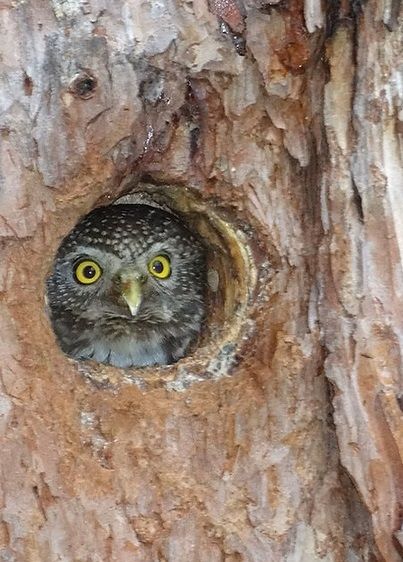
In woodlands, forests, and even in our yards, trees continue to provide life after death; snags provide nesting sites, food, and cover for owls and a variety of cavity nesting birds. The life of a tree doesn't end when it dies, it simply transforms. Owls are a special family of birds that depend on dead trees – snags – owls that range in size from Great Gray Owls to Screech Owls benefit from snags across the United States and Canada. And by protecting a snag or a number of them, we provide an area of habitat for an interacting web of life that extends from forests to open woodlands, and even our backyards.
Cavity nesting birds benefit in a number of ways, birds that include woodpeckers, nuthatches, bluebirds, chickadees, wrens, kestrels, Tree Swallows, Wood Ducks, Buffleheads, mergansers, goldeneyes, Prothonotary Warblers, Ash-throated Flycatchers. and many other birds that use tree cavities to nest in, and to roost in at times throughout the year. Other birds use snags as foraging sites, searching for caterpillars and insects among the bark and crevices of snags, and hawks and eagles use them as hunting perches and as a sturdy framework to build large stick nests, as do some wading birds and cormorants. Sometimes it's not only about the trees we plant, it's about the snags we save, and dead trees are often worth saving because their value on an ecological level may be as great as when they were living trees.
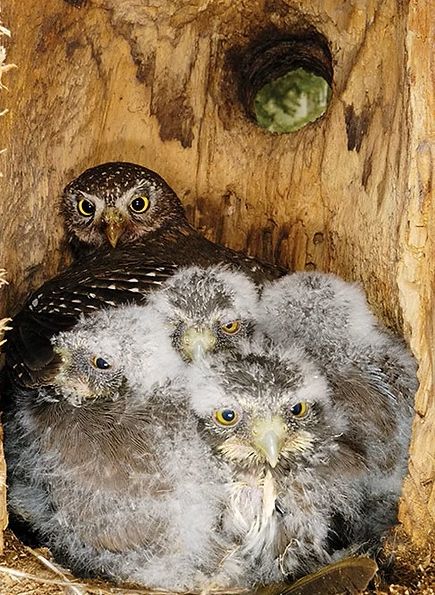
Back to owls, this important family of birds is a favorite among most birders and most people across North America. These include Western and Eastern Screech Owls, Northern Saw-whet Owls, Northern Pygmy Owls, Boreal Owls, Northern Hawk Owls, Northern Spotted Owls, Barred Owls, and Flammulated Owls – and that's not even a full list of the species of owls that benefit from snags. To learn more about the value of snags to owls, including broken-top snags, the Owl Research Institute conducted field studies that have been used to prepare an informative publication entitled: Saving Snags for Owls: Nesting Habitat Preference Research.
You can easily access this publication at Saving Snags for Owls: Nesting Habitat Preference Research. On a more local level, if you have a dead or dying tree in your yard, you can benefit birds for decades by keeping the trunk and the base of some large branches in place through selective pruning that can even add a decorative effect to the snag. Then keep track of how many different species of birds use the tree in addition to other trees in your yard. Snags offer an important addition to the overall habitat scheme on any property and landscape, and a walk in the woods or a forested area will provide you with added insight to the value of snags and logs to the ecology of any property.