
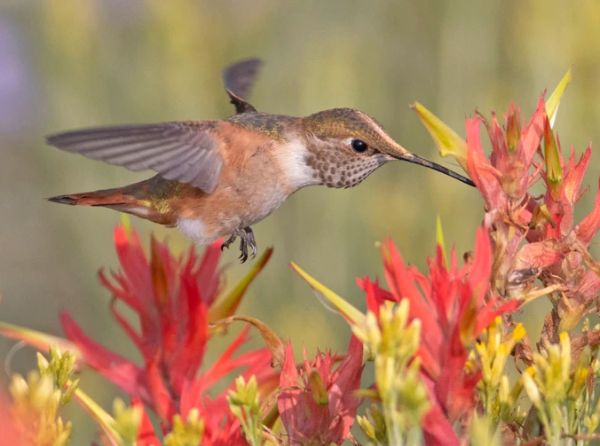
Every birder has observed hummingbirds darting among flowers to feed on sugary flower nectar, but hummingbirds eat tiny insects and spiders too. Sugary liquids like flower nectar and tree sap along with protein-rich insects that include gnats and aphids play important roles in hummingbirds' diet, according to Zach Hutchinson, a community naturalist with Audubon Rockies. And while there are many factors that affect what a hummingbird eats, ranging from its species to where it is located and what foods are available, it's helpful to understand that a hummingbird's diet can also evolve during the season.
Just as a person may eat more carbs before a long bike ride or get extra servings of protein when they are going through a growth spurt, hummingbirds may adjust what they eat in advance of and during periods when nesting, migrating, molting, and when they need to get through periods of cold weather. Flower nectar fuels a hummingbird's high-speed metabolism and it powers their long migration flights. Nectar also fuels their daily foraging needs (including searching for tiny insects), and it boosts hummingbirds' ability to survive sometimes erratic weather, including cold spells.
With their racing metabolisms, hummingbirds are always on the edge of survival and need to feed often each day or they could risk starving. Hummingbirds often increase their nectar intake and quickly add a level of weight before they migrate, so they can sustain themselves on their series of cross-continent flights. Hummingbird nectar is essential for hummingbird survival, but it's only part of what hummingbirds eat.
Tiny insects and spiders provide longer-term sustenance in the form of protein, as well as fats, electrolytes, and macronutrients that are not available in nectar Hutchinson explained. These nutrients play key roles at different times of the season, such as when hummers are nesting and molting.
For example, a female hummingbird will catch gnats, aphids, spiders, ants, fruit flies, mosquitos, and other small flying insects to feed her nestlings after they hatch to promote growth and development. Insect protein is essential for each nestling's growth, including developing their skeletal system and growing feathers. Adult hummingbirds also increase the amount of insect-based protein during their annual feather molt, which usually begins after the nesting period, later in summer, although some hummingbirds molt during winter.
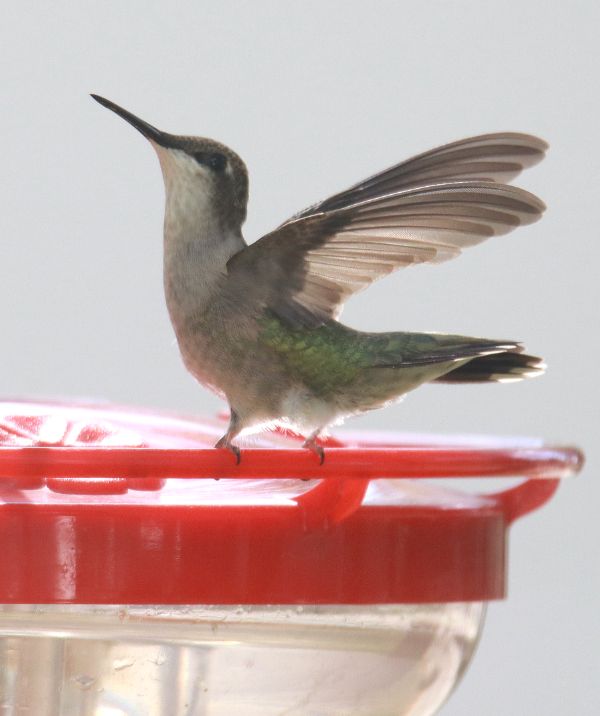
Flower Power & Sugar Supplements – Now, knowing what hummingbirds eat, the best ways to feed hummingbirds in your yard are to provide both nectar and protein sources. Let's start with nectar: While native flowering plants are the best source of nectar for hummingbirds, supplementing flower nectar with a well-maintained sugar-water feeder can provide additional sustenance during the nesting season and migration – plus it is a supplemental source of nectar that can help hummingbirds get through times when there aren't as many blooming flowers available nearby.
The best and least expensive nectar for your hummingbird feeder is a 1-to-4 mix of standard refined white cane sugar (1 part) and water (4 parts). Don't add red coloring to the sugar-water; after all, almost all hummingbird feeders feature some red coloring – to attract hummingbirds that know that red flowers produce the highest sugar content in their nectar. Provide fresh sugar-water nectar twice per week, but more often during hot weather; and clean the feeder each time you replace any left-over sugar-water.
Buggy Protein – As for providing natural protein, embrace the presence of small insects and spiders outdoors – one person's pest is a hummingbird's treasure! As noted above: Gnats, aphids, spiders, ants, fruit flies, mosquitos, and other small flying insects are important sources of protein for hummingbirds. Be comfortable with some bugs in your yard and be sure to avoid using pesticides or herbicides. These products and treatments are designed to kill insects, spiders, weeds, and other landscape "pests," but they can affect the amount of protein-rich food available for hummingbirds, and in some cases pesticides can inadvertently make them sick or even die. If a product is identified as an insecticide, herbicide, or fungicide, avoid it to help improve the food available to hummingbirds and keep a healthier yard for you, your family, and pets.
We hope you enjoyed the spring migration of hummingbirds through your area and hope it's an active hummingbird summer for you. In some areas, hummingbirds migrate through but don't nest nearby, but if that's the case in your yard, male hummingbirds will return in a few weeks, so don't give up on the chance to host hummingbirds – the experience certainly brightens up the summer for us all.
The above article was based on 3 excellent articles published on Audubon websites, including the Audubon Rockies website at What Do Hummingbirds Really Eat in Colorado, Utah, and Wyoming? | Audubon and the National Audubon website at Where Do Hummingbirds Get All That Energy? | Audubon and Hummingbird Feeding FAQs | Audubon
Share your backyard birding experiences and photos with The Birding Wire at editorstbw2@gmail.com