
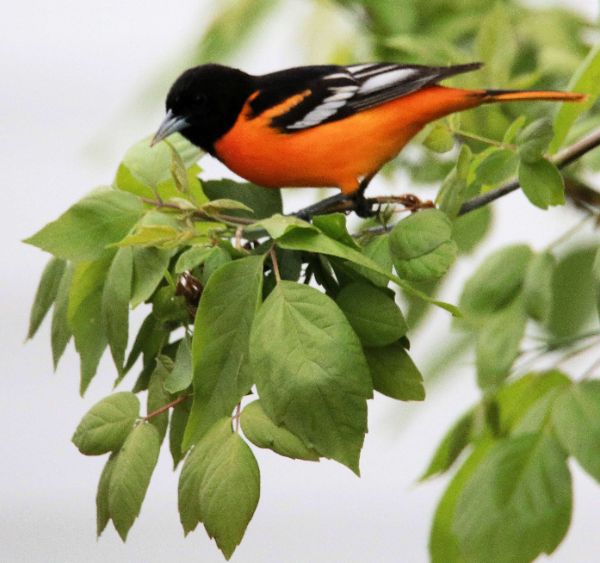
Are you among the remarkable numbers of birders and businesses across the United States and Canada who are transforming portions of their yard to benefit birds and biodiversity? It doesn't take much to make a difference to benefit birds more, especially when you do it little by little, plant by plant, pot by pot, garden by garden. Recently, a new term came to our attention – Controlled Nature – and we thought: Ya, that's really what urban and suburban landscaping becomes as we add and improve yards, neighborhoods, parks, and businesses, school yards, and church grounds with birds as part of the planning and planting.
In the case of landscaping and backyard habitat, we can use this active period of June plant growth as an opportunity to fit a new tree, shrub, or flower garden in to provide cover, fruit, berries, nectar, seeds, and even insects – that combined provide year-round bird habitat and lush surroundings that can be a gem of landscaping that you, your family, and neighbors can enjoy and appreciate month after month and year after year.
It is probably the best time of the year to take a creative look at your yard with an eye to its landscaping and other elements and consider how you can emphasize "structure" for birds. Landscaping structure comes in many forms, but think of it as using a variety of elevations, different textures, varied shades of green, additional colors, and anything else that comes to mind within the focus of landscaping. Keep shaded and sunny areas in mind as they change during different times of the day too, as these factors also add color, texture, and a different options for birds seeking cooler or warmer areas to forage and rest, shelter and nest. You can also add structure to your landscaping by avoiding straight lines and rectangles too – instead, plant using curves and ovals to add a more natural edge to your landscaping elements.
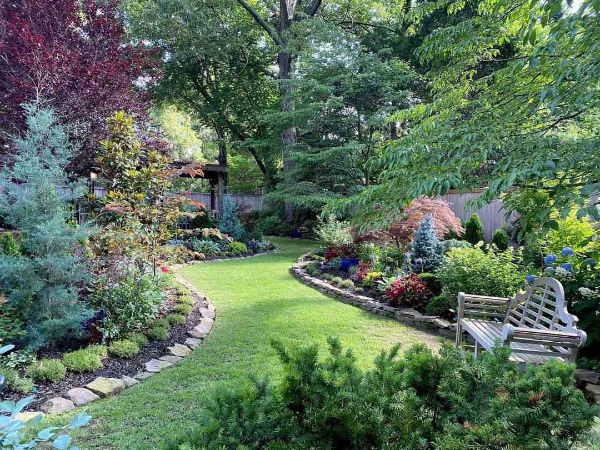
Landscaping structure can even mean filling in some empty spaces with plants that will improve the look for you, your family, and guests, while improving your backyard habitat for birds. For example, if you have some bushes that have grown upward, leaving their lower branches bare, you can add a new lower level of plants that provide another elevation of cover, a foraging area, and a touch of color to liven up a new focal area. If you have an area of tall vegetative plants, you may be open to expanding a complementary area for flowering plants too.
Trees add structure in many ways, whether it's a single tree or a little stand of 3 or 4 trees planted together in the way that aspens or birches might grow in the wild. Speaking of aspens and birch trees, their light-colored bark and paler-green leaves will add color structure to a darker green background. Blending deciduous and coniferous trees also adds a lot of texture variations, as well as shades of color. Even just among pine trees, the differences between blue spruce and black spruce or Douglas fir can add a dramatic addition to a yard or property.
Trees of different ages will show and provide structural differences too, in their bark and in their branches, and they provide perches, and even anchor bird nests in season. Try to leave a significant dead branch in place if it doesn't pose a safety problem – dead wood and the food options it creates is attractive to a variety of birds. Even a dead snag can be decorative if you find the right one, and you will learn that many birds use a dead brank or trunk as preferred perches, as well as foraging sites for woodpeckers, creepers, nuthatches, and other birds.
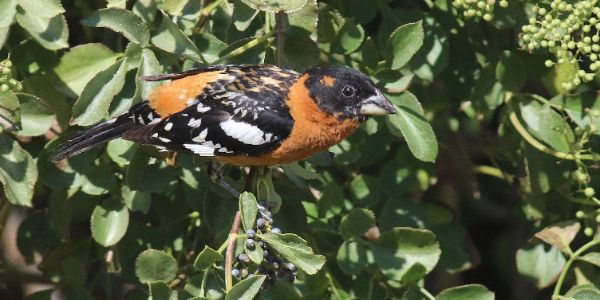
The variety of bushes offer a lot of landscaping options, and they clearly add another level of structure. Like your trees, you can have areas of coniferous bushes as well as the more traditional deciduous bushes. You can trim bushes, but rather than the straight-edged hedge trim, consider a more contoured trim that may have multiple levels and depths. Some bushes produce flowers and berries, which is always a plus for birds, and you can even keep some ornamental trees trimmed shorter into more of a bush height to add structure.
Some vines can provide a nice texture among your landscaping, and they can vary from trumpet vines that are hummingbird favorites to wild grapes, or even domestic grape varieties. The leaves add to the look of your landscaping when they turn gold, or red in season. It's well worthwhile to add a few patches of trumpet vines, grapes, or another vine you find pleasing. You can even run vines along a fence to give it a more natural look, thereby adding to the landscaping structure of your yard.
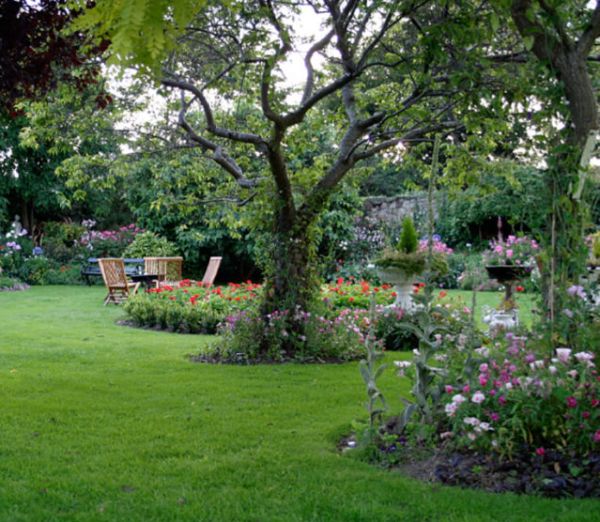
We embrace the idea of letting some grass (lawn) grow tall around the base of trees, thereby providing another level of vegetation and a source of cover. We think it adds a pretty base of green that complements the higher foliage. You might also like to let an oval of grass (lawn) grow to its full height and develop seed heads just as you would do with a planted stand of decorative grass. It's pretty during the green season, but also during the fall and winter when the taller grass turns into a decorative yellow stand. You can also use pots and planters on a deck or patio, making the plants you choose versatile as you rotate and re-arrange them over time. Potted plants can also add areas of interest among your landscaping, and some people add a couple potted plants to the edges of their bird feeding station to add another element of color and vegetation. Birdbaths and other water features are always good additions to any area of your yard.
It's an excellent practice to use a variety of plant structure to improve the look of your yard and enhance its birdscaping value, while adding interest and beauty to your property. Enjoy visiting a couple local greenhouses regularly to get some new ideas, find a new plant or 2, and maybe buy some new flowering plants to add color and attract hummingbirds (red tube-shaped flowers are best for hummers). Create layers in your landscape, ideally with native plants. Also, be comfortable with some bugs in your yard and please avoid using pesticides or herbicides. These products and associated treatments are designed to kill insects, spiders, weeds, and other landscape "pests," but they can affect the amount of protein-rich food available for birds. It's a healthier practice for you, your family, and pets too.
Keep in mind that every yard counts as potential bird habitat. We can improve our yards for birds while we make them more pleasing for ourselves, our family, neighbors, and guests. The cumulative effect of robust landscaping provides shelter, cover, roosting sites, foraging areas, and more to benefit a remarkable variety of birds in neighborhoods, towns, and rural areas across the continent. Every year, try to enhance your yard a little or a lot to continue to provide a special place for resident, migrating, nesting, and wintering birds.
Share your backyard birding experiences and photos with The Birding Wire at editorstbw2@gmail.com