
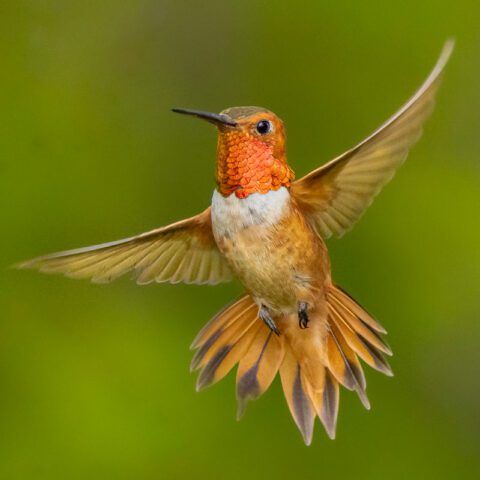
Northern-nesting hummingbirds are migrating now, including Ruby-throated, Rufous, Broad-tailed, and Caliope Hummingbirds. These tiny birds are flying hundreds of miles and more, before arriving and spending time preparing for the next leg of their migration flights farther north – or possibly establishing nesting territories near you. Because flowering plants are at a minimum as northern temperatures warm and plants revive, the center stage for many migrating hummingbirds is our nectar feeders and potted flowering plants as they provide important food, and our landscaping provides resting areas and shelter.
During the long migrations north, the importance of these resources can't be underestimated. Attracting and benefitting hummingbirds is easy, as long as you live within the range of one or more hummingbird species. Providing sugar-water nectar in a hummingbird feeder is simple: 1) keep it filled, 2) keep it fresh (the nectar); 3) keep it clean (your feeder), and 4) mix your sugar-water nectar at a ratio of 1 part white cane sugar to 4 parts water – the sugar-water mix that is closest to nectar produced by flowers that hummingbird favor.
In addition to nectar, hummingbirds need protein, which they get by feeding on tiny insects and spiders daily. It's interesting to watch hummingbirds as they hunt; in fact, many times when you see a hummingbird working its way from plant to plant, flower to flower, it may be feeding on tiny bugs hidden among the vegetation and blooms – watch closely.
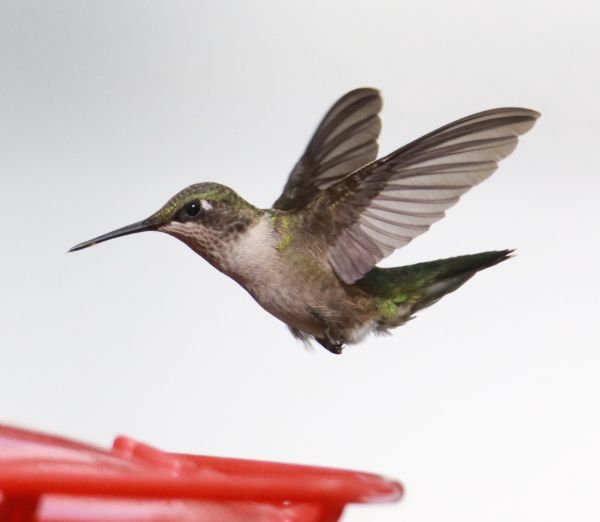
Of course, it is especially interesting to learn more about the hummingbirds you are seeing, and you can get more information about each species of hummingbirds found in North America at All About Birds at Online bird guide, bird ID help, life history, bird sounds from Cornell | All About Birds. If you type "hummingbird" into the Enter Species box, all North American hummingbird species will be listed, allowing you to choose the species you want to learn more about. It's especially interesting to view the range maps that provide a look at their wintering, migration, and nesting ranges.
To learn all about hummingbirds, start by referring to a special article about the 9 Hummingbird Species you are most likely see north of Mexico at 9 Hummingbird Species to Look Out for This Summer | All About Birds All About Birds, provided by the Cornell Lab of Ornithology.
In case you are interested in taking a full-fledged course to learn more about a variety of the hummingbirds found in the Americas and Caribbean, you can refer to The Wonderful World of Hummingbirds, offered by the Bird Academy at the Cornell Lab of Ornithology – see The Wonderful World of Hummingbirds | Bird Academy • The Cornell Lab (allaboutbirds.org)
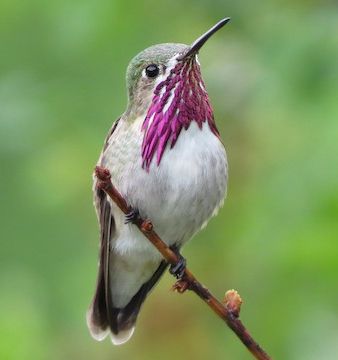
Hummingbird Photography is surprisingly simple, but the iridescent plumage of hummingbirds requires sunlight to turn what looks like gray-green plumage into brightly shining feathers, including male's throat gorget. Therefore, photograph in open sunlight with the sun behind you, and preferably during the morning and late afternoon when the sun is a 20-degree to 60-degree angle above the horizon to avoid overhead sunlight and shadows. Try to use a very fast shutter speed as you photograph at your feeder, flower garden, or anywhere you find hummingbirds.
Altogether, there are more than a dozen different species of hummingbirds found annually north of Mexico, but that is a small fraction of the 363 species of hummingbirds found in North America, Central America, the Caribbean, and South America. Hummingbirds are only found in the Western Hemisphere, in a variety of habitats beginning from near ocean shores to the highest mountains, from Alaska to Argentina, Canada to Chile. These tiny, beautiful dynamos never cease to grab our attention, never cease to amaze us.
In addition to learning more about hummingbirds, it's also important for each of us to share information about hummingbirds with other people, including children in your life, and seniors – and anyone in between those age groups. Enjoy the hummingbirds around you while they are in your yard and anywhere else you may encounter them.
Share your backyard birding experiences and photographs with The Birding Wire at editorstbw2@gmail.com