
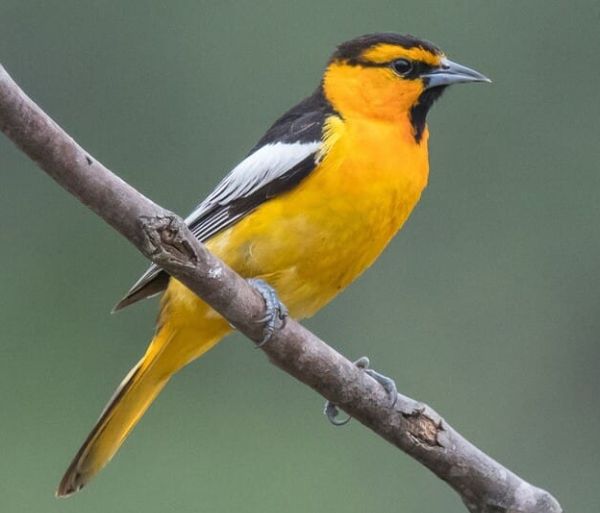
April is an exciting month when the birds we see changes dramatically from wintering birds to new birds making migration stops – brief or extended – plus the arrival of favorite summer residents like orioles and hummingbirds. April is also a good time to look ahead in a general way to assess our yards with respect to birds, to consider what we can do to improve things ranging from landscaping to feeders to flower gardens. Preparing for birds like orioles and hummingbirds also requires a change of feeders and foods to attract and benefit these popular birds.
It's not too early to prepare for the arrival of orioles and hummingbirds, which begins later this month in many regions of the country and extends into May in more northern latitudes. While the kinds of migrating orioles and hummingbirds that are native to yards across America and Canada will vary west to east and south to north, the menu of foods won't vary – all orioles react to the same foods, as do all hummingbirds.
For orioles, 3 things will bring you colorful visits daily – grape jelly, sliced oranges, and fresh water. We have found that for the most part, orange halves attract orioles to a feeding station, but grape jelly keeps them coming back. There is an impressive variety of interesting oriole feeders available on the market, most with some level of orange color to add to their attraction to orioles and to provide perches for the colorful birds. Primarily, oriole feeders have 1 or 2 spikes for you to attach orange halves on, along with a bowl to hold grape jelly.
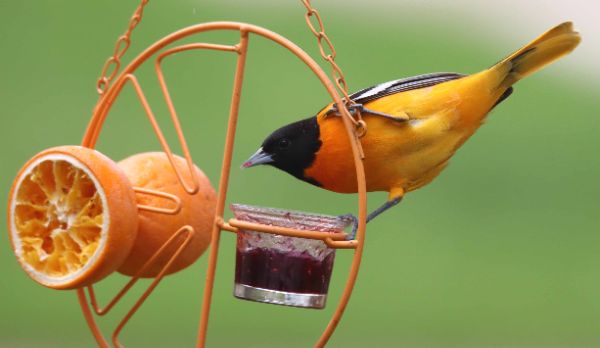
One other oriole feeding option is a nectar feeder – similar to a hummingbird feeder but orange in color with larger holes to facilitate oriole's larger beaks. However, our experience with orioles is that the sugar-water mixture goes unused in our oriole feeder, while it's hard to keep the grape jelly bowl filled with ample jelly to satiate orioles. Some birders find that orioles that visit their yard will utilize an oriole nectar feeder, so give it a try if you are interested, but grape jelly is the best option in our yard. We buy grape jelly in handy squeeze bottles that make filling the feeder easiest.
As we daydream about orioles visiting our feeding station, it's a good time to make you're your oriole feeder is clean and ready for the new season. Also, you may want to consider adding a new feeder or even additional feeder for this spring and summer. Plus, we have already stocked up on grape jelly and have a couple oranges ear-marked for orioles ready in our fridge. You probably remember the week when orioles arrive in your neighborhood or have the date written down, so don't hesitate to add your oriole feeder to your feeding station a week ahead of time, just in case one comes early.
We are convinced that by providing a dependable source of food and water that we "convince" a couple pairs of orioles to stay to nest in our landscaping or in other neighborhood habitat. We usually entertain a dozen orioles during peak migration days, including 2 species: Baltimore Orioles and Orchard Orioles – and we usually have 2 pairs of each species nesting here. That didn't happen before we began feeding orioles grape jelly!
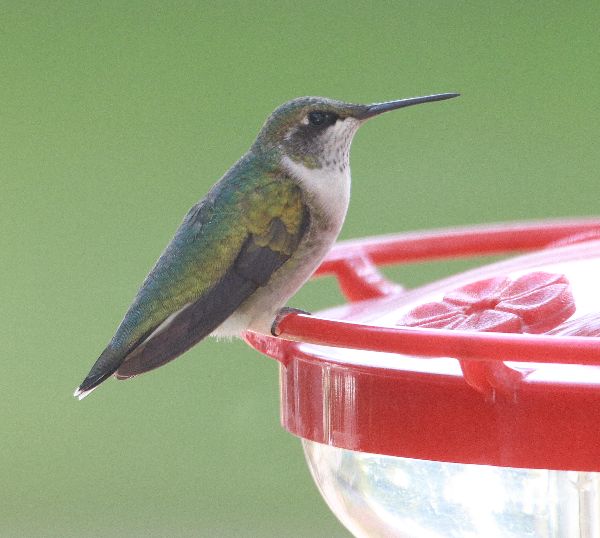
For hummingbirds, you know the drill: Provide a hummingbird feeder that features some red coloration and a few feeding ports with associated perches. Fill the nectar basin with the simple mixture of sugar-water: 1 part sugar to 4 parts water, which is closest to the sugar content produced by favored red flowers that produce natural sugar-water nectar. It's simple, keep the nectar fresh, and keep the feeder filled. We clean the feeder each time we fill it, and we mix fresh sugar-water each time we fill the feeder. And oh what fun it is to have hummingbirds buzzing outside your windows, along with orioles and other exciting birds of the season!
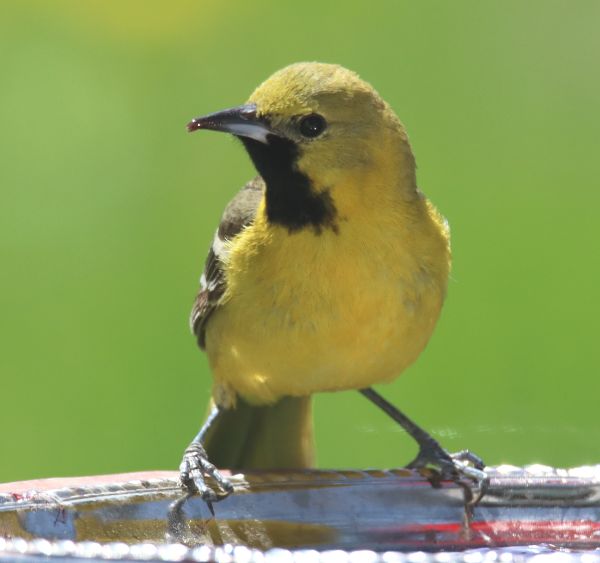
One more ingredient is important for orioles, hummingbirds, and all birds – water! Fresh Water will attract a greater variety of birds than any other feeding station ingredient, and a stylish bird bath can add a focal point to your yard or flower garden. The key to providing water for birds is to keep the depth of the water less than 2 inches (1 inch is best), which permits small birds like goldfinches and warblers to stand in the water to bathe. Too often, people fill a birdbath's basin to full capacity, which effectively eliminates it as a bathing source. You can also attach a sprayer to your birdbath, which is a plus for hummingbirds.
Landscaping can also be a plus to benefit and attract hummingbirds, orioles, and other birds when it provides shade, resting perches, foraging areas, and even escape cover. For hummingbirds, birders emphasize adding plants with red tubular flowers, which provide the highest sugar content in their nectar – that's why hummingbirds are attracted to the color red. Flowering trees are a plus for hummingbirds, orioles, and many other birds during spring, and some fruiting trees are attractive to orioles in season too.
If you already have resident hummingbirds or orioles visiting your yard, lucky you! For most of us, spring migration will bring the first orange birds and hummers – but that's just weeks away now; after all it's already April. Enjoy the birds in your yard and neighborhood, and gear up for the excitement of seeing new bird in your yard and feeders.
Share your backyard birding experiences and photographs with The Birding Wire at editorstbw2@gmail.com