
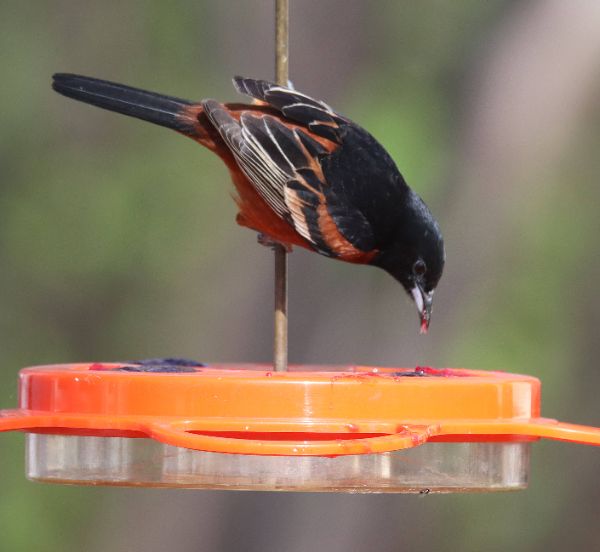
Reach out to migrating birds with a full array of foods topped with fresh water to attract the widest variety of birds to your yard to date! As we head into one of the most exciting months of the year, in our yards and at our feeding stations, it's time to pull out all the stops – if you haven't already. With the prospect of orioles, tanagers, hummingbirds, grosbeaks, catbirds, warblers, finches, native sparrows, towhees, thrashers, and thrushes migrating into view to join the likes of cardinals, woodpeckers, nuthatches, and whatever else shows up. "Be prepared" is the name of the game during May.
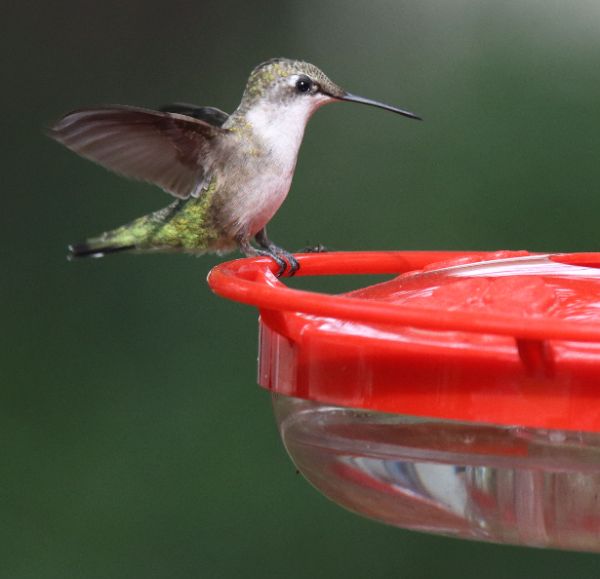
Providing a variety of foods is key, and that's very easy. In fact, you may only need to add a couple things to provide the full May buffet – for resident birds, migrants, and potential nesters. The next wave of migrants should include hummingbirds – so a nectar feeder is a must; along with grape jelly and sliced oranges for orioles, catbirds, robins, and more. Of course, Water is the most integral ingredient of any feeding station, and it's worth having a second bird bath in a garden area or deck because many warblers, thrushes and the like don't come to eat – but they often need water to drink after a night of migration – they may take advantage of a chance to bath and refresh their plumage too.
It is important not to wait until you see the first hummingbird to install your nectar feeder – have it ready for the first hummingbird instead. Same for providing grape jelly and sliced oranges for orioles. In fact, check your records, or your memory, and have your feeders filled and ready about a week before you expect the first hummingbirds and orioles so you don't have early individuals passing by an unstocked feeding station.
An important reason to keep your feeders well-stocked in advance and thereafter is to try to encourage orioles and hummers to stay in your yard or neighborhood throughout the nesting season and into the post-fledging season. A dependable food source is extra-important for birds looking for a nesting area, and that is true for all birds that nest within your geographic area. That said, let's go down a list of foods that should be available at any May feeding station, plus you can serve these foods through the summer:
Sugar-water Nectar – All hummingbirds will feed at a nectar feeder filled with the standard fresh sugar-water mixture, which is 1 part white cane sugar mixed with 4 parts water). Some orioles will feed at nectar feeders too, but that's almost never the case in our yard where the following 2 foods are greatly preferred.
Grape Jelly – We haven't found anything that attracts orioles like grape jelly, and we are convinced that by providing a constant source of grape jelly throughout the migration period and beyond, we actually "short-stop" some orioles to stay in our yard and neighborhood to nest. When we provide a dependable food source, it becomes an essential part of their nesting habitat, and during mid-summer there are few better backyard birding experiences than when adult orioles bring fledglings to our feeders. Other birds will also feed on the jelly, including catbirds, robins, tanagers, grosbeaks, and some finches and warblers.
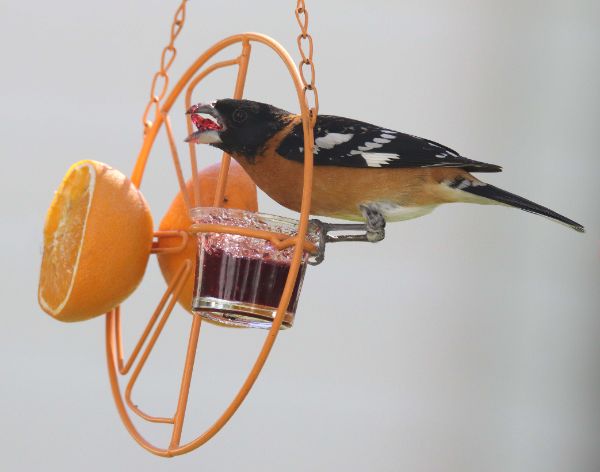
Orange Halves – Oranges sliced in half are also an oriole favorite, and we believe the orange color attracts orioles, but usually once attracted to the orange fruit, orioles prefer the grape jelly.
Suet – Our best suet offering is "hot pepper no-melt suet," which doesn't melt during hot weather, and the hot pepper keeps squirrels from dominating our feeding station. Suet is an important food source for birds year-round, and especially during periods when birds need a high-energy food, such as during a migration stopover. The hot pepper seasoning repels squirrels and other mammals, but it does not affect the appetite for suet among birds. It has made a big difference in keeping squirrels at bay and our suet costs are a fraction of what they were before the advent of hot pepper suet.
Shelled Sunflower Seeds – Black oil sunflower seeds are the best to attract and benefit all seed-eating birds, and even the smallest finches will eat the shelled seeds. But if you want to offer smaller seeds, you can opt for shelled sunflower seed chips. Black oil sunflower seeds provide the highest food value, which is why they are preferred when available. Another reason we offer shelled sunflower seeds is to avoid the need for clean-up and to keep a healthier feeding station site.
Nyjer Thistle Seeds – If you prefer to offer thistle seeds in addition to shelled sunflower seeds or chips, they also provide the highest food values among the varied types of seeds. But we have found that goldfinches, siskins, and other small seed-eating birds prefer shelled sunflower seeds, even when nyjer seeds are present, at least at our feeding station. And a separate feeder is required to provide the tiny thistle seeds, so we keep it simple.
Shelled Peanut Halves or Chips – Most seed-eating birds will appreciate the option of feeding on shelled peanut chips or halves, and some individual jays, woodpeckers, and nuthatches seem to prefer them, especially jays. Again, we offer shelled peanuts to avoid the mess of finding peanut shells in the yard and neighborhood, and the shell take up a lot of space in a bag that you pay for.
Overall, try doing a little research of your own to see what works best for you and the birds that stop at your feeding station and water feature this spring and summer. Different species have preferences, as do species in different geographic locations sometimes. Even individual birds will have preferences, so see what birds come to the foods listed above, and any other options you find to be preferred at your feeding station. In the coming days we are about to enter into a new season of bird feeding that provided new foods combined with year-round foods, and when combined with essential fresh water, we birders benefit a variety of birds as the seasons and avian community change around us. Enjoy the spring bird feeding season!
Share your backyard birding experiences and photographs with The Birding Wire at editorstbw2@gmail.com