
We are fast approaching the time of the year when birds tend to move to new feeding areas, and even edge farther north as the daylight period increases and temperatures rise. That means it's time to watch for new birds at your feeding station as well as in your yard, neighborhood, and beyond. As individual birds and flocks of birds consume food resources, they can move in any direction in search of a new food source – and that can mean a new bird or birds arriving in your area and at your feeders and bird bath. To start with, it's always fun to add a new bird to your yard list, and if you are really lucky, to add a new species to your life list.
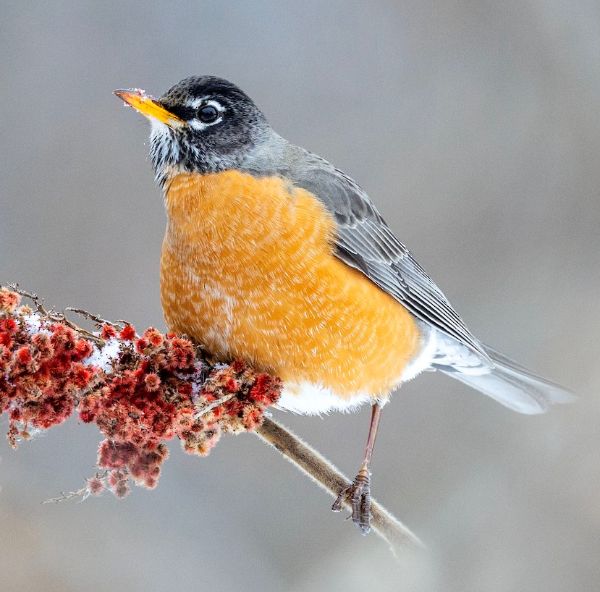
It's especially exciting to see a new species in your yard and your feeding station. It's worthwhile to check your feeders and landscape a bit more often to try to catch sight of a new bird – even the "first of 2026" of a given species. We always watch for Dark-eyed Juncos and Redpolls around this time, Pine Siskins and Fox Sparrows too. Waxwings and crossbills are obvious wanderers that can appear on a whim, and even an American Robin can spark some excitement if you haven't seen one since October.
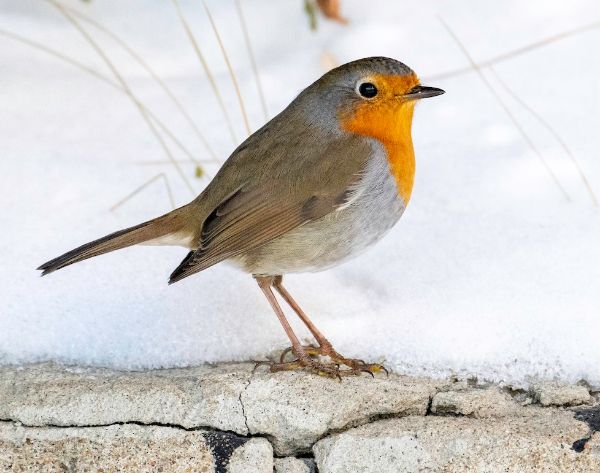
Speaking of a robin, a European Robin has been the rarest backyard bird to be found this year in a neighborhood setting, creating a First Canadian Record and thrilling people in Montreal – including birders from other areas of Canada and the United States for the past couple weeks, and it's still in the area! These small birds are fairly common in yards and fields across Europe, but it is only the fourth Euro Robin to be documented in North America, with the only other European Robins found in Pennsylvania, New Jersey, and Florida.
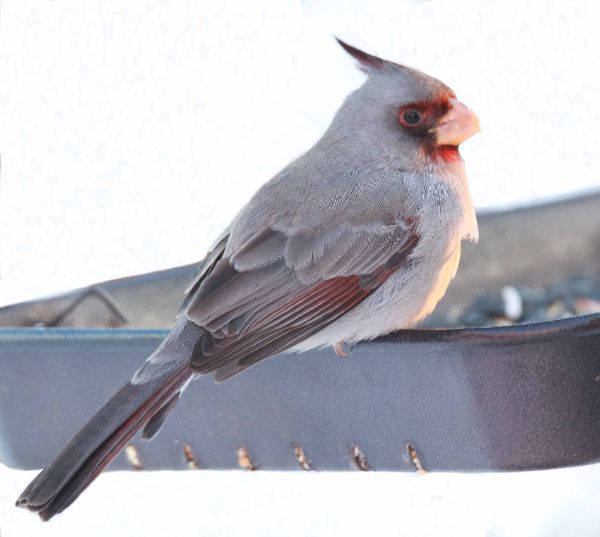
Speaking of really rare birds, along with many other birders, our editor was recently able to visit a feeding station that attracted a Pyrrhuloxia in rural North Dakota – a state record for sure. This member of the cardinal family that is usually found from central Mexico to Arizona, New Mexico, and Texas was far north of its normal range, and stands as evidence of how nothing is impossible when it comes to birds with wings and the ability to fly.
While it is impossible to predict or anticipate any rare bird's visit, it is easy to keep your feeding station active as a resource for food and water for any birds that might venture into your yard. It stands to reason that a feeding station with a greater variety of foods would have the best chance to attract a hungry avian traveler, even one that is dramatically off-course, and fresh water is the best single element you can provide to attract the greatest variety of birds. It might be worthwhile to expand the variety of foods you offer, but make sure your suet, shelled sunflower seeds, nyjer thistle seeds, shelled peanut halves, and fresh water are well stocked if you are a northern birder.
If you are in the Sunbelt, you will definitely want to have a nectar feeder in the mix too, because hummingbirds are a regular part of the avifauna of many parts of the Sunbelt. This is especially true in southern California, portions of southern Arizona, and south Texas; and during recent years Louisiana has had an active group of birders who host wintering hummingbirds. This year Louisiana birders are hosting a total of 8 species of hummingbirds numbering more than 200 individual hummers as of the end of January!
In areas of southern California, Anna's Hummingbirds are in full swing into the nesting season, as are Allen's Hummingbirds. They are present throughout the year, but may also attract a new species to your yard – maybe a Rufous Hummingbird, or an even rarer species. That goes for year-round residents and "snowbirds" wintering in parts of southern Arizona, where hummingbirds can be even more diverse.
Any seed-eating birds can be attracted, and perhaps a new species will be among them. Suet can be almost as universal as water in its attraction for birds, and it's worth adding some grape jelly to your feeder menu at this point too – in case an early oriole or tanager swings by – and they definitely will appear as spring migration picks up in March and April.
When you do find a rare bird, be sure to document it with a number of photographs, and report it to your state's rare bird committee and eBird. And get a special photo for your own files that you can share on social media or via email or text – it's a fun part of sharing a highlight of your birding activities. It's also fun to alert other birders who might be interested to see a rare bird in your yard. Being a rare bird host can bring new friends to your yard, and give you a bit of notoriety among the birding clan.
Of course, every February-March period is different and things can change quickly as breaks in the weather lead toward spring temperatures and every increasing early migration arrivals. Good luck and enjoy the first birds of each species you see – new to 2026 – even new to your yard or state!
The Great Backyard Bird Count is this weekend! You can participate anytime over President's Day Weekend in this annual winter birding event – whenever you choose between Friday February 13th and Monday the 16th. To learn more you can refer to the Cornell Lab's announcement at Great Backyard Bird Count – Join us each February when the world comes together to watch, learn about, count, and celebrate birds. And take a look at the next article in this issue too - see Birding News.
Share your backyard birding experiences and photographs with The Birding Wire at editorstbw2@gmail.com