
The attraction of winter finches can do 2 things for birders at this time of year: 1) Make your feeding station irresistible, and 2) Go where the winter finches are! As for selecting foods at your feeders to attract wintering finches large and small, it's easy – provide shelled black oil sunflower seeds. Even the smallest finches like Pine Siskins and Redpolls can eat these shelled seeds that provide the best-quality of food for them. Larger finches relish this dish too, and by using shelled seeds, you eliminate the mess (and cost) of shells. If you wish, you can provide smaller nyjer thistle seeds too, which will serve to reduce competition if nothing else.
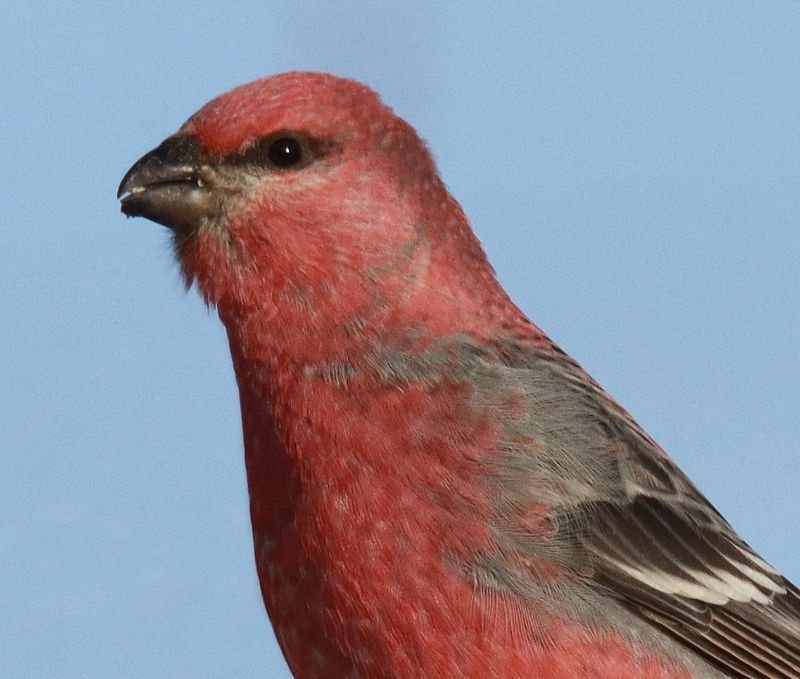
Most exciting of all, you can plan a special "winter finch trip" to search out some northern finches you may have never seen before. In fact, our Birding Wire editor recently did just that – traveling to a "sure thing" winter finch destination where such attractive finches as Pine Grosbeaks and Evening Grosbeaks are visiting feeding stations. And that's when you will realize a lot of things about how attractive a feeding station can be for wintering birds in the right place surrounded by attractive habitat for these boreal forest species.
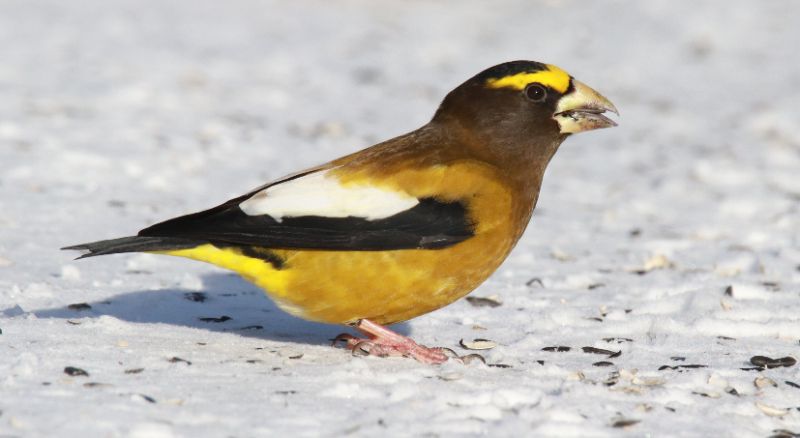
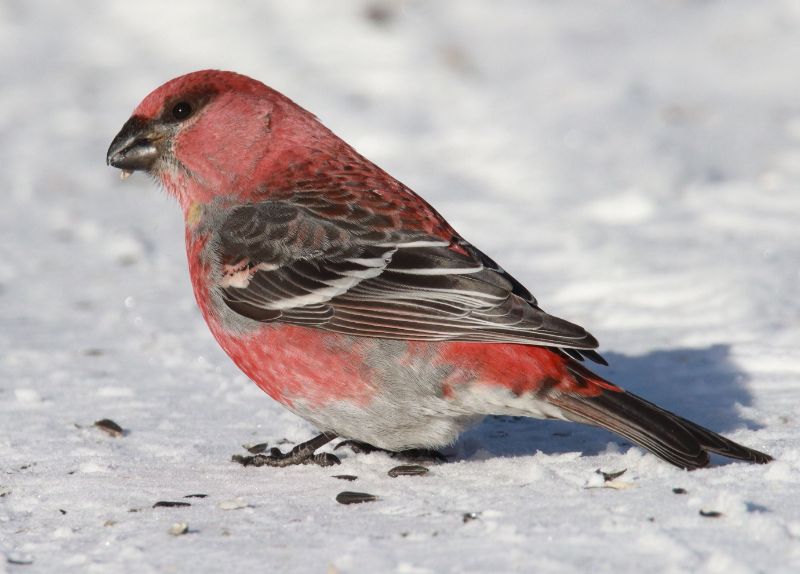
Paul Konrad, our editor, recently made a New Year's Day trip to a very special winter birding destination – the Sax-Zim Bog in the Minnesota Northwoods. This year it's a good bet you will find 2 of the most spectacular finch species there – Pine Grosbeaks and Evening Grosbeaks – both providing quality observations at a number of feeding stations and adjacent black spruce forests. One look at the photographs Paul took of these especially colorful songbirds should inspire you to consider following in his footsteps to a similar winter finch hotspot or "The Bog" itself. A look at the license plates on vehicles parked at the Welcome Center show that birders are traveling from surrounding states as well as more distant states and provinces.
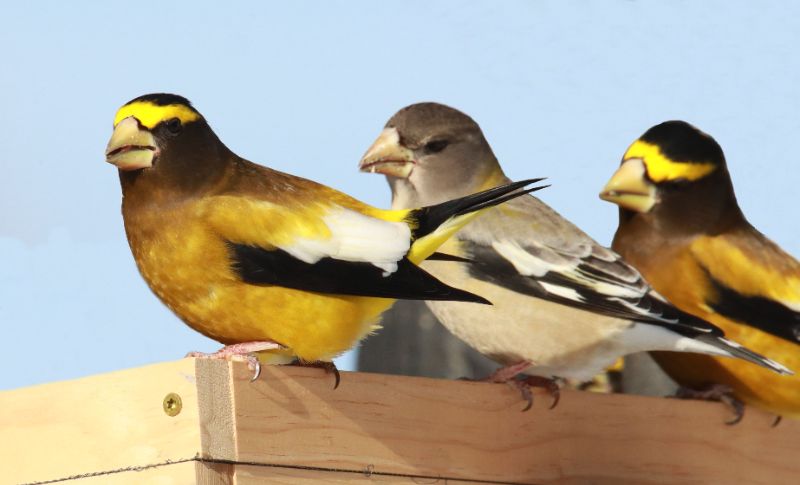
"The chance to observe these attractive birds at close quarters is a high point for most birders who revel in the opportunity to see a flock fly in to perch on overhead tree branches as they add their tiny voices to the scene – it gets your heart pumping faster immediately," Paul said. "And getting an initial look at the birds through binoculars makes the moments all the more exciting, until the grosbeaks begin gliding downward on outstretched wings to land so close that binoculars are no longer needed as they begin feeding on sunflower seeds at a platform feeder."
We opt to let Paul take over from here: "That's when you really begin to see the varied colors and plumage differences between adult male and female Pine Grosbeaks, as well as female and male Evening Grosbeaks – Wow! And if you enjoy photographing birds, it's an ultimate opportunity to photograph these impressive songbirds on natural perches, on feeders, and on the snow-cover ground. These are the kinds of experiences you will really enjoy, standing nearby or even seated in your heated car, SUV, or truck with your window open (although it's often mighty cold in the Northwoods during winter).
Of course, there are other birds attracted too this Northwoods location, and some finches among them may include Redpolls, Pine Siskins, and Purple Finches. Just as exciting as the northern finches, you should see Canada Jays, and maybe even a Boreal Chickadee. Familiar feeder birds are likely too, including Black-capped Chickadees, Blue Jays, Downy Woodpeckers, and Hairy Woodpeckers, and you never know when an unexpected species adds to the excitement.
Some feeding stations are positioned along a very rural road, kind of in the middle nowhere, but it's actually prime habitat. A few are located at the beginning of a walking trail to add to anyone's outdoor experiences. And most of the feeding stations are located in local homeowners' property – usually in their front yard so you can view the action at the feeders from the road with binoculars. Obviously, these are very, very generous homeowners, and enthusiastic birders themselves. One location in particular has a drive-thru opportunity that permits you to slowly circle the feeders positioned in the front yard, stopping to observe and photograph as long as you aren't in anyone else's way. It must be the highest level of generosity among birders one can imagine.
Also active behind the feeding station activities is the Friends of the Sax-Zim Bog, who provide some feeders and bird foods for homeowners, and who also set up the roadside feeding stations with feeders, and volunteers keep the Friends' feeders stocked with a variety of foods including sunflower seeds, suet, and even peanut butter. Some of the roadside sites utilize natural settings to provide suet and peanut butter, as well as seeds. Oh, and there are the many feeders at the Welcome Center, including a prime feeding station set-up outside a huge window wall on one side of the new building addition. The new Welcome Center is most impressive and it reflects the dedicated work of the Friends group that has been remarkably successful raising funds to preserve area lands, with a limited staff and volunteers who do such a fine job of welcoming, informing, and interacting with the visiting public.
While the feeding stations guarantee quality views of some of the birds on hand, while driving along area roads, either while birding or while moving between different feeding stations, the varied habitats attract other exciting birds that usually don't visit feeders – such as White-winged crossbills, Red Crossbills, Northern Shrikes, Black-backed Woodpeckers, Pileated Woodpeckers, Ruffed Grouse, Rough-legged Hawks, American Goshawks, or the northern owls – Great Gray Owls, Northern Hawk Owls, and even Snowy Owls. The Sax-Zim Bog is a true winter hotspot – no matter how cold it gets. And by the way, there is a handy map of the area and all the roads, hiking trails, and feeding stations – in print and online, available by the graces of the Friends group.
Every winter is different, and each year different birds are present in varied numbers. For example, while Evening and Pine Grosbeaks are pretty common this winter, last winter they were scarce; but White-winged Crossbills and Purple Finches were common last year and are rare so far this winter. Same with the northern owls – but you can keep abreast of recent sightings provided by fellow birders on eBird, and get an overview of recent bird sightings on The Friends website at Bird Report : Friends of Sax-Zim Bog and for more info, see Friends of Sax-Zim Bog.
Thanks Paul. If you live in an area where some of the northern finches visit during some days of winter, you will likely gain a renewed interest in your feeding station; and you never know when these "eruptive" birds might stop by. Paul's stories about his visit to The Bog were so vivid that we thought it would be a good opportunity to inspire you to travel to a similar location near you – or plan a trip to The Bog, located an hour north of Duluth. We are convinced it's a great way to add a lotta spice to your winter birding activities. Good Luck!
Share your backyard birding experiences and photographs with The Birding Wire at editorstbw2@gmail.com