
Although the sunlight was sketchy, I wanted to check on the Tundra Swans at Charo Marsh. Even with more cloud cover than sunlight that afternoon, it seemed like open sunlight was following me as I drove the 15 miles south-southeast of the office, but even if the clouds overwhelmed the landscape, the bottom line in my plan was to enjoy a short break into the wilds of Dakota and count swans (and geese, if present). The sunlight held, but for how long? While watching a number of somewhat distant swans, the light began to dim as a cloud front pressed forward, just as an interaction between 2 pairs of equally aggressive Tundra Swans appeared to be imminent.
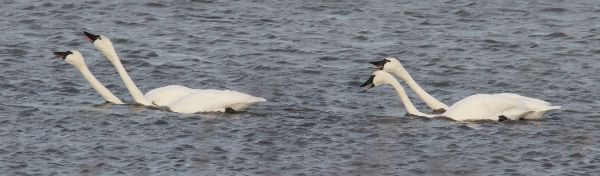
Adjusting to an f-10 aperture to get a wider area in focus with 4 swans in my photo frame, when the big Tundras began calling with their long necks stretched forward, I began to photograph their initial interactions. When the leading pair turned to face their pursuers it was as if a light switch was thrown and the 2 males raised up to address one another in a violent way. Photographing rapidly in series, I could sense the light dimming every 15 seconds, but the action was dramatic until the more aggressive male turned away. Even so, the quitter quickly raised its giant wings in a victory flap, only to incite the larger male and the more likely victor to react in kind. By that time the clouds already shaded the sun to create a dim cast of light – not the kind of sunlight that creates quality photographs.
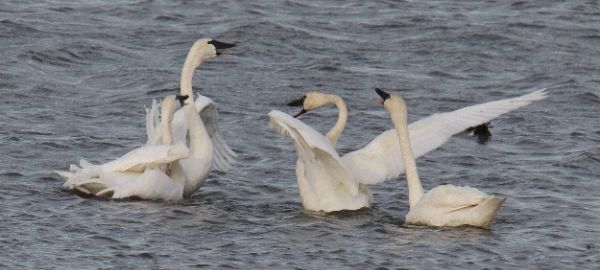
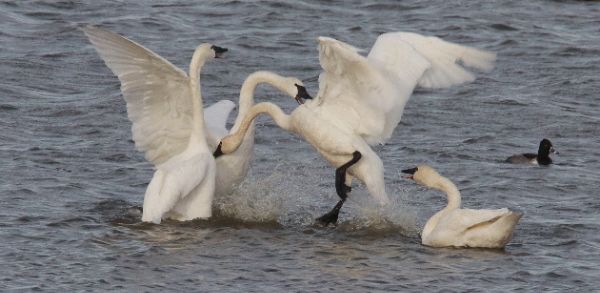
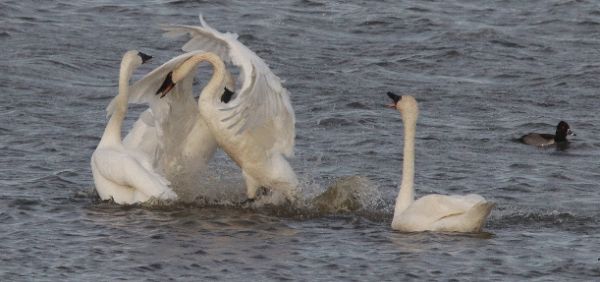
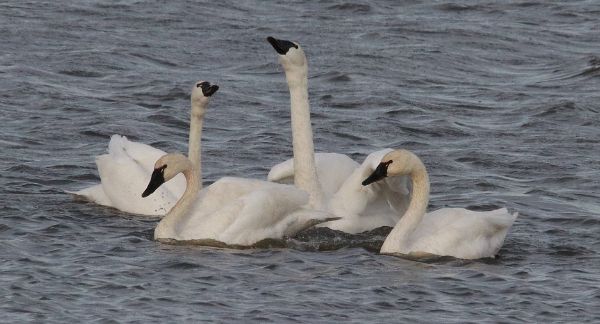
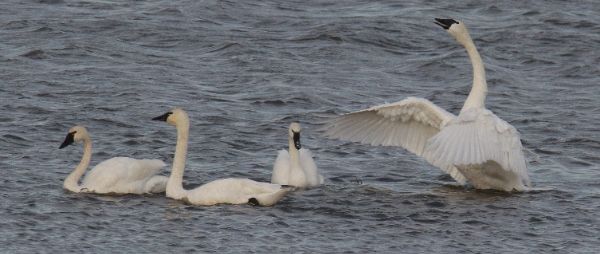
When reviewing the photographs of the Tundra Swan interactions on my laptop screen, it was quickly evident that the lighting was subdued and the photos were sub-par as a result. In essence, I wouldn’t share any of the photographs if they were single images. But it’s hard to pass up the chance to show a collection of exciting interactions between birds such as this. At the same time, it illustrates the importance of good sunlight to illuminate the birds and get the best colors and contrast in bird photography. Simply by referencing the sun-bright photos of swans in the above article to these action photos, you can see my point graphically. And that’s why I choose to wait for good sunlight to go birding. That said, I wish for sunny days every day you are birding with your camera!
Article and Photographs by Paul Konrad
Share your bird photos and birding experiences at editorstbw2@gmail.com