
Sunlight and bird photography go hand in hand, and during November I’m lucky enough to have access to both of the species of America’s largest waterfowl species – Trumpeter Swans and Tundra Swans. Flocks of Tundra Swans make migration stops in my area, as close as ½ mile, 1 mile, and 2 miles from home, making them a local favorite to observe, monitor, and photograph. Trumpeter Swans require a drive to Minnesota or Wyoming to appreciate their size, trombone-sounding calls and spectacular flights.

Last Thursday, I enjoyed seeing many Tundra Swans locally as I began a birding trip to west-central Minnesota, and within 3 hours I was photographing Trumpeter Swans in beautiful afternoon sunlight east of Cormorant Lake south of Audubon, Minnesota. Surrounded by a small group of 14 Canada Geese and 19 Mallards, 3 pairs of Trumpeter Swans, each with 3 gray-colored young of the year were present, along with 2 other pairs. I also photographed Trumpeters near Pelican Lake and along the smallish Pelican River.
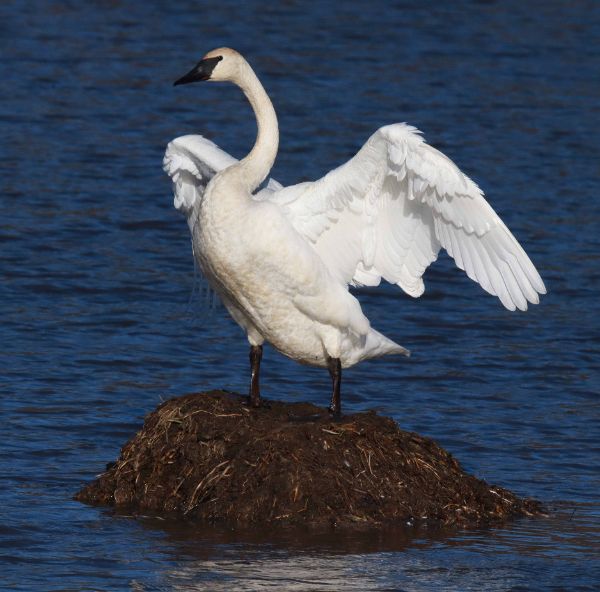
While timing is important to utilize the best periods of sunlight for photography from spring to early fall, these days of November provide angled sunlight from the south from about an after sunrise until an hour before sunset – as long as the sun in not shaded by clouds. Therefore, it is important to plan any photo-based birding trip during sunny weather, such as I did last week. Tuesday and Wednesday were cloudy or mostly cloudy, so I waited to drive east until Thursday, when the area southwest of Detroit Lakes was sunny with a minimum of wind – as was Friday, which turned out to be a perfect day for bird photography.
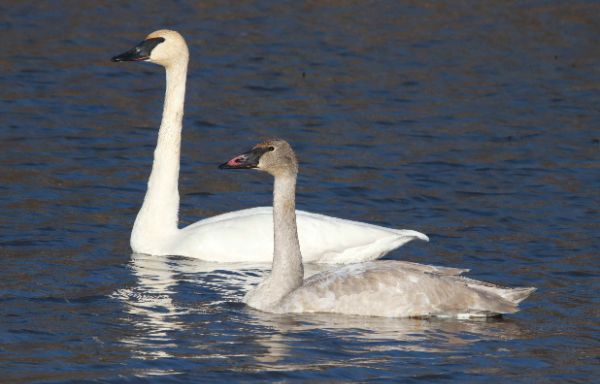
In tandem with this short article and photographs that were taken in prime sunlight, I provide a second example of swan photographs that show an exciting interaction between 2 pairs of Tundra Swans near my North Dakota office. The action was great, but just as the swans began facing off, a cloud front advanced from the west, and the resulting photographs turned out to have muted colors and little contrast. In short, use the photographs in these 2 articles to appreciate the differences in photographs taken with the sun illuminating your subjects, and during an overcast period with clouds shading the sun.
Article and Photographs by Paul Konrad