
Finally, after hearing jays for a couple weeks, then seeing them another week before they apparently finally found the shelled peanut halves I provided as a special offering, one arrived! I was truly excited, and when the word spread quickly (and loudly) among the jay clan, it made me want to take some photographs, especially when within an hour or so the Blue Jays began coming 3 and 4 at a time. But all my best tips that I share in this weekly article quickly went out the window. First, there was no sun as the sky was clouded in gray; the platform feeder was also not very attractive, nor was the background behind and surrounding the feeder.
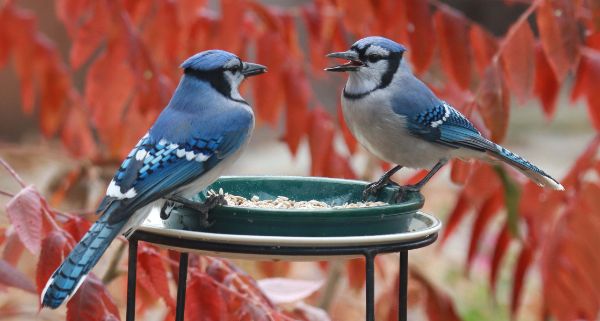
That’s when I added a new green glazed bowl to top my platform feeder and hold more shelled peanut halves and sunflower seeds. Then, after taking a few photographs, I could see the colors were rich and there were no shadows due to the subdued light – a nice surprise. I don’t like to photograph through window glass, but that tends to be necessary when photographing at my feeding station – and sometimes it works well. This time, the results were fine, with no obvious effects from the glass. And after taking a few initial photographs that showed the potential for photographing under the seemingly adverse sunlight conditions, an idea came to mind.
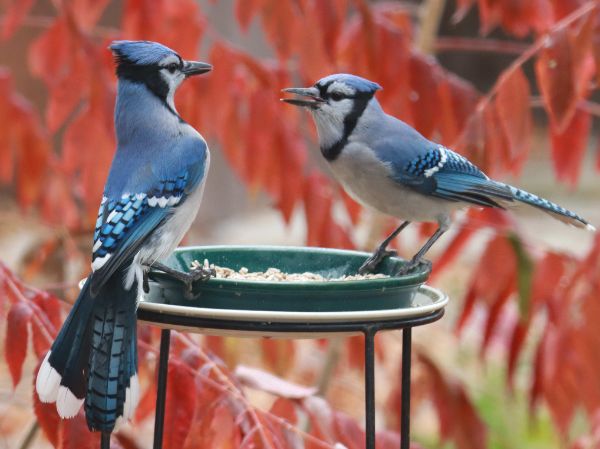
When the leaves begin to change colors each autumn, I try to bring fall colors into my bird photographs. And almost every year I fail miserably – mostly because birds don’t perch among the yellow, orange, or red leaves in my presence. But last week, a few feet away from my feeding station the sumac leaves were at their peak red color, and I realized this could be my chance to work some fall colors into the Blue Jay photographs. In a flash I moved the smallish platform feeder to a spot where a number of sumac branches overlapped, just outside the bay windows where I usually view and photograph birds at or near my feeding station. And that’s when everything seemed to come together in fine photographic harmony.
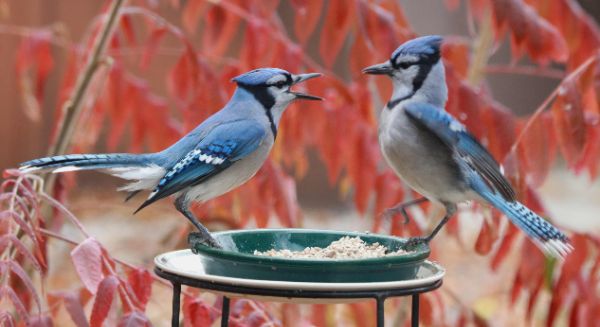
At first I was thrilled to have the jays readily adjust to the slightly new feeder position, and I spent some time photographing a line-up of jays, each feeding individually while others waited their turn. But that scenario soon changed as 3 and 4 jays assembled at once, even building to 7 at a time! That’s when jay patience was transformed into jay dominance, and some scuffles began at the feeder. As a second jay bird landed on the rim of the smallish bowl across from the feeding bird, it tended to incite a quick skirmish of beak jabs and wing flaps until one of the jays quickly retreated. In short order, this behavior escalated and sometimes the action included 3 and even 4 jays standing on the rim of the peanut bowl, making for momentary tension and quick repositioning for some birds.
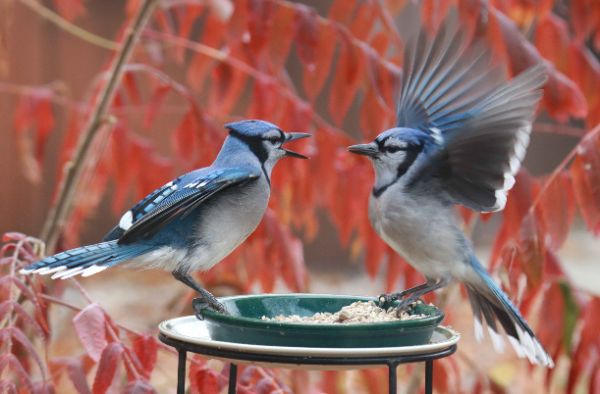
This feeder action was interesting and entertaining to watch, but it was especially exciting to try to photograph. My zoom lens served me well, as I zoomed out when more jays arrived, especially to fit flashing wings and spread tail feathers into the photo frame. But with the fast action came a need for a fast shutter speed and as wide an aperture as possible, yet the low light conditions offered neither of these preferences. Instead, in order to get the fastest shutter speed possible, I had to use the narrowest aperture possible – an f-6 – and even that compromise didn’t provide a very fast shutter speed to stop the action of the jays at the feeder. Often the shutter speed was in the 1/125 range, but it varied from 1/250 to as low as 1/6 of a second – way, way slow!
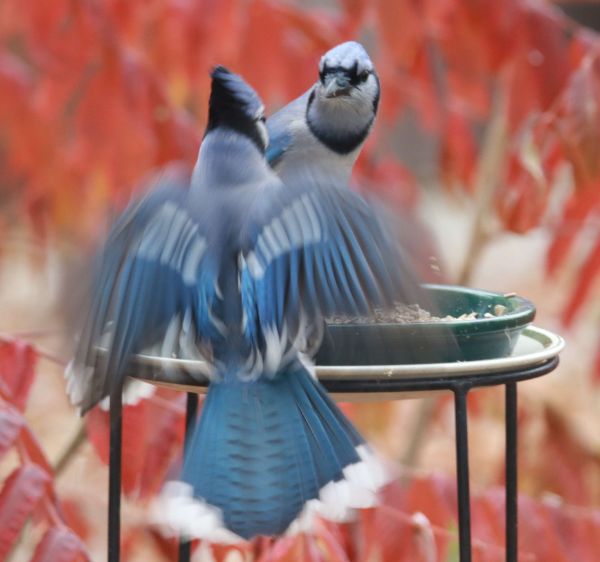
That’s when it became apparent that for lack of an option, this was a chance to try to take some blurred action photos that showed action in the form of somewhat blurred wings and other body parts. But that’s when bird photography became even more of a hit-and-miss situation, because it is almost impossible to anticipate how much blur will become too much. In fact, any flight movements by the jays was almost always limited to an unidentifiable blur. So it came down to following the action, taking photographs when interactions between jays happened, and hoping that some percentage of them – or even just one – turned out to be an interesting and acceptable blurred action photograph.
In the moment, when a second bird dropped in on the small platform feeder, I was on high alert and if the birds interacted, I took 2 photos in quick succession; and in some cases I took a quick series of 4 or 5 photographs if the action continued. In that case, especially with the shutter speed so slow, the number of sharp photographs was limited; and the number of interesting, higher quality photos composed a small percentage at best. But that’s part of what was required under the circumstances, and the fast camera action was exciting when a series of interactions ensued – exciting and fun!
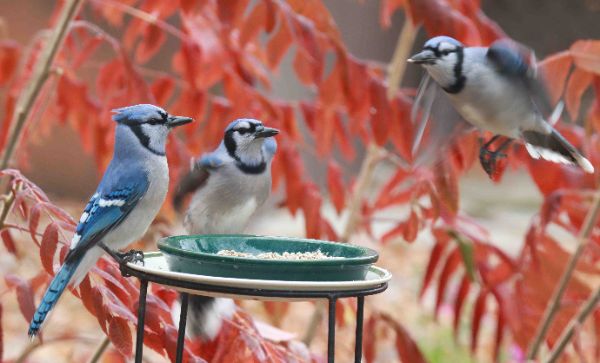
I usually do my photo editing after dark, when I can see colors and levels of sharpness better than during daylight periods, and that’s when it was fun to see photographs on my large laptop screen and to select my favorites. But during breaks between jay visits to the feeder, I took a quick look to see how photos were turning out on the camera’s tiny review screen. Then it was already apparent there should be a few keepers that might fit into a photo series for this article; but on the big screen I could really get serious about the selection process. Photo editing is always interesting, especially when it get your creative juices flowing and leads to a rewarding experience. This is especially true when one photo leads to another and the images serve to illustrate a series of activities, with one image leading to the next. In spite of the poor lighting, the keepers were quite good in quality, so I only did my usual simple cropping of extraneous background to give the selected photos the best look possible.
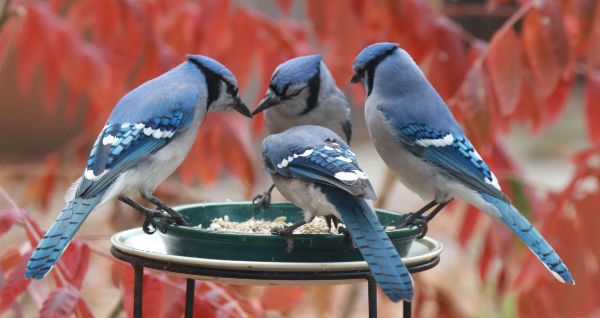
Of course, other birds were attracted to the platform feeder, quite a variety actually, but when Blue Jays were on hand, the other birds waited on the sidelines. To see photos of some of the other birds, you can easily refer to the Backyard Birding article at the top of this issue. The winter feeding season is just getting started, and new birds will migrate into view periodically with some stopping for a quick refueling stop, while others continue to appear for days or weeks into the leafless season. So take advantage, give feeder photography a try, and appreciate that the photos featured here were taken under what I would have suggested were the worst conditions – yet they turned out nicely, if not miraculously. Good Luck!
Article and Photographs by Paul Konrad
Share your bird photos and birding experiences at editorstbw2@gmail.com