
When photographing birds, Timing and Sunlight are especially important ingredients. The time of day when the sun is at a slightly low to medium low angle below an overhead position is best. Timing also includes watching the weather to be sure you plan bird photography sessions when there is the best chance for sunny weather, or at least a partly sunny sky. And then there is the time of the season when the birds you hope to encounter will be present, or even in full color plumage. Sunlight, the time of day, and the time of the season all enter into planning for a bird photography outing.
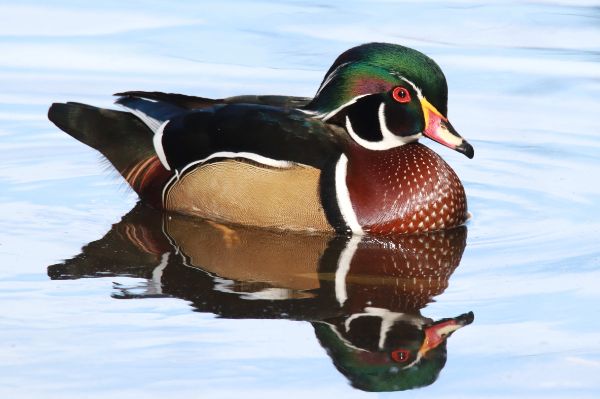
Case in point, I was interested in photographing Wood Ducks, and my go-to location is a tree-lined marsh north of Minneapolis. During September, Wood Ducks in central Minnesota were still in the late stages of molting, which included their all-important crest feathers, so October seemed to be a good bet – before the colorful ducks begin migrating south. I also checked back on photographs I took in the area some years ago and saw the best Wood Duck photos I’ve managed to date at that spot were taken in mid-October, the 16th to be exact. With that in mind, the timing was right for a mid-week photo trip – if the Wood Ducks were on hand at that traditional location.
That’s when the weather report became paramount, and while Monday and Tuesday were overcast with rain, there appeared to be a narrow window of potential sunshine Wednesday afternoon in the area north of Minneapolis before clouds and rain moved in again Wednesday night. Would the break in the clouds materialize? It was go time, so to be on site, I hit the road late Tuesday afternoon, a half-hour after finalizing that week’s Wednesday issue of The Birding Wire. Arriving near the Twin Cities just before midnight, the next morning a blanket of low gray clouds obscured the sky and the chance of seeing the sun seemed especially remote, but the hourly weather prediction still suggested a break in the clouds about 1pm.
The first step at that point was to check to see if there were Wood Ducks at my intended photo location. Last year when I was hoping to photograph Woodies there, my van blew up (literally) about 20 miles away from the marsh, and after putting out the small engine fire and having the van towed to the nearest junk yard to be crushed into scrap metal, waterfowl photography was no longer on my list of things to do. But today would be much more successful – right?
As I walked a little path to the most likely location to find a couple Wood Ducks, there was a small flock of Giant Canada Geese on the open water, but no ducks. Then, in the shadows of some colorful trees, a few Mallards materialized, and upon closer inspection, there was a pair of Wood Ducks – hooray! And there were more Woodies as I watched – 8 more, for a total of 10 Wood Ducks! I didn’t want to disturb them with the hope they would be on hand in a few hours when the sun might break through, so backtracked and texted my niece Katy to see if she was open to an earlier than expected visit with her and 2½-year-old Anders (the nature boy!). We enjoyed time together until 12:30, when I headed back to the Wood Duck marsh as clouds showed promise of breaking up.
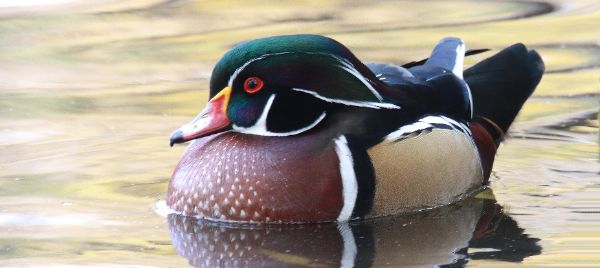
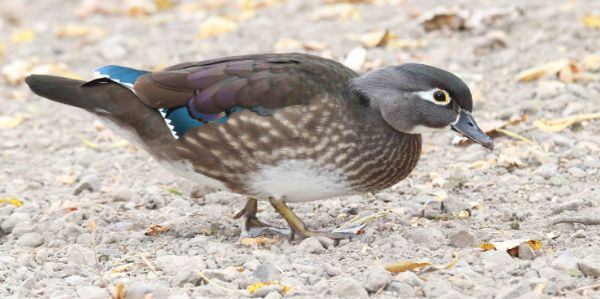
The ducks were pretty animated when I returned, with 8 foraging among fallen leaves on an area of bare ground adjacent to the wetland shore. They even provided a few initial photographs when the sunlight beamed through from an occasional break in the cloud cover. It took a bunch of patience and a couple hours before favorable sunlight provided the bright natural colors I was hoping to reproduce digitally as I photographed the small, colorful ducks. However, even when sunshine was available, it took a little longer before an occasional duck or pair of Wood Ducks would swim into open areas between the shade of trees for me to photograph with some certainty the photos were coming through with the best possible quality.
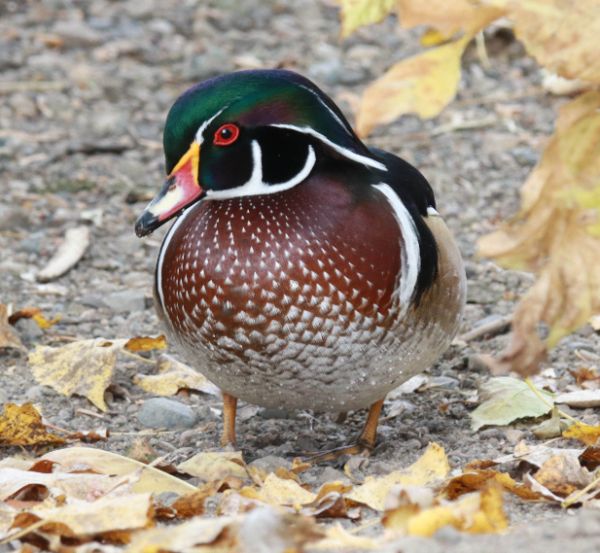
As I periodically referred to the small review screen on the back of the camera, the series of photographs I was taking provided the truest feedback of how the light or lack of it was affecting photographs I took. The review photos also showed a dramatic improvement as soon as direct sunlight created top quality colors and reproduction of the birds’ plumage and other avian features. In some cases though, the color reflected on the water was quite different from the color reproduced on photos – perhaps because the Wood Duck colors were quite dark compared to the brightly reflected light on the water. In many photographs the light blue color reflected on the water surface turned to white, which may have been due to the bright background reflection from the larger lake area. But I kept trying, becoming ever-better at judging when and where the ducks would be more likely to provide the best-quality color reproductions.
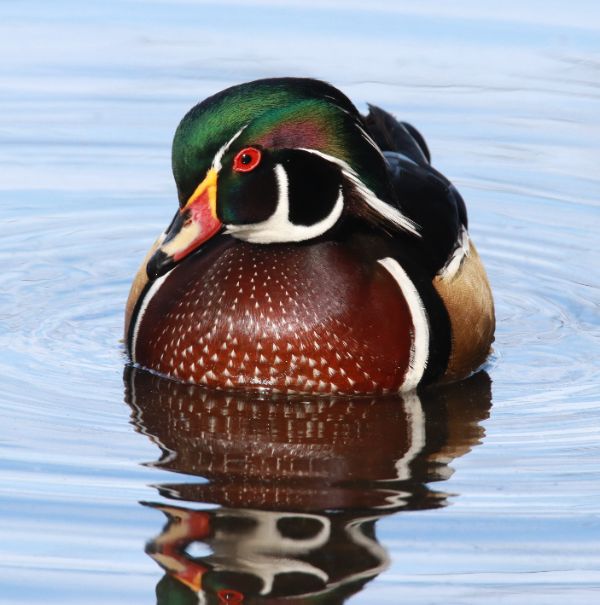
When the sunlight was best, slightly to the south with my shadow pointing at the ducks I was focusing on, the Wood Ducks showed the least amount of action – often simply floating on the water as if resting – but the resulting photos provided excellent portrait images. Considering all the variables and potential game changers related to this Wood Duck photo trip, it was a complete success during the short photo period I had to work within – as dictated by the weather and the limited period of ample sunlight.
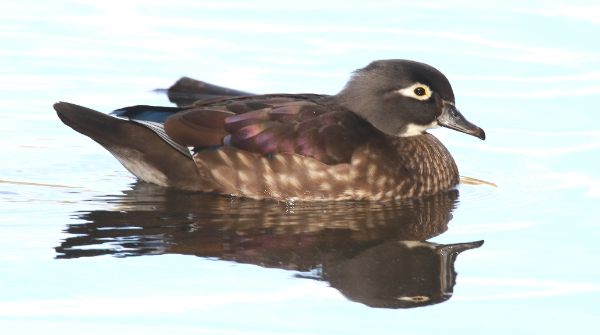
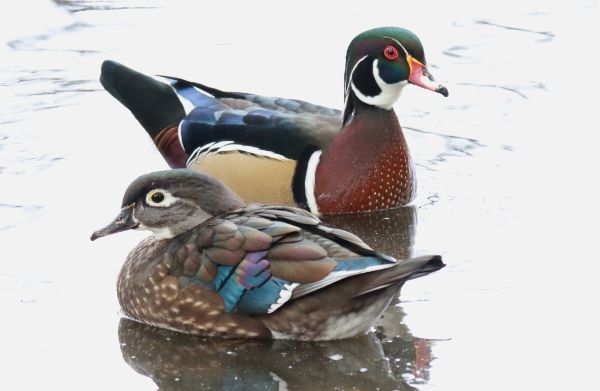
By about 3pm I felt I had done all I could photographically, having managed ample photos of male Wood Ducks. Even though it seemed I had fewer photos of females, that’s just the way it worked during the hours I spent, and I’m happy with the representative photos of females I managed to get. Photographs of pairs together were even harder to procure, but a favorite was taken in a lighting position that was a little less than optimum, and the result was a very pale white water color such as I mentioned above.
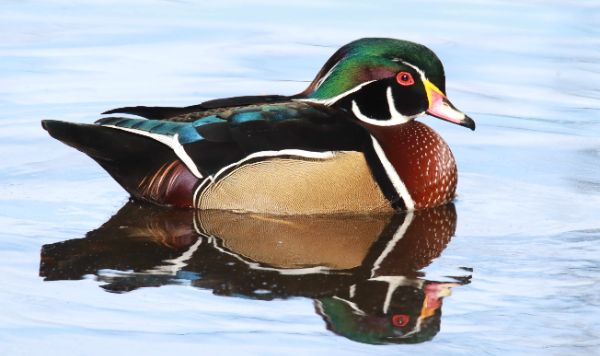
Nonetheless, getting one good photo of a Wood Duck would have made this photo effort a success for me. And the chance to observe and photograph what many people consider the most beautiful birds in America and southern Canada was especially rewarding and enjoyable – as was the chance to rejoin Katy and Anders with the addition of my nephew Jeff for a satisfying visit and hearty dinner – hard to beat that combination. I usually take photo opportunities as they present themselves while birding, so this was a different angle on bird photography, in which I was pretty species-specific in my photo focus; and especially considering the photo location was 6 hours down the road. But seeing my family was a huge plus, and the photos made it all worthwhile. Good Luck during all your bird photography activities, near and far.
Article and Photographs by Paul Konrad
Share your bird photos and birding experiences at editorstbw2@gmail.com