
I often emphasize the need for good sunlight, because sunlight from behind your position produces the best quality photographs with the most accurate colors. It also provides sharper focus and better contrast, while bringing out highlights in the face and plumage. I understand this, or overstand it, to the point of not opting to go birding unless there is good sunlight, mostly limiting my time afield to a period when the sun is beaming at the best angle to illuminate the birds I find to photograph.
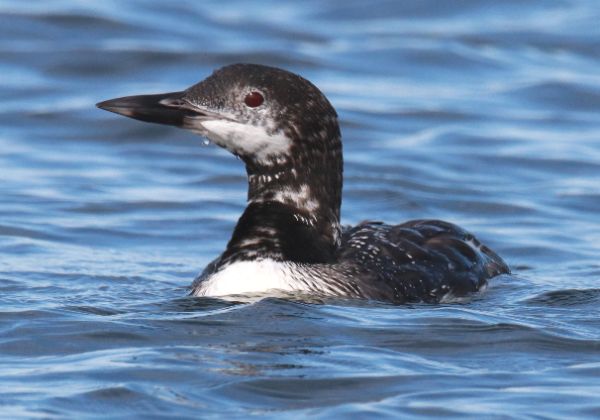
After returning from photographing Common Loons at the Pelican Lakes in Minnesota a dozen days ago, while reviewing the photos from that eventful day I was reminded that at the end of that photo session an expanding cloud formation progressed far enough east to affect the quality of the sunlight in a big way – instantly. The colors, contrast, and highlights in the loon’s features were very dull compared to moments before, plus it also changed the color of the water, which made a huge difference in the quality of the photographs I took during the brief period when the cloud affected the scene and photo quality.
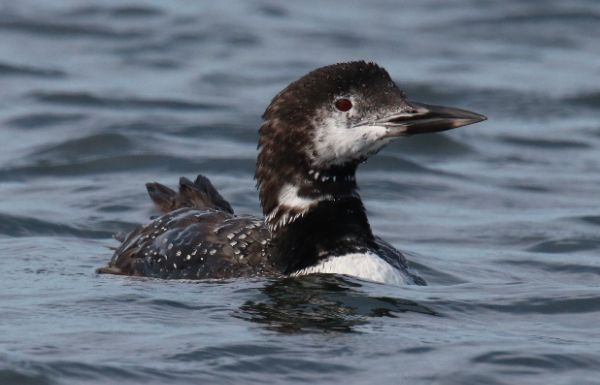
The beautiful wind-blown water turned from bright blue to a dingy, dirty-looking gray – looking more like a black & white photo than a color photograph. The bird’s colors weren’t affected nearly as much, with the white remaining almost as white and the differences in the bill color remaining mostly alike. But if the loon still had its alternate plumage that shows some iridescent green qualities on the feathers of its head and neck, the colors would have changed to a monotone black. And what a difference the dark water devoid of highlights and reflected blue sky made. It was not a photograph I would keep or share with anyone – except as an example of how important good sunlight beaming from behind is to producing a fine image. In this case the difference in water colors made a huge difference, and the photos show the variability of water color provided by the reflected sky along with the texture the windblown water.
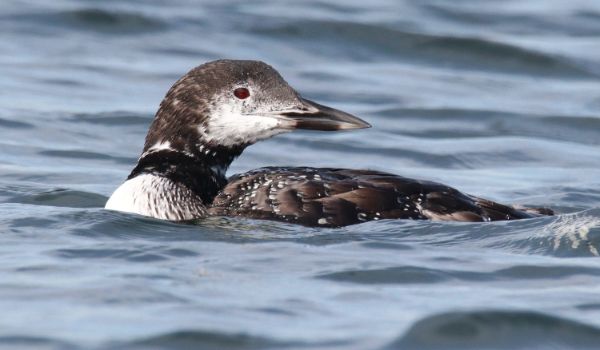
The third photograph shows how when the sunlight returned, the resulting loon photo was a bit overexposed (overly bright). It is an interesting image nonetheless, and in another way it illustrates how the light and surrounding scene can affect the bird and its surroundings as you photograph. The 3 photographs shared here were taken within a minute of time, so they provide a good trio of examples of how weather and sunlight conditions can affect your photographs. And how timing with respect to sunshine is important when planning a photo trip. While I share my best photographs taken of the molting loons in last week’s issue, I wanted to emphasize the importance of these essential elements to taking a quality photograph (the first of the 3 provided here). Keep the sun at your back and your shadow pointing at the bird, but if the sun is screened by clouds, I’m staying home.
Article and Photographs by Paul Konrad
Share your bird photos and birding experiences at editorstbw2@gmail.com