
Feel the Spirit of the eagle in flight, plying the windless evening sky in a straight line that sweeps into a graceful 180-degree banking turn. Leveling off again, the young eagle’s flight continues directly in front of the camera, followed intently through the zoom lens as it veers in my direction. As it passes my stance and circles as a silhouette between the low sun and my position, I raise my left hand high and called happily “Thank you, good luck young eagle!” As if reacting to my raised voice, it broke its circling flight and flew directly toward me, prompting me to raise my camera again to document its slow gliding flight directly overhead. What an exciting surprise!
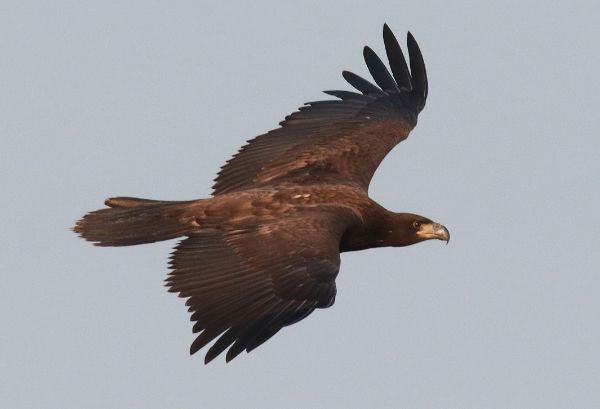
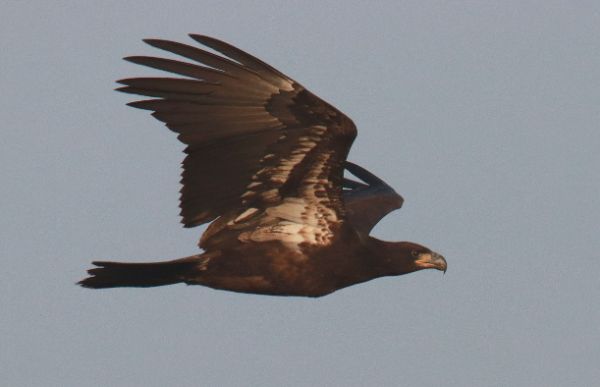
As a birder, and especially as a birder with a camera in hand, how lucky could I be just at the edge of adequate evening light? I was on an extended photo drive that hadn’t offered many opportunities – surprisingly. But the biggest surprise was the eagle flight described above and illustrated here as it took place before me. I sighted the young Bald Eagle that probably left its nest less than 2 months ago as it perched atop a tree on the edge of a broad wetland. I double-checked my camera settings from a distance and waited a few moments for a small cloud to clear the sun.
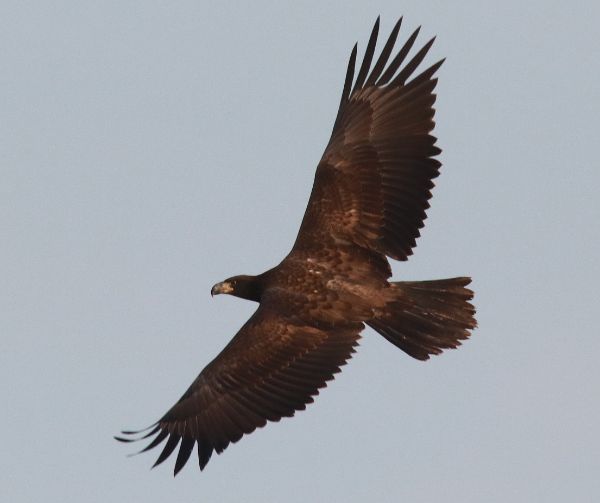
Sunlight beamed through again, somewhat subdued in the hazy western sky, but before I could move into a closer position, the young eagle took flight. To get a better photo vantage point I stepped out of my car to watch the eagle fly a straight line before me toward the south. I focused my lens on the eagle and took a few photographs as I followed its flight, then as it moved a bit out of range I prompted it to “turn, turn.” And turn it did, in a 180-degree banking flight that yielded a second exciting series of photographs as the young eagle exercised its wings before me, then angled closer until it passed behind me, as described in the first paragraph. This was certainly a delightful surprise at the end of a day trip, and an excellent example of how birding can switch a rather mundane outing into an especially thrilling photo event in an instant. It’s a prime example of the kind of excitement and surprise that fuels our interest in birds, birding, and bird photography.
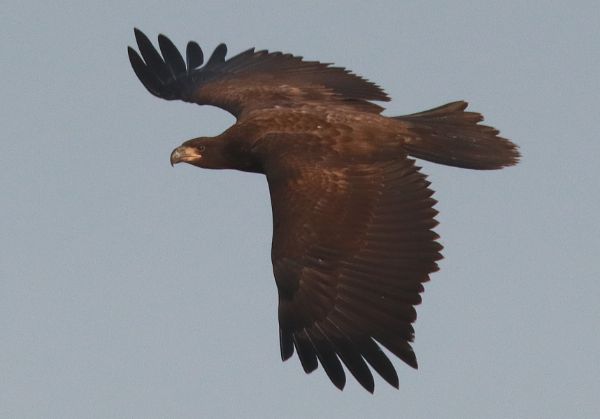
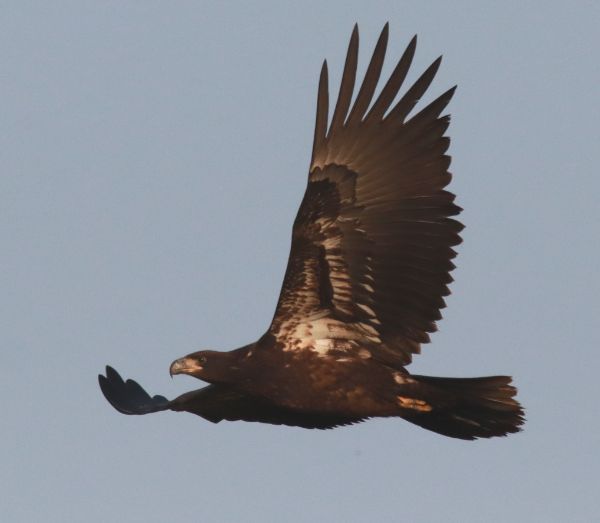
In retrospect, as I was momentarily preparing to move to a closer position to photograph the eagle, did the big raptor fly ever-closer to study me and my car? It essentially flew a half-circle around me, then returned directly above me. Maybe it was showing its interest in me as it is learning more about its surroundings day by day. By the way, after the young eagle flew directly overhead, it veered to the southeast a hundred yards to perch on the same branch where I first encountered it moments before. How could I have orchestrated such a photo interaction better? And how much fun and continued excitement the encounter provided to fuel my drive home, still searching for the next birds, but smiling all the way and anxious to review the resulting photographs on my laptop at my office desk.
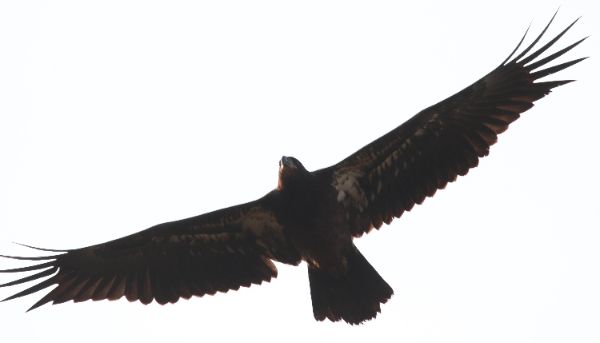
In the field I checked a few of the photos on the mini-screen on the back of my camera for exposure, lighting, and sharpness, but while the little screen can be deceiving, the images showed promise. On my 17-inch computer screen, where I do my photo reviews and photo editing, it was especially rewarding to see how beautiful the young eagle looked in its varied flight positions. As for editing the photos, I try to limit any photo manipulations to simple cropping, primarily eliminating extraneous sky in this case. Cropping also enlarges the bird within the new photo frame, which is often a plus for bird photographers. I usually try not to center the bird by leaving some extra space in front of its gaze. I’m especially glad to share my favorite photos in the series I took with you as they reflect the majesty of America’s national bird, even a very young Bald Eagle as it learns more about flying and the world around it.
Article and Photographs by Paul Konrad
Share your bird photos and birding experiences at editorstbw2@gmail.com