
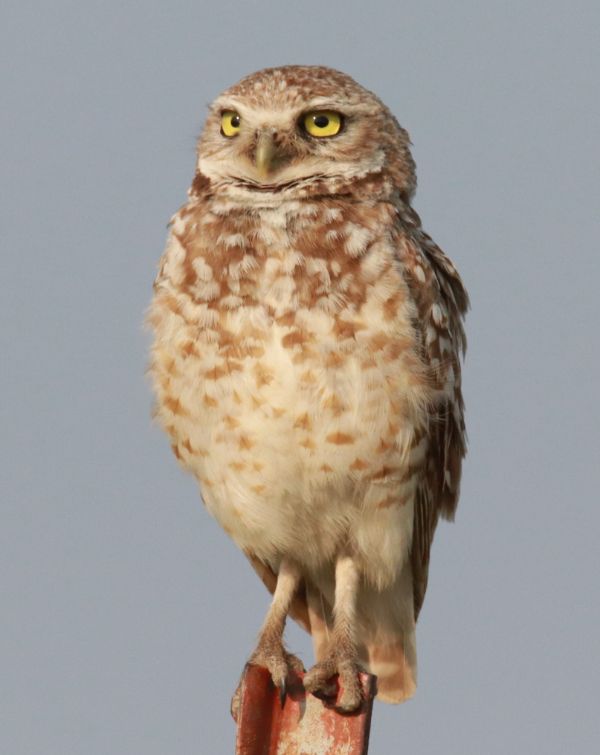
We have all photographed a bird as it perched on a branch, fencepost, or another location; usually it is a quick photo and the bird moves on – or we do. But recently I was reminded that when on territory, some birds have a favorite perch or perches they prefer to use on the edge or in the midst of their summer territory. Regularly used perches are usually associated with singing perch, a nest site, or a hunting location, so I’m always very careful about not pressing a bird too much to get into photo position, but while photographing a Burrowing Owl recently, I found that the male used the same perch each time I saw him and thought I might be able to get some action photos as he hunted flying insects.
I kept my distance at first, but during my third visit in 2 weeks I noticed the small owl seemed to have complete trust in my advance and positioning. And when the female suddenly appeared on the very next fencepost, she seemed to be immediately relaxed with my mobile blind (white car) parked nearby with the sun behind it. I concentrated on the male, considering I didn’t see the female hunt, and each time the male caught an insect, it took the big bug to the location of the nesting burrow – then returned to its fencepost perch. Using my Tamron 150-to-600mm zoom lens, I zoomed back a bit to increase the size of the area surrounding the metal post in the photo frame to try to keep the small owl’s wings within the frame as it flew to the post. As I waited for the owl’s return, I pre-focused on the fence post and used a medium aperture of f-8 with the hope of keeping the entire owl and its wing and tail feathers in focus.
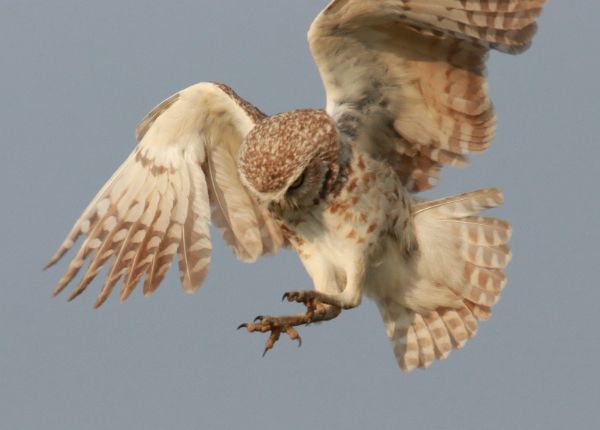
I couldn’t see the owl coming until the last second as it approached its favored perch, so there was a level of anticipation and keeping alert until the quick movement of the owl precluded its landing. I have the camera’s Al Servo setting set at “continuous”, so as soon as I press the shutter button and keep it depressed, my camera takes 5 photographs per second, providing an exciting fast-action series of photographs as the owl landed on the perch. In the series of photos that illustrates this article, I was surprised that the owl dropped in from above rather than its usual approach from the ground. That resulted in part of the owl’s left wing being just beyond the photo frame, but the fact that it bared its talons as it reduced its speed with its broad wings and tail spread to brake its approach helped to focus attention on the owl’s feet. And all the other photographs were well-centered in the camera frame, from landing to balancing to folding its flight feathers. As it checked its surroundings and searched for the next bug or vole, I took a couple more photos to show its more relaxed positioning.
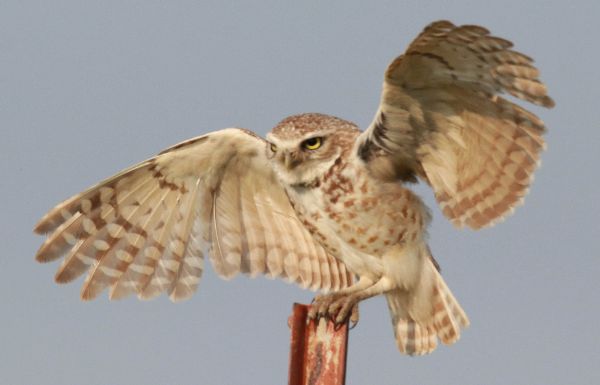
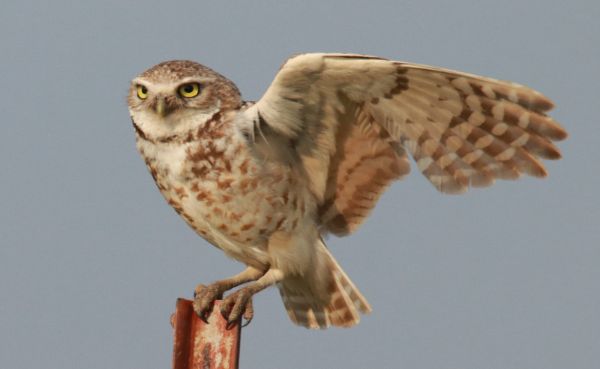
You never know the results of such an interaction between you, the camera, and the owl until you have a chance to review the photos on the big screen of a laptop or desktop computer, but I saw the photo series had strong merit when I quickly checked the images on the small LCD screen on the back of my camera. I had a chance to take a second series too, but the first series, taken only a few minutes after my arrival, was pretty hard to beat in retrospect. In addition, the lighting was as good as I could hope for – bright but lightly subdued as the sun was at a lower elevation toward the horizon. The positioning of the sun behind me also reduced the chance of shadows from beneath or at one side. Voila!
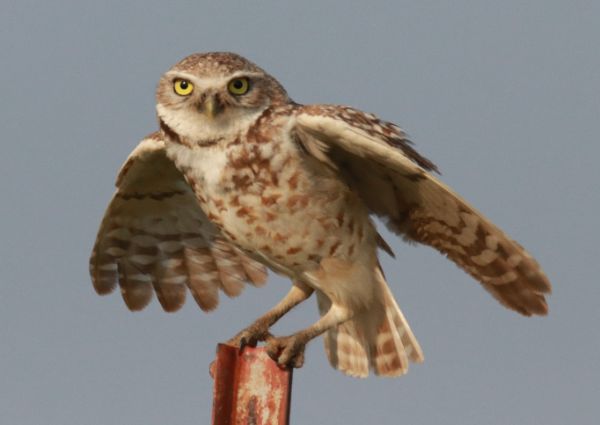
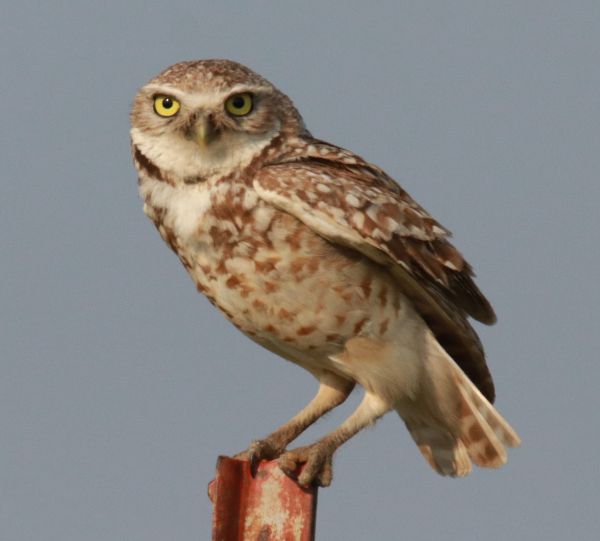
Of course, any bird can be the star of the show at a frequented perch site. The show being a series of photographs, of a bird landing, singing or calling, stretching, flapping its wings, or even preening. Often it comes down to finding the right bird – one that permits you to melt into nature so the bird acts as if you are not there, or it embraces you as part of its realm. Sometimes a bird must get familiar with you, and I played it safe with the male over time, getting a little closer each time I saw it; while the female was never concerned from the first moments forward. I always keep the bird in mind and stop or back off if I get the impression the bird isn’t comfortable – the birds always comes first, especially during the nesting season, when they are on territory, feeding mates and nestlings, hatchlings, or fledglings. Enjoy your summer photo sessions, and embrace photo ops when they are presented by feathered ambassadors. Thank you Ambassador Burrowing Owl.
Article and Photographs by Paul Konrad
Share your bird photos and birding experiences at editorstbw2@gmail.com