
Pleasantly surprised to find a favorite duck brood location bustling with recently hatched ducklings, I was especially happy to have the chance to search for duck broods, find some, and photograph most of them. Attentive females with ducklings aged between 1 day and 2½ weeks were spread around the edges of the marsh, eventually numbering 12 broods comprised of 4 species in all: The 2 cavity nesting ducks were Hooded Mergansers and Wood Ducks, plus Mallards, and new brood of 11 newly hatched Northern Shovelers with a special female leading them to feeding shallows.
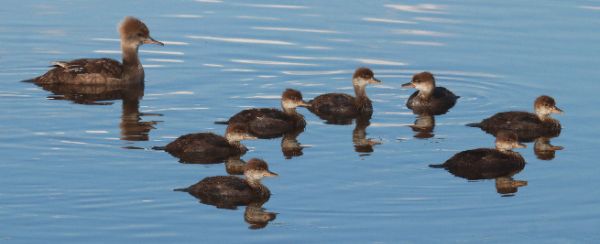
Dogtown Marsh, better known as Dogtown Waterfowl Production Area is located only 10 miles east of Bismarck and during late June and early July this small marsh usually turns into a very impressive duckling rearing wetland. Dogtown waters have been unusually quiet this spring, but after driving 120 miles across the Missouri Coteau and seeing only a single Mallard brood along the way it was my last hotspot check – and it turned my birding afternoon around from an all-too-typical outing to an exciting bird photography opportunity. This small marsh usually turns into a very impressive duckling rearing wetland, but I thought this visit was too early to find so many duck broods last Wednesday!
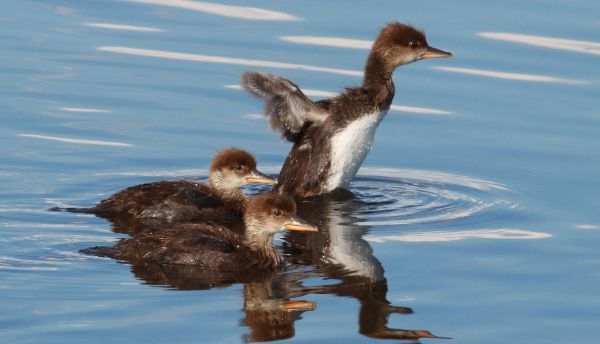
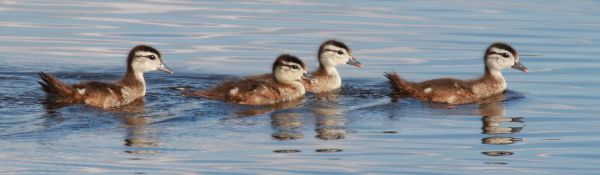
The species and number of ducklings attended by an adult female included 3 Hooded Merganser broods numbering 3, 9, and 4; 2 Wood Duck broods numbering 11 and 6; 2 Northern Shoveler broods with 11 and 6 ducklings; and 5 Mallard broods numbering 6, 7, 3, 6, and 9 ducklings – with all broods being led by an adult female. That’s a total of 81 ducklings – already! And there will undoubtedly be many more broods that will arrive at this relatively small wetland area in coming weeks as more Mallards and Northern Shoveler ducklings continue to hatch, along with later-nesting ducks such as Redheads, Canvasbacks, Blue-winged Teal, and Ruddy Ducks. The chance to photograph a variety of broods of ducklings was especially exciting as the fluffy little guys followed the adult females to reach a feeding location, then spread out a bit around her to forage for small insect larvae that are developing in their aquatic larval stage.
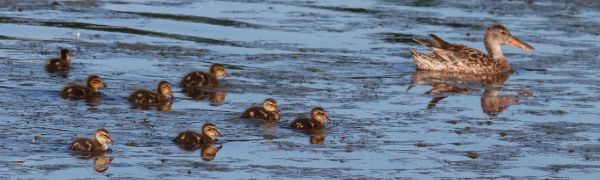
Because there were many more birds involved in each photograph – up to 12 at a time – I opted to use a broader than usual f-11 aperture to keep as many ducklings in focus as they meandered around the adult female. With bright sunlight at my back, the f-11 setting still provided a corresponding shutter speed that averaged about 1/1000 of a second during this photo session. While trying to keep all the ducklings in focus, I have found that it is best to focus on the closest duckling, and hope as many other ducks are within the focal range of the aperture used, the female included. While photographing, I tried to watch for key ducklings and the female to be in a pleasing position, especially with concern for how their heads were turned, and prepared for a little action, like a wing flap or gape stretch among the group. It becomes a bit tricky though when you have several ducklings moving quickly, so it’s worth taking many photos and picking out the best during your review and editing process. That’s when you can also crop extraneous background areas to improve any photograph you choose.
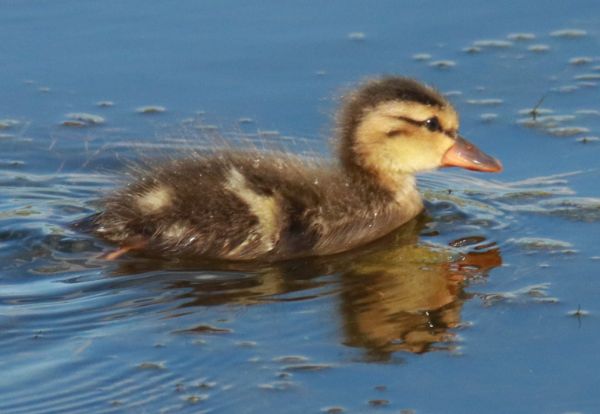
With so many ducklings in a brood with the adult female, it was necessary to was to zoom in and out depending on how close the group was to my position, as well as how spread out the ducklings were as they foraged, rested, or followed the adult female. As a result, zoom magnifications varied from 270mm to 600mm. Zooming the lens added another step in the photo process, and at times the movements of the brood required relatively quick zooming action, which is kind of fun too. The entire opportunity was truly enjoyable, exciting, and inviting; so much so that after an hour in Bismarck to get a hair trim from my friend Janine, I couldn’t help but return to Dogtown Marsh to resume photographing duck broods under even better lighting conditions and a subdued breeze from 6 to 7pm.
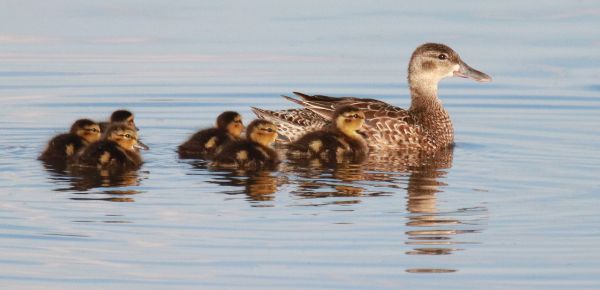
As the week continued, more duck broods revealed themselves in my home range, mostly Mallards. But 4 days after my Dogtown encounters, as I was photographing an American Avocet preening, a Marbled Godwit in flight, and a Blue-winged Teal drake resting on the surface of a beautiful watery scene at Charo Marsh, a previously hiding female Green-winged Teal led her newly hatched brood of 7 ducklings out of a new growth of bulrushes and into the same dreamy blue water. The resulting photos were some favorites, partly because of the rareness of the species during the nesting season in this area and partly because the ducklings are so small and seemingly helpless – but that will change quickly as the precocious new downies develop and grow. Photographing ducklings is always fun, fun, fun. As we experience this first week of summer, I hope the beginning of your summer bird photography gets off to a super start – Good Luck!
Article and Photographs by Paul Konrad
Share your bird photos and birding experiences at editorstbw2@gmail.com