
In the Bird Photography feature published in the May 6th issue of The Birding Wire I finished the article with this description of a pair of Red-necked Grebes: “When the male surfaced he looked in the female’s direction, called, and they met just behind some reeds where I could see they were facing one another with their necks stretched high as they began calling in unison. Although I took a photo, the grebes’ activity was obscured by the reeds; but I’ll get another chance was my reaction in the moment – someday.”
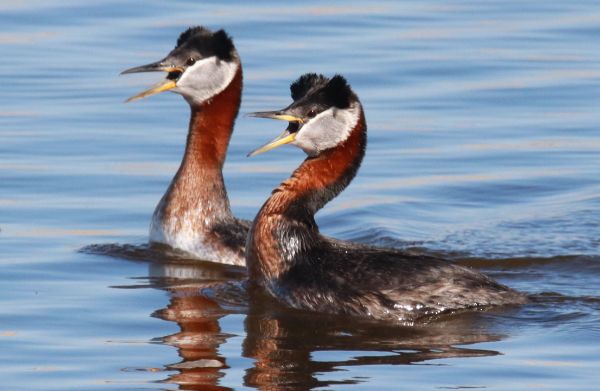
Only 4 days after publishing the May 6th issue, “someday” was realized May 10th during an especially interesting territorial interaction between 2 pairs of Red-necked Grebes on the edge of Herb’s Lake. One pair was positioned near the road with the female mostly hiding among the aquatic vegetation lining the edge, while a more territorial pair of Red-necks pressured the roadside pair. The interactions provided a very interesting series of interactions, but none more impressive than when the pairs would begin unison calling in a most impressive species-specific display. I was thrilled, and the birds were so enthralled in their territorial interactions that I was able to follow the action in my “mobile blind,” pulling ahead or reversing along the almost never-used road (especially on a Sunday evening).
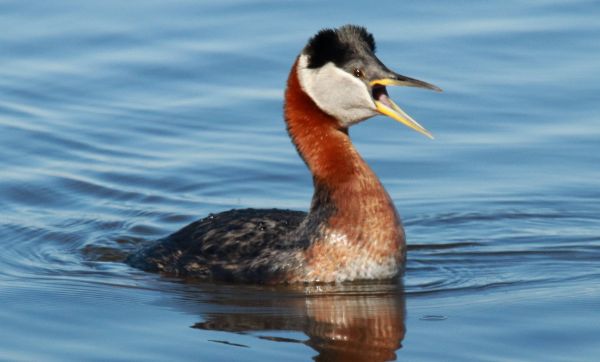
The photo action was exciting, and one of the keys to getting good photographs was to rely on the grebes to turn into the sun when they were close to my position. When they faced me, I was able to photograph them during the best sunlight of late afternoon as the charged-up grebes broke into a unison call display. Luckily, both pairs performed this exciting display a number of times and it was a personal thrill to witness the interactions, photograph them, and see the resulting images. I ended the May 6 article with an appropriate suggestion to all photographers: “Stay alert, spend some extra time in the field, and when you find a bird or birds to photograph, spend some extra time in their company – you never know what might transpire before you – and always have your camera within reach and ready for your next photo opportunity.” Good Luck during all your photo opportunities!
Article and Photographs by Paul Konrad
Share your bird photos and birding experiences at editorstbw2@gmail.com