
Spring migration brings the added excitement of seeing a new species arrive for a migration stopover or as a potential nesting species. Friday evening, as the wind was calming and the water was becoming smooth in ever-lighter shades of blue, a regularly rare bird slipped into view – the first of spring Red-necked Grebe. It leisurely swam on the water side of dry cattails in a small bay on the edge of a large lake – a favorite bird photography location for a variety of ducks and waterbirds. Already in position with the low sun at my back and the new arrival swimming before me, I took a couple documentary photos.
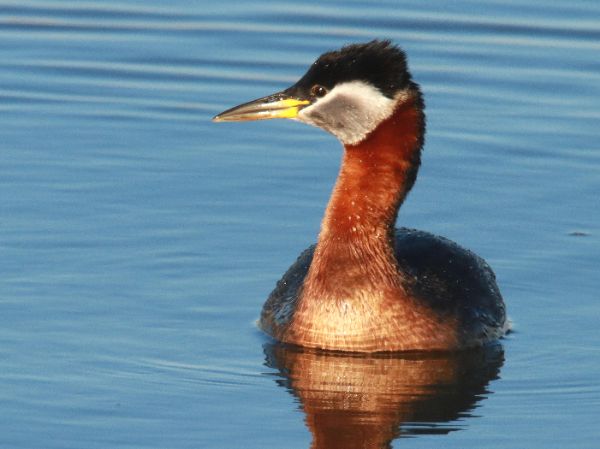
While the female kept her distance and anchored among some reed stalks, the male made his initial appearance and immediately provided better photo opportunities as he swam across much of the far side of the small bay, eventually moving into the midst of the open water area. I was thrilled to get some portrait-level photos of the pair, but the real action began when the male began diving beneath the surface of the water. Then, of course, it became a question of where he would pop back into view. And after staying on a pretty horizonal diving plain, without warning I was taken aback when he suddenly appeared within a few feet of my position!
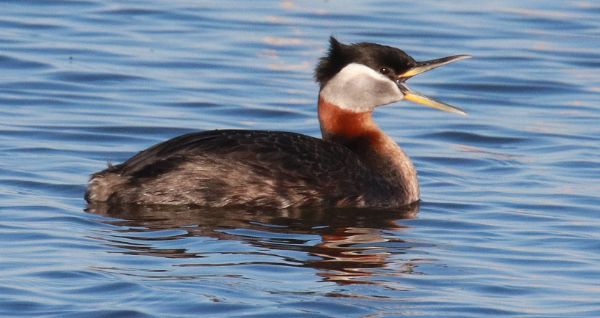
In retrospect, I’m not sure I have ever been so close to a Red-necked Grebe, which I usually find to be rather stand-offish, so I made the most of the moments as he faced me and turned his head side to side. Without warning he crouched low and quietly dipped into the water, barely making a ripple on the glassy surface. That’s when I noticed the female floating into the open some distance away, and although she was never very animated, I photographed her as she appeared to be stretching her mouth open, just as a breath of air caught her nape feathers to create something of a momentary crest, which added a level of character to the resulting photo.
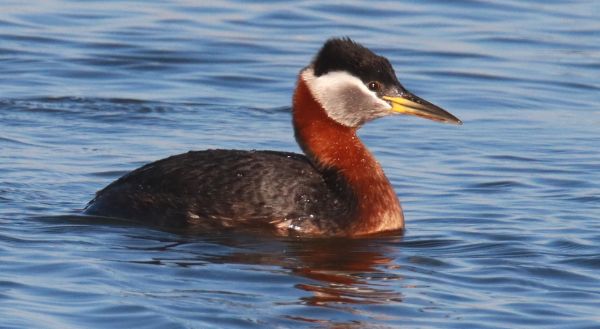
When the male surfaced he looked in the female’s direction and called, and they met just behind the reeds where I could see they were facing one another with their necks stretched high as began calling in unison. Although I took a photo, the grebes’ activity was obscured by the reeds; but I’ll get another chance was my reaction in the moment – someday. Stay alert, spend some extra time in the field, and when you find a bird or birds to photograph, spend some extra time in their company – you never know what might transpire before you – and always have your camera within reach and ready for your next photo opportunity. Enjoy the exciting spring days ahead!
Article and Photographs by Paul Konrad
Share your bird photos and birding experiences at editorstbw2@gmail.com