
Living in the Northern Great Plains, in the midst of one of the most attractive wetlands and prairie regions in America, I’m lucky to have a relative abundance of large sandpipers in my local area. With such exciting birds as Marbled Godwits, Willets, and American Avocets nesting here, along with rarer Hudsonian Godwits migrating through during spring, these impressive birds provide occasional photo opportunities, and that was clearly the case during recent days. These big shorebirds are truly graceful, and being much larger than the mostly minute sandpipers, they emphasize that grace in their movements and their flights.
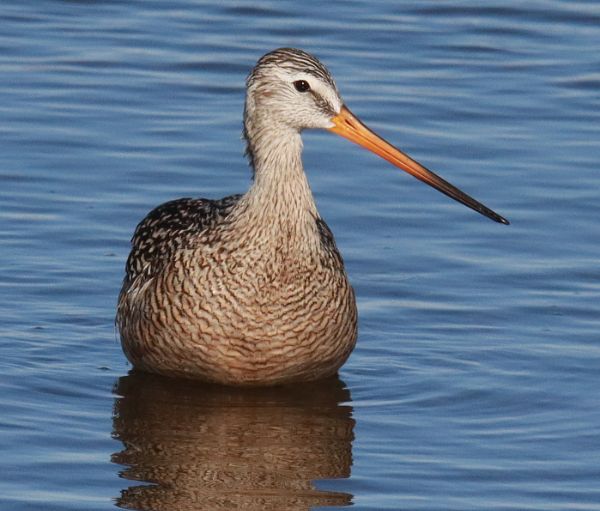
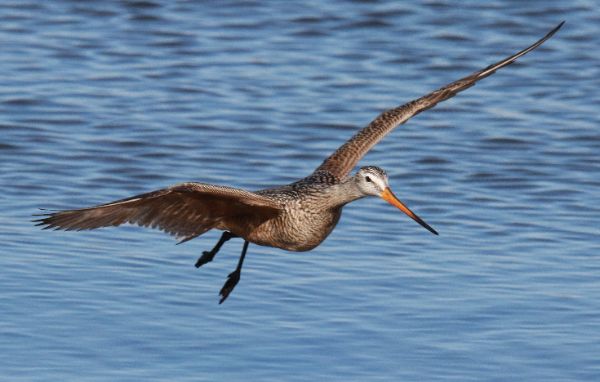
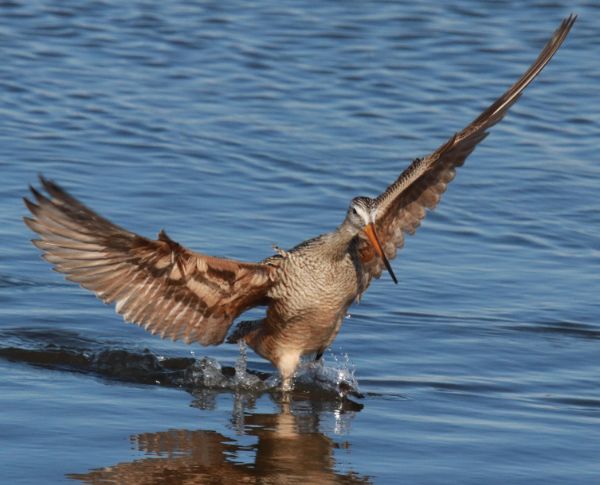
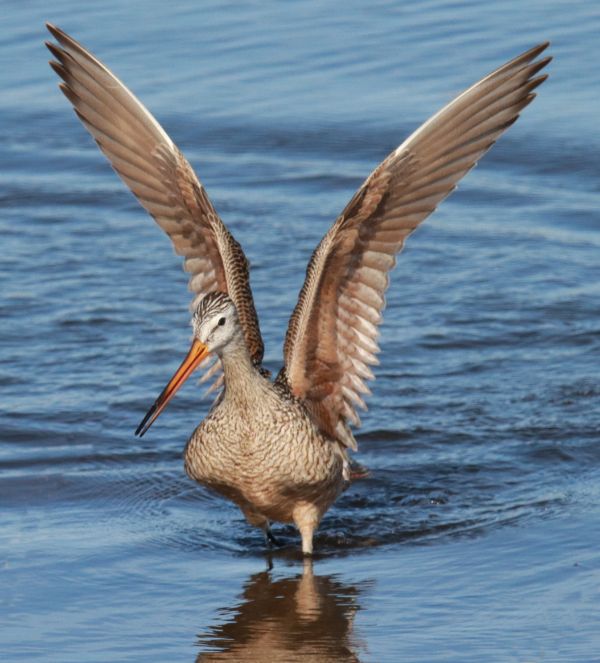
These large sandpipers are also very animated and sometimes loudly vocal as they protect feeding areas and nesting territories, sometimes in very aggressive ways that may result in one-on-one avian showdowns. These interactions are often not limited to single-species bouts, but may include a couple species of big sandpipers. That was the case when I observed and photographed an especially belligerent American Avocet that made concerted efforts to confront and chase a number of Marbled Godwits, Willets, and other avocets, which led to a series of photographs of a godwit landing after being displaced by the aggressive avocet. The resulting photos clearly show the elegance and grace of the big sandpipers of the northern prairie marshes.
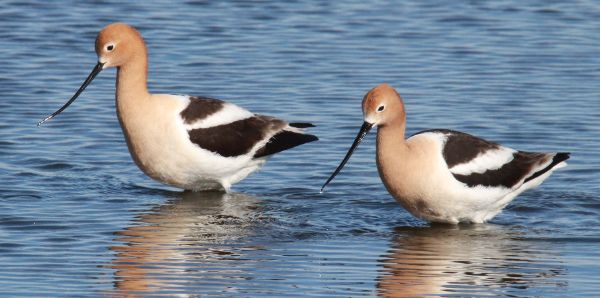
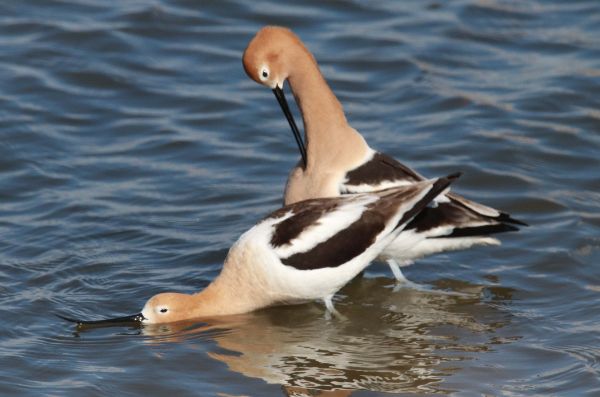
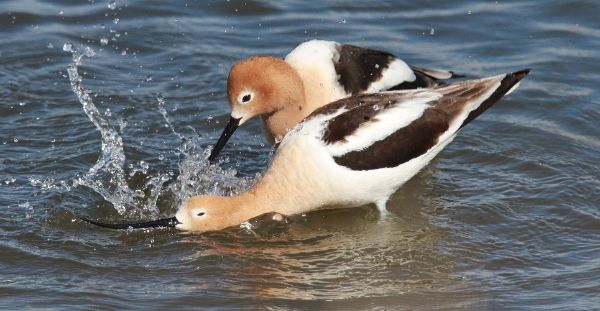
Of course, the word elegant lends itself well to American Avocets, and their cinnamon-colored neck plumage and pale blue legs make them an obvious winner for beauty along the shallows and shores of this region and far beyond. They are also very animated, not only during territorial aggressions, but during this period of spring they are also involved in a variety of mating behaviors, which seem to be more pronounced in this species, especially during pre-copulation. The interest and intent is quite obvious and involved as the male performs a series of actions while walking in half-circles behind and to the sides of the soliciting female. An interesting part of this sequence is when the male splashes water with its long, thin bill beside the female.
And back to godwits, my enhanced interest in Hudsonian Godwits goes back to 2017, when I had a chance to observe and photograph Hudsonians for the first time during 2 mornings while they foraged in a shallow marsh about 8 miles south of home. Finding these Arctic-nesting godwits during one of their brief migration stopovers between wintering areas in Argentina and nesting sites in tundra regions of northern Canada or Alaska is not an annual opportunity, but last year I enjoyed a few photo ops with multiple birds just 2 miles north of my office at Bobby’s Bay. I also found a few about 24 miles northwest on the shallow shore of a large lake, and so far this year I have observed groups of 2 and 3 Hudsonian Godwits at 2 favorite shorebird sites – Bobby’s Bay and Charo Marsh.
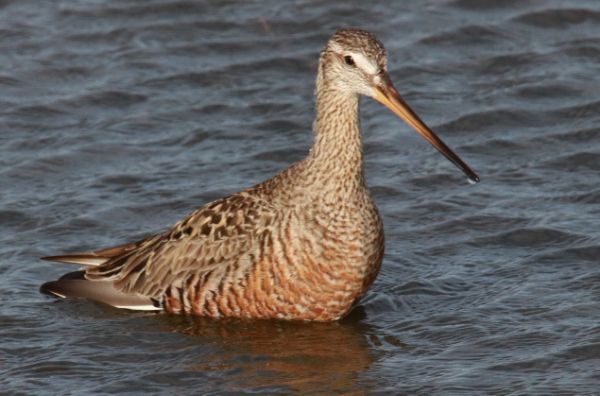
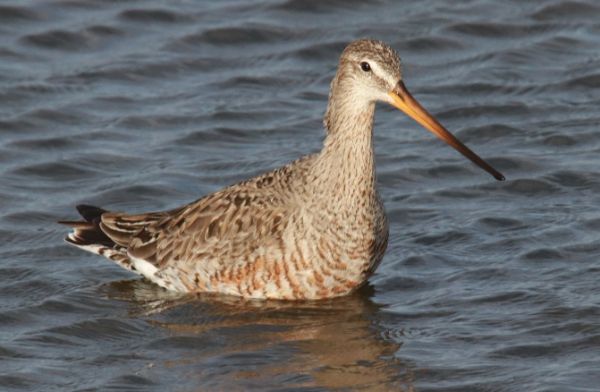
That brings up the point that you never know what triggers your interest and attraction to certain birds, but there is no question that certain birds excite me more than others, and Hudsonian Godwits are one of those species. And when you find one or a flock of these special species, it’s invariable that you will want to take photos of them, starting with documentary photos and portraits, then trying to add photos of any actions or behaviors that warrant something beyond documenting them – adding a bit more of an artistic flare to your composition or capturing key moments during a preening episode, such as when a bird flaps its wings. Perhaps you can photograph them during an interaction with another bird, or maybe during a repositioning flight.
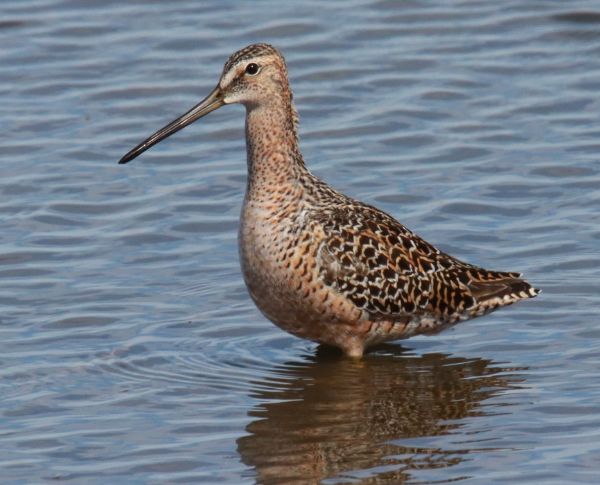
The big shorebirds provide great examples of the kinds of birds that can attract a lot of attention and offer some excellent opportunities for portraits and action photos. And that can be extended to the smaller sandpipers and plovers, along with wading birds like egrets, herons, and ibis, as well as waterbirds, waterfowl, songbirds, and any birds you encounter. In the moment, take advantage of all the photo opportunities that present themselves, provided by migrating birds and local nesting species alike. Even if a given photo op only provides a chance to practice using your camera and making a few adjustments to the aperture, give your camera a workout. Take a few test photos to check on lighting or shadows, every bird you encounter with your camera provides a new opportunity to get a representative photo of a species, an ultimate image, or a pleasing representative photo – it all adds to the thrill of photographing birds. Good Luck!
Article and Photographs by Paul Konrad
Share your bird photos and birding experiences at editorstbw2@gmail.com