
Action is a pretty broad term, and so is action photography; but this spring the action is rampant among the variety of ducks that have migrated into my area. And during the past 10 days it’s been the regal Canvasbacks that have been most active on the courtship and mating side of behavior, including ducks performing innate behavioral displays that are species specific. It’s always exciting to see these displays and to watch Canvasbacks interacting – as pairs or as groups – but getting close to these wary ducks is not an easy task or even a fruitful wish some years. This year, with an abundance of Canvasbacks in nearby marshes, I’ve been very active and photographically lucky among these impressive waterfowl, and I wanted to share some of the behavioral photos I managed to take with some insights about taking the photos and how these large ducks behave during their spring migration stopover period.
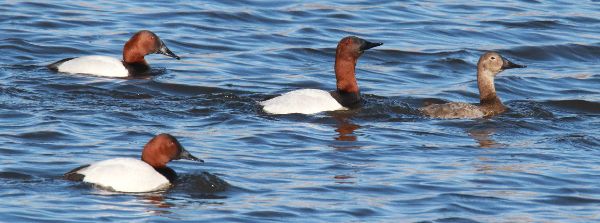
As always, it’s a matter of finding a photo-friendly individual, pair, or flock that will permit me to get into position nearby with the sun at my back with the hope of not impeding the ducks’ behavior. Secondarily I hope the Canvasbacks will relax, and maybe even approach my mobile photo blind (car) a little closer. This time of year it can even be a small group of ducks or a pair that is consumed by hormones and blinded by the lure of a sexual encounter with another Canvasback that can provide a surprise photo opportunity. Any photo ops are welcome, and when the action turns to behavioral displays between a female and her mate, or a female and interested suitors, the action can become both exciting and fast-paced when the big ducks slip into your camera lens’s range.
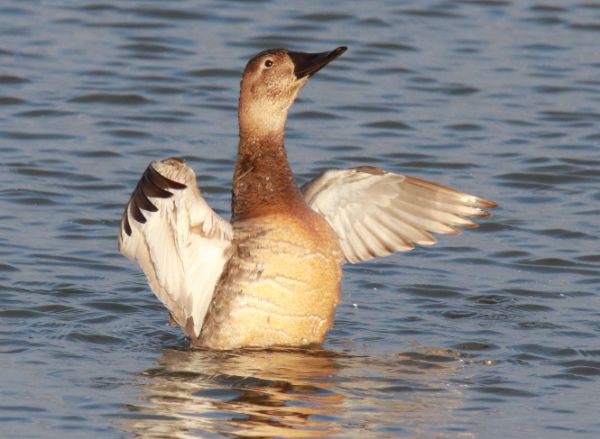
Several Variables: Lighting, water colors, bird colors, movements of the water in varied wind conditions, and of course, movements of the birds themselves dictate the successes of your photo chances and the quality of the photos you get. It's interesting to see how the colors of the ducks and water changes from marsh to marsh, hour by hour with changes in angle and intensity of the sunlight and wind. This week I was really surprised by momentary changes in colors as I watched a duck move through the water a few feet at a time, with different color shades changing as though a dial was being turned. The key was to take advantage of this interesting opportunity to take portraits of the duck as it was swimming, and anticipate unpredictable behavior that might transpire. At the top of the ‘variables list’ is the species’ behavior, including innate behavioral displays.
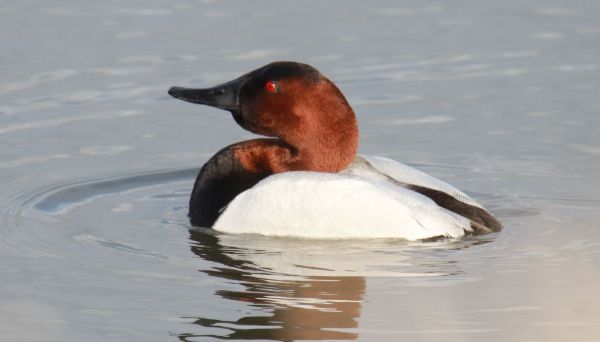
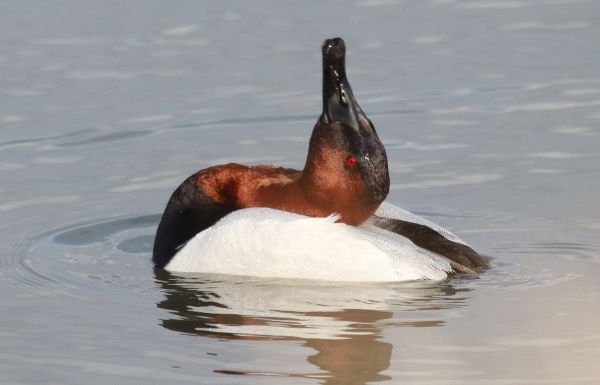
Canvasbacks have been very active at several area marshes between 4 miles north and 14 miles south including Bobby’s Bay 2 miles north and Melody’s Marsh ½ mile south, plus 8 other Canvasback marshes. This is Canvasback central for a period during their spring migration stopover, and this year area marshes seem to be especially attractive to the largest of all North American ducks. Most of the Cans nest farther north, possibly even at Canvasback-famous Delta Marsh in Manitoba, perhaps farther north. Some are wary, but most have been pretty trusting, and when you position yourself in a location near an active flock, they may move closer in a surprisingly short time, even while continuing their pairing and mating activities. And that’s when the excitement begins as you focus on individual birds, on pairs, and small flocks.
One especially surprising Canvasback episode began with a pair swimming innocently away from an active group of interacting Cans, swimming rather slowly, straight in my direction. As they approached closer, I began taking an occasional photo of the female, then the male separately, to get some head-on images of the ducks swimming on the quiet water. As they approached closer than I ever would have expected, they began angling closer to one another and I began photographing the pair together – and then it happened. Without any advance warning, the female lowered her and began moving slightly in front of the male, and after taking the first 2 photos I realized what was happening.
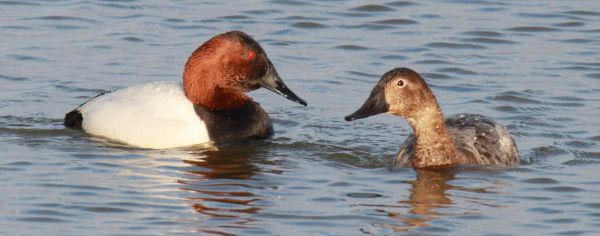
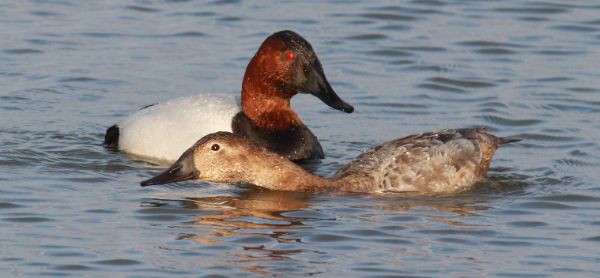
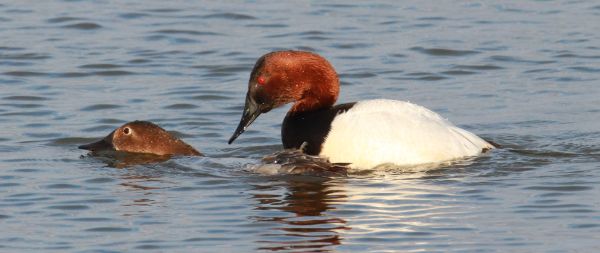
At that point I was photographing rather frantically to document what was sure to follow, but the male seemed to fumble a bit before regaining his composure and approaching the female as she submerged most of her body and the pair copulated as I photographed. Count to 3 and the female regained her composure and the pair turned broadside to begin swimming right. After a few feet, the female lifted her head and body upright to flap her wings, and the male followed 45 seconds later, and on they swam. It was almost as if they performed before my camera – true species ambassadors that provided a sequence that could be used to illustrate a college animal behavior text.
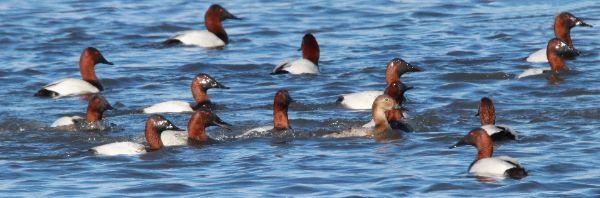
Was that the ultimate spring exchange between a pair of Canvasbacks? In retrospect, most mating displays are meant to lead toward pairing, mating, and ultimately to spring nesting and reproduction. The Canvasbacks I’ve been concentrating on photographing have provided a full spectrum of spring behaviors, and as with any birds, their behaviors and activities provided a variety of photo opportunities. Whether its Ring-necked Pheasants or Sharp-tailed Grouse, American Avocets or Wilson’s Phalaropes, Common Loons or Swainson’s Hawks, spring is in the air and it’s exciting to view the rites of spring while birding, especially when you have a chance to photograph bird behavior now throughout the nesting season. Good Luck!
Article and Photographs by Paul Konrad
Share your bird photos and birding experiences at editorstbw2@gmail.com