
After the 4-day snowstorm that dropped at least 15 inches of wet snow, Saturday afternoon’s sunshine was especially welcome! And the bright sunlight with blue sky from horizon to horizon and an abundance of waterfowl and other birds evident showed it was a textbook example of a day when every birder should be in the field with their camera. I was an enthusiastic participant and eventually realized I was going to retrace the same big circle as I drove 8 days earlier: South to the border of the Dakotas, east to Hecla Marsh, then turning south and west to Sand Lake National Wildlife Refuge – returning home after a memorable 6-hour birding extravaganza in heart of the northern Great Plains.
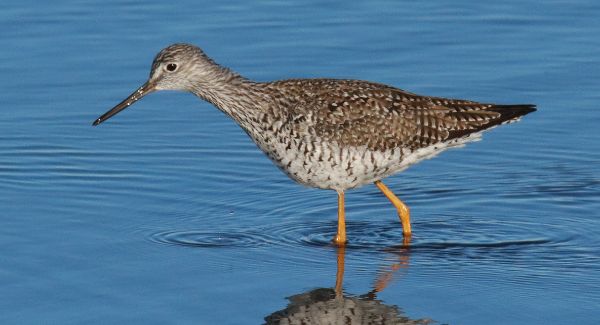
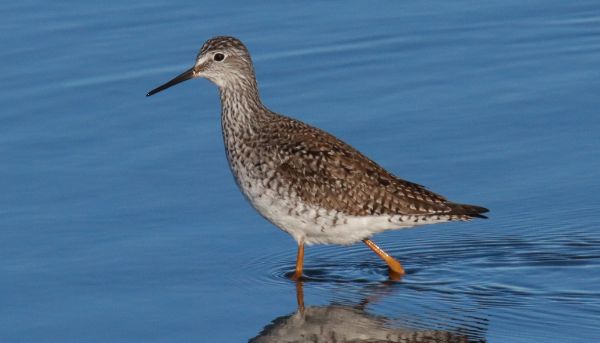
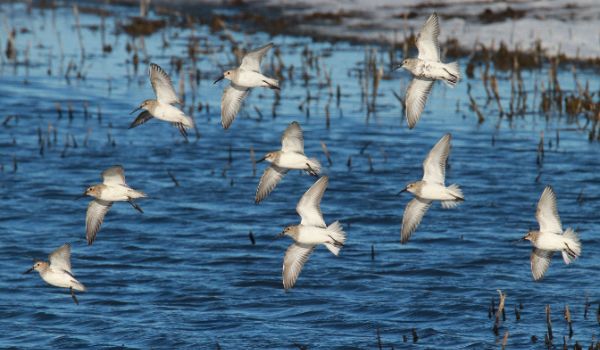
At Sand Lake Refuge I was surprised to find a variety of sandpipers – few but enthusiastic. There were 8 Lesser Yellowlegs with a couple Greater Yellowlegs and a surprise flock of 17 Dunlins with 2 associated Baird’s Sandpipers and 1 Pectoral Sandpiper – all new for the year except the Greater Yellowlegs! The yellowlegs provided some beautiful species portraits, and the Dunlins provided some fun action photo ops as they flew in formation from location to location to forage in a tight flock along a shoreline bordered with snow.
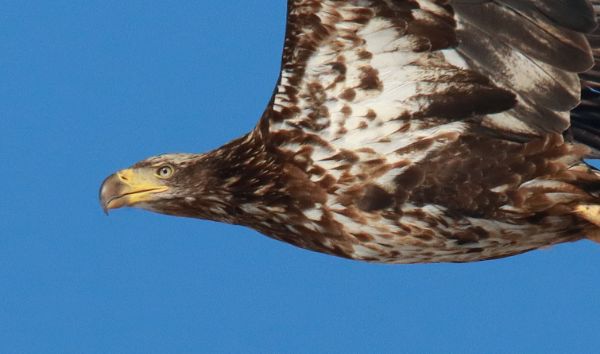
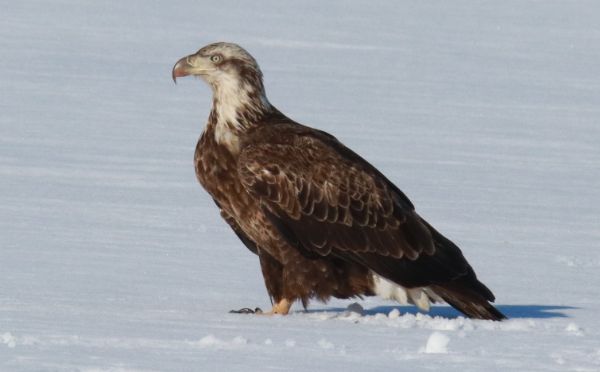
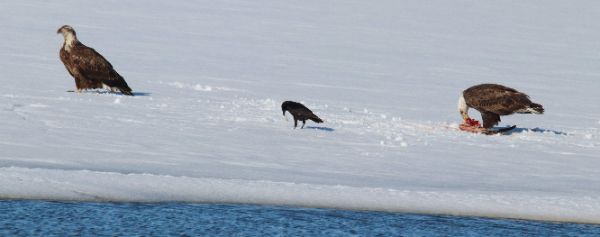
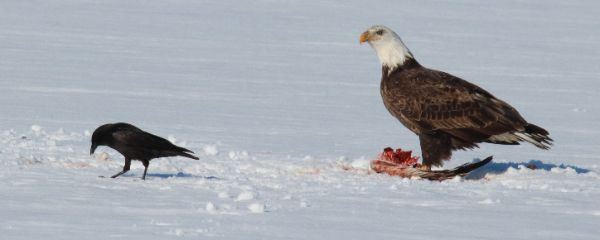
There were also at least 4 young Bald Eagles active in the northern part the refuge, 1 was a yearling and 3 were nearing adulthood as indicated by their plumage, which suggested they were 3 or 4 years old. The eagles provided some nice photo opportunities while 2 were feeding on a snow-covered ice shelf in the company of an American Crow, and while 2 perched on a bare branch. As I photographed the branchers, the younger eagle flew directly toward me, providing a head-on view with its wings spread straight from its sides. But it provided the closest photos as it turned more directly into the sunlight.
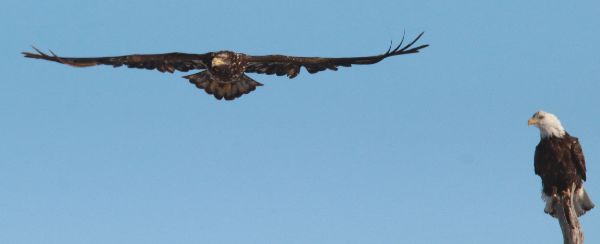
Certainly, the key to all the Sand Lake photographs was the ample afternoon sunlight that provided the best angle of light between 4pm and 6pm with the sun beaming directly from the west. The clear blue sky reflected in the calm meltwater, and by luck and a bit of planning the birds were positioned in excellent locations for me to photograph them as they fed and interacted.
Although there were limited photo opportunities beyond the refuge, there were plenty of ducks to check out, along with sightings of an adult Cooper’s Hawk, a Turkey Vulture, and a Northern Flicker along the way. About 5 miles to the east of the refuge 2 Short-eared Owls were beginning to hunt and a trio of Northern Harriers was also hunting a nice expanse of grasslands. Overall during the drive, I observed about a dozen American Kestrels, another dozen Northern Harriers, and a third dozen Red-tailed Hawks too.
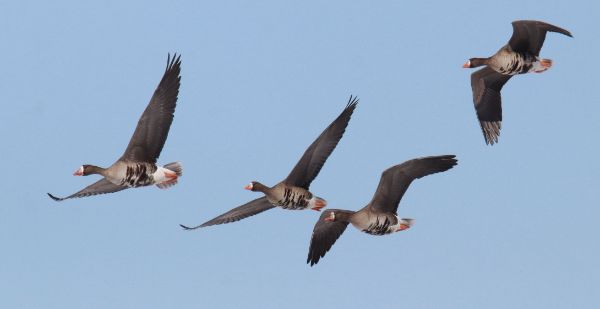
Male Ring-necked Pheasants became especially active the last hour of sunlight, and I tried to photograph them walking across the snow, but the colorful birds were especially wary in the open. During that same period flocks of geese spanned miles as they flew from the south to feeding fields closer to the Dakota border on the way home – mostly Snow and Ross’s Geese, plus separate flocks of White-fronted Geese in fewer numbers. It was a fitting exclamation point for a memorable birding photo drive punctuated by a welcome sunny blue sky afternoon to break the series of 4-day snowstorms.
Article and Photographs by Paul Konrad
Share your bird photos and birding experiences at editorstbw2@gmail.com