
As soon as the ice gave way on local ponds and lakes during the past week, the open water was filled with flocks of ducks – mostly diving ducks – Ring-necks, Redheads, Canvasbacks, Lesser Scaup, Common Goldeneyes, and Common Mergansers. But there were Mallards, Gadwalls, Northern Shovelers, Northern Pintails, and Hooded Mergansers too – 15 species in all! I live in duck central from the time the ice melts until area wetlands freeze again, and with a big duck migration surge at hand last week there were a number of exciting photo opportunities at hand. That plus the abundant sunlight and lack of wind combined for pretty perfect photo conditions over the weekend.
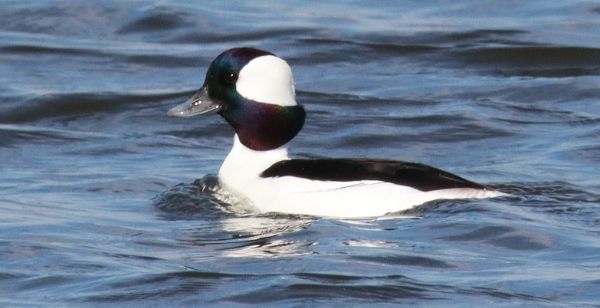
With an impressive mix of species on hand at some area marshes, I was like a kid in a candy store. And while I enjoyed observing many species in active display behavior as some ducks vied for a mate, others were busy feeding on newly available aquatic invertebrates and other morsels to fuel their migration and charge their physiology for the rigors of reproduction. With all that ducky activity, you would think that action photos would be the name of the game, but after Friday’s outing I noticed my photos were primarily of a portrait nature.
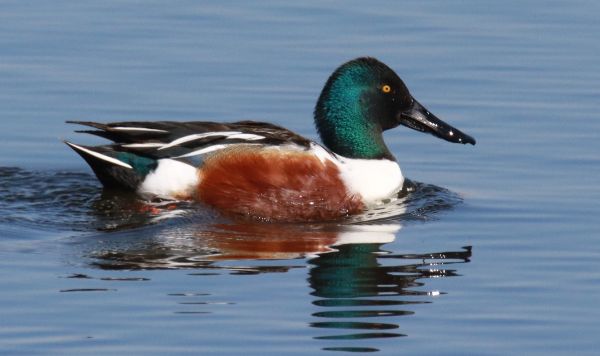
Embracing that fact to a degree, I tried to emphasize photographing displaying ducks and ducks in flight, but in the end, I realized it was best to go with the flow and enjoy getting the best possible portraits of individual ducks and pairs while the weather conditions provided such exceptional conditions under the broad blue sky. I didn’t need to venture far either, with some of the best ducks and best photo ops beginning just a half-mile south of home at Melody’s Marsh, where Hooded Mergansers, Lesser Scaup, Ring-necked Ducks, and Canvasbacks joined pairs of Mallards.
The marshes a mile south of home held many diving ducks, but didn’t produce any photo ops; however the lake 2 miles south was ever-productive, especially for Common Mergansers, Hooded Mergansers, and hard to approach Common Goldeneyes. The marsh at mile 3 attracted the most ducks of all, but they offered no photo ops (yet), and the large 4-mile marsh that increases in size annually provided some excellent photo activities with Ring-necked Ducks and Buffleheads, as well as Hooded Mergansers and Lesser Scaup.
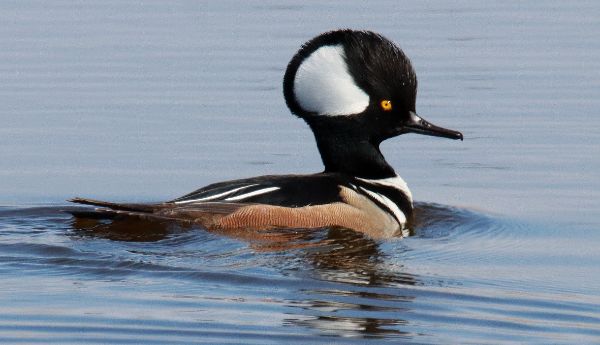
Because I prefer to cover an extensive area, I usually search for photo ops in my car, which doubles as a comfortable mobile photo blind. Once I’m in position with the sun behind me and the ducks in front of me, I settle in for a few minutes or for an extended period if it seems that would be productive. I’ve become better at spending more time with potential photo subjects, and once I take a couple initial photographs I like to wait for some action to begin. But, as noted earlier, action was usually happening in the distance, like in the case of 3 impressive male Common Goldeneyes displaying earnestly toward a female – that’s the kind of photo action I’d like to document, so I’ll keep getting out there and hoping to slip into position sometime soon before the goldeneyes resume their flights north.
Another thing about the portraits I was taking is that they tended to feature single birds, usually males, but that’s just the way it worked out. Even when a pair was present, they tended to be too far apart to fit them both inside the same photo frame comfortably. That is, members of the pair would be separated by too much water – except Sunday evening I got 2 breakthroughs. Both included a pair of Common Mergansers that was swimming close to the road. As I slipped into position the pair turned in just the right way to provide a couple initial photos, yet they were separated by just a bit too much in my view. In a moment though, the female closed the space between her and the male that provided quite a nice photo of the pair together – a nice breakthrough image. The female really makes the photo special and more colorful.
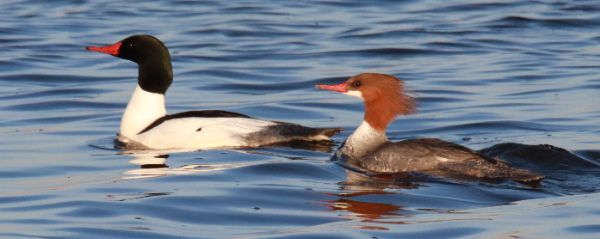
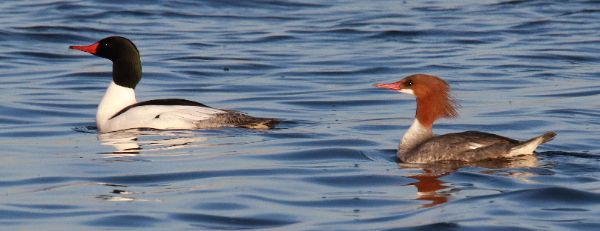
The most important thing about that merganser photo series is that I adjusted my aperture to f-10 to better ensure that both birds would be within the focus plane. It would clearly have ruined any photos if one of the ducks was out of focus. I also increased the aperture up to f-14 when photographing mixed flocks of diving ducks, and when I photographed the group of Canvasback drakes vying to attract the attention of a single female. These are simple but important changes that can be made in the field.
I never use an automatic camera setting, but I always use the Aperture Priority (Av) setting that allows me to set the aperture, which triggers the corresponding shutter speed. (In Av mode, when you change the aperture, the shutter speed changes automatically to coincide with the available light). When taking portrait photographs, I didn’t need to be concerned about the shutter speed, unless the bird created an action, like tipping up and flapping its wings. Even then, if there was a bit of blur in the wings, that might work out to show the motion. But to stop action, including birds in flight, I try to keep the shutter speed at 1/1000 or faster.
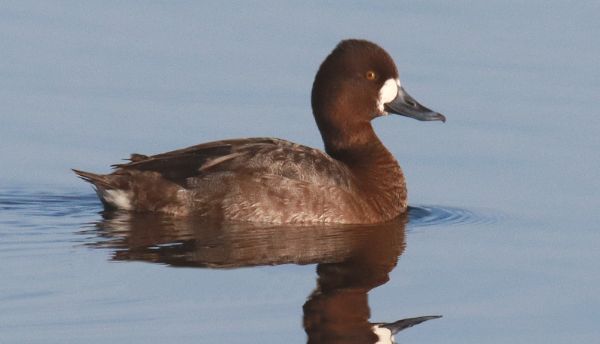
One other thing I wanted to share is the opportunity that you have to crop photos after you have taken them, reviewed, and selected them for your digital photo files. Usually there will be extraneous background in a photo; for example, in the case of my duck photographs the extraneous material was water. By cropping out extraneous background you also enlarge the remaining image, including the image of the bird in the photo frame. Ultimately, you also want to create an image that is the most attractive possible, and that will not necessarily be a square or rectangular photo with the bird positioned in the center. When photographing you may position the bird in the center, but cropping allows you to reposition the bird within a photo frame of you making.
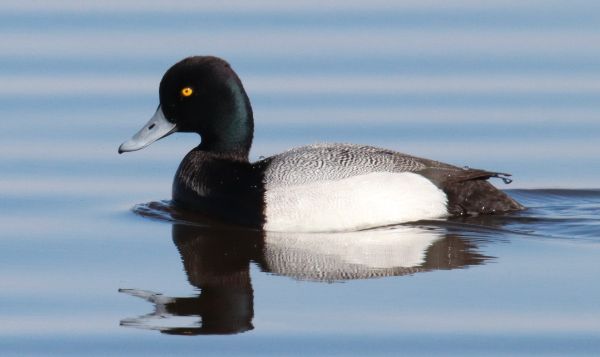
In design, one of the first things you learn is to keep your subject off-center. In the case of birds, we usually want to leave some extra space for the bird to look into, to fly into, to swim or walk into – it helps to balance the photograph. A rectangular image is a norm, but that’s where your creative juices can help, and it becomes a matter of what looks best to you. Then too, a given photo can be cropped in a number of ways – say 2 or 3 different ways, each created using the original photographed and saved with its own name, which can be a simple as adding an a, b, or c to the file name – or whatever works best for you. Just as selecting a given image to edit is subjective, cropping it to look better is subjective and part of your personal creative interests. Photography is a wonderful creative outlet, and bird photography can be artful too.

Back in the field, even as I returned to some of the same marshes periodically last week, and even during a given day, the individuals and species seemed to be ever-changing, which kept me engaged and extended my birding periods with my camera and lens. Birding sure is fun, and the potential of getting a beautiful or meaningful photograph while enjoying the surprises and thrills that only nature can provide is amplified exponentially during migration periods like I experienced last week. I hope you have a successful spring birding season with your photo equipment!
Article and Photographs by Paul Konrad
Share your bird photos and birding experiences at editorstbw2@gmail.com