
A tranquil pond punctuated by a scattering of elegant white swans floating on bright blue winter water and surrounded by snow-covered ice created a dreamy scene. What a thrill to encounter such a large group of Trumpeter Swans in a small pond created along a slowly flowing stream.
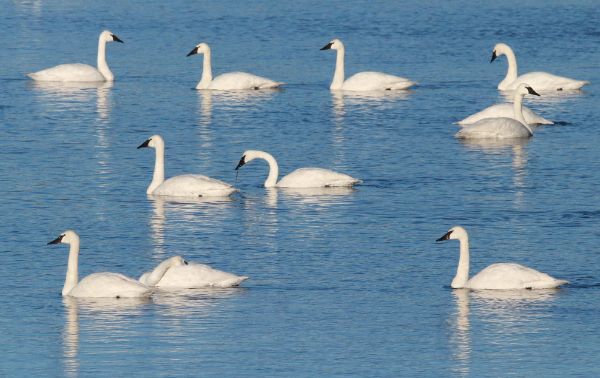
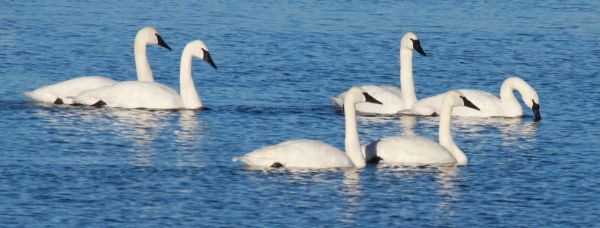
The waterway was fairly close to a bend in a rural road that provided access to an open view of the swans that numbered about 70, no small gathering on the western edge of the eastern woodlands. I hesitated for a half-minute to appreciate the beauty of the scene before raising my camera to begin composing photographs at will. There were single swans, many pairs, 2 family groups, and larger numbers of resting swans that were swimming, feeding, bathing, preening, and resting in the water and on the adjacent snow-covered ice. Using my zoom lens to frame a number of different views across the whole of the winter marsh, the photo options seemed endless as I began zeroing in on certain pairs and groups of Trumpeter Swans.
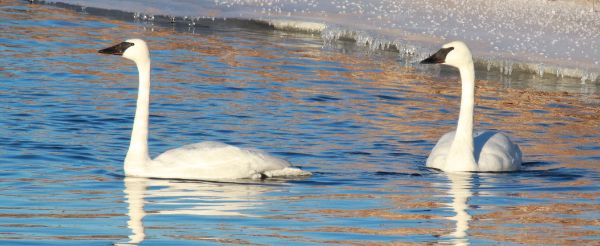
Previous winter swan photo opportunities in the area have been rather fleeting, but this was one of the best chances I’ve had to photograph Trumpeters in the few areas of open water in the area. The location couldn’t have been better, with a chance to view the swan community with the winter sun at my back and the water and birds before me. I was far enough away that the swans were aware of my car, but continued with their regular activities undaunted. In fact, time and time again a pair of Trumpeters or a group swans swam quite close, following the narrow stream of open water toward my position.
Suddenly, the wild calls of swans from behind my left shoulder alerted me to turn to see a flock of 4 Trumpeters flying toward the pond, followed by 2 more. That’s when I needed to step out of my heated auto and into the 8-degree cold to follow the flight of the swans through my camera lens. They circled low around the “swan pond” and I expected them to land in the shallows, but instead the group of 4 flew straight toward my position, head-on, until they broke to the left and into the full force of the afternoon sunlight, which is when I managed the best photos – when the swans were closest. The view of the white swans flying in formation just above the treetops and circling above the blue pond created another level of natural beauty in the otherwise stark wooded landscape.
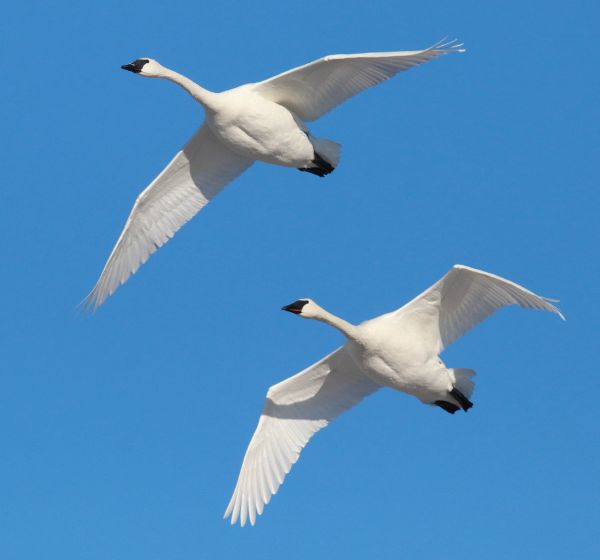
As the swans winged by, their close flight emphasized their giant size. Trumpeter Swans are the heaviest flying birds in the world (some weigh more than 30 pounds), flying on especially broad wingspans that reach more than 8 feet from wingtip to wingtip! Then, if they belt out a baritone call it gives them something of an exotic flair that breaks the freezing silence and permeates the valley each moment it sounds. The swans did not land, but simply flew back in the direction where their calls originated, but what a thrill to see them in flight above the others, above the pond, and above me – and hearing the pond swans calling in unison in response to the visitors’ appearance and flight.
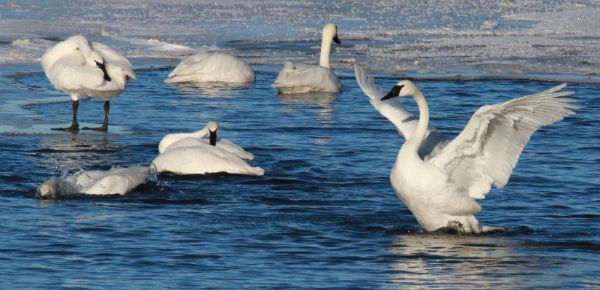
My attention to watching for new photo options for the swans continued outdoors until the tips of my fingers began tingling in earnest from the frigid cold, in spite of the winter gloves covering my hands. No sweat, just hop back in the warm car with the heater running to warm up. I took most of my photographs from inside my heated “mobile blind,” but turned the engine off when I anticipated taking some photos to eliminate the movement of the car in an effort to keep the photos as sharp as possible. I also positioned my lens against the frame of the open window to steady the lens, and I instinctively hold my breath whenever I am about to press the shutter button.
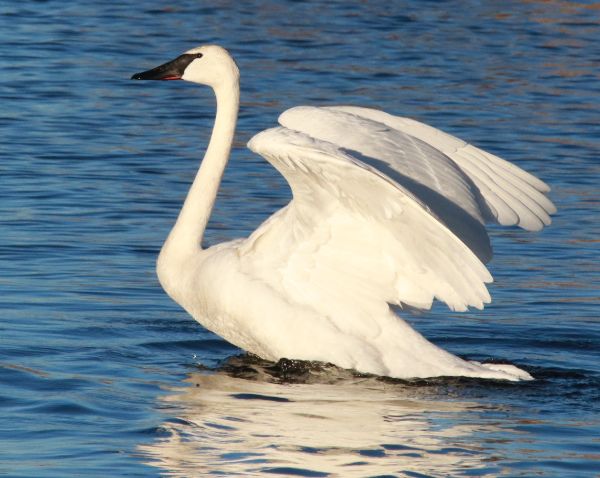
I eventually broke away to do a little exploring and saw another smaller group of Trumpeter Swans in a distant pond along the little river’s course, but turned back to spend a bit more time with the original group of swans. I had one more promising location to check on at Andy’s point, where the little Pelican River flows between Little Pelican Lake and Pelican Lake. With relatively warm temperatures after the first weekend of January, the river was open with some swans in attendance there, but when I checked the swans had vacated and the river was ice-covered. Oh well, back to the sure thing and a few more swan photographs near the end of another fun daytrip to the western edge of Minnesota lakes country.
Article and Photographs by Paul Konrad
Share your bird photos and birding experiences at editorstbw2@gmail.com