
A moment after a Pileated Woodpecker perched as close as I could imagine and tantalized me with the best potential of photographing the elusive species, it vanished into the pines. But before I could let out a moan, a flock of 5 Pine Grosbeaks flew into sight and perched in a nearby ash tree as if on que. As I focused my camera on a male, 3 females dropped down to the road to search for seeds and grit – right next to my position!
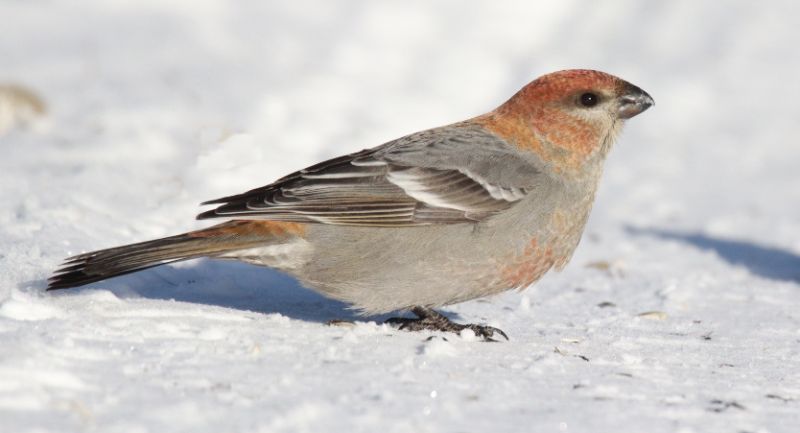
Even as I took my first photos of the females, 6 more Pine Grosbeaks arrived, and almost immediately they were joined by a tight flock of about 20 Evening Grosbeaks – WoW – all positioning in photo range! I zeroed in on a close male Pine Grosbeak with stunning red-pink plumage as about 20 grosbeaks were active atop the newly fallen snow beside the road. I couldn’t have orchestrated this initial photo opportunity better – aside from missing out on the big woodpecker.
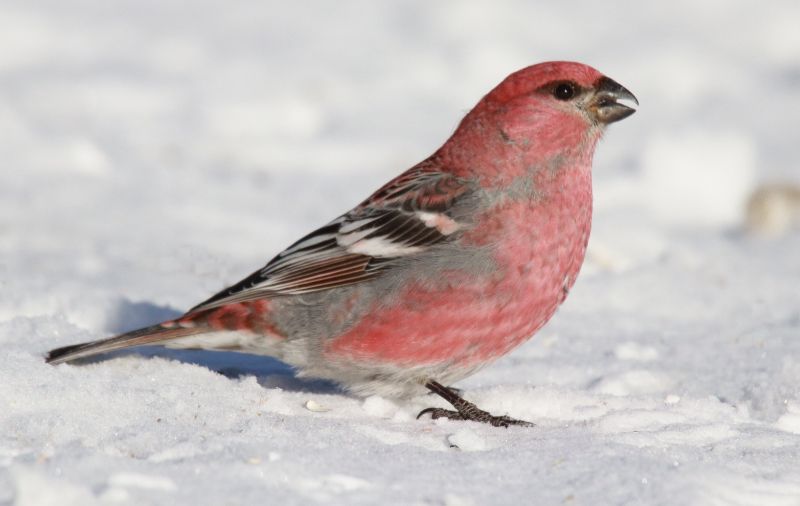
This was just minutes after sunrise on the northwest edge of the Sax-Zim Bog region north of Duluth, Minnesota, and already I was in the midst of what I could already deem a successful pilgrimage to this notorious Northwoods winter birding hotspot, but it was just the start. I held position to make the most of opportunities to photograph Pine Grosbeaks feeding on ash seeds in the young tree outside the car window where morning sunlight illuminated the exquisite colors of both males and females – shades of colors I can’t recall in any other birds.
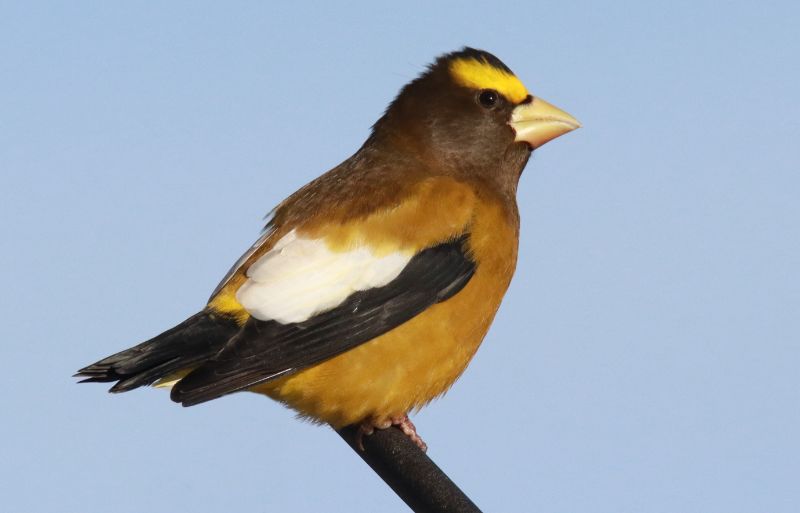
And 20 yards before me more than 50 Evening Grosbeaks were assembled on the well-packed snow on the rural road, with a few Pine Grosbeaks mixed in – and more in the adjacent black spruce trees. I was drawn forward by the colorful finches, and while many continued moving north along the road cut a small flock of Evening Grosbeaks was warming in the sun in an open spruce tree, providing another photo op. The temperature was –8, so it was no surprise that these Evening birds had their feathers puffed out to the max to capture their own body heat, while trying to absorb the “warmth” of the morning sun.
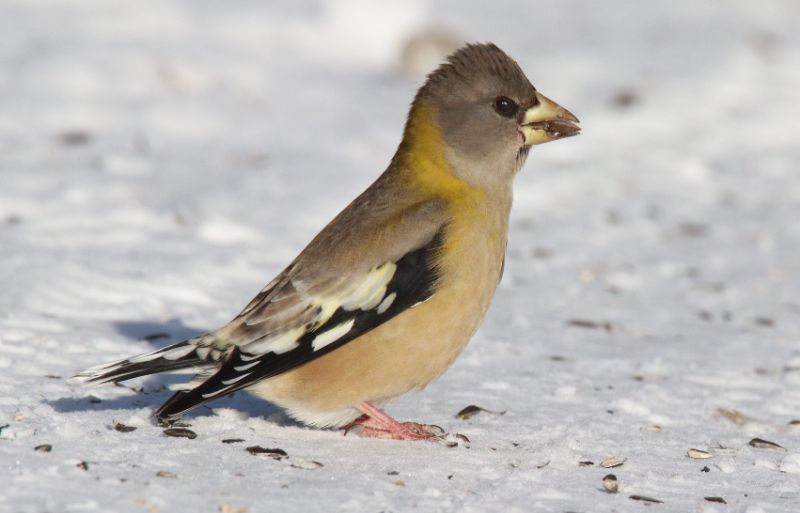
With an exciting and productive start to the early January morning, I repositioned to a favorite Evening Grosbeak feeding station in The Bog – Mary Lou’s feeders, positioned in the front yard of some of the most generous birding enthusiasts you can imagine. For years, this family has provided access to their front yard, which is filled with a colorful variety of feeders that provide sunflower seeds, suet, peanut butter, mixed seeds, nyjer thistle seeds, and a heated bird bath to an ever-changing variety of winter birds. The grosbeaks zero in on the platform feeders filled with sunflower seeds, and it only took a few minutes for the first small flock of Evening Grosbeaks to fly in to perch in the tallest tree branches, then drop down to the platform feeders one by one.
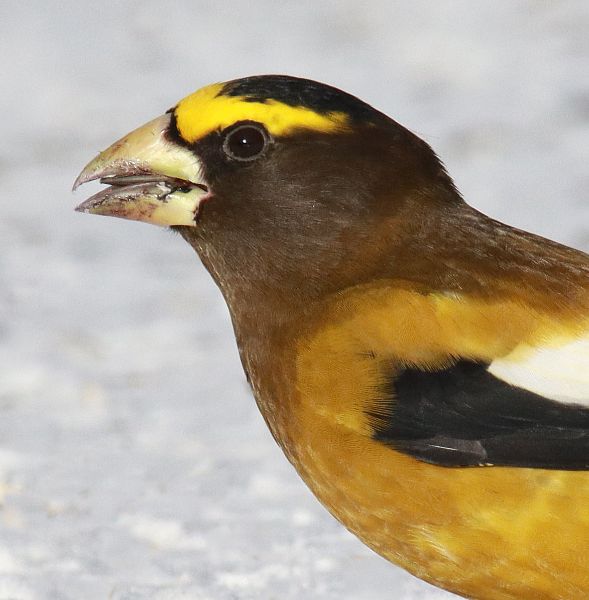
Another key feature of this feeding station is that it has a half-circle driveway that allows birders to turn into the yard, park where convenient along the driveway, and pass through near the front deck of the house, parking again as long as you aren’t in the way of other birders that may stop by. It permitted me to position my heated car (mobile photo blind) in just the right location with the sun to the southeast and the birds to the northwest – perfect for morning photography. Turning off the engine with my driver’s window open to facilitate poking my camera lens through to take advantage of the Evening Grosbeaks as individuals provided more close views and photos as they perched, fed, interacted, and some even dropped to the snow-covered ground.
Happily, about 1/3 as many Pine Grosbeaks join the platform feeder buffet. I don’t think I’ve seen Pines at this feeding station before, and there was no indication of them on recent eBird lists. But it was sure nice to have them in the mix, which included Blue Jays, Hairy and Downy Woodpeckers, Black-capped Chickadees, and a flyover by an occasional Common Raven, which would send the grosbeaks into flight; only to return in quick order. What a thrill it was to be surrounded by such a colorful and active group of birds in the midst of a frigid January morning!
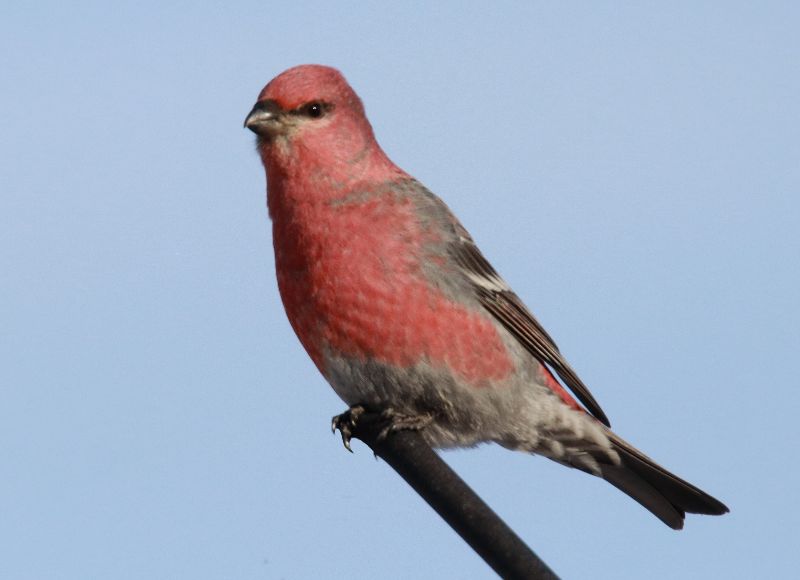
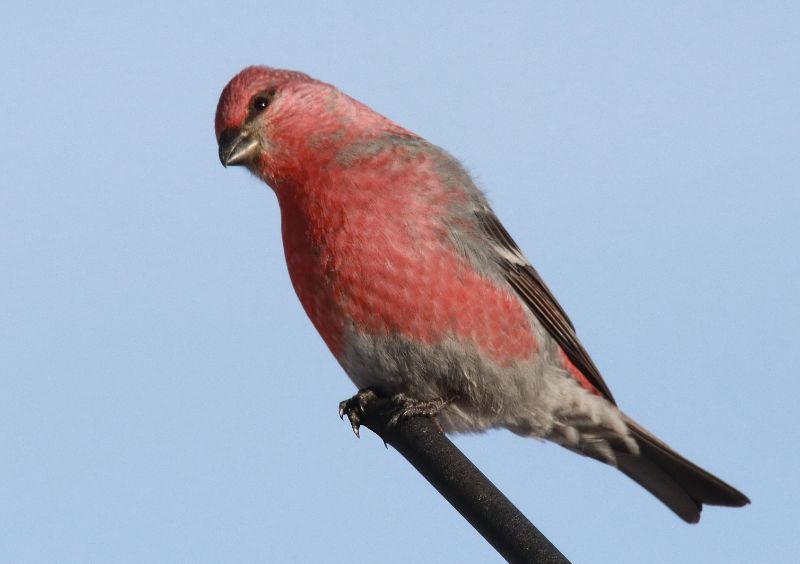
Of course, one of the planning components to making the 400-mile, 7-hour drive to The Bog was to choose a day when there would be ample sunshine, and my planning was excellent, as was the weather folks’ prediction for the day – blue sky and sunshine as far as the eye could see – following a windy storm that brought some new light snow to adorn the trees and landscapes of the Minnesota Northwoods.
My next stop was the Admiralty Road feeders, which are provided and filled by the Friends of the Sax-Zim Bog. The drive to these 2 feeding stations is beautiful with spruce forests yielding to tamarack bogs and aspen groves with occasional stands of birch trees and cattails surrounding frozen marshes. Interesting observations could include one of the northern owls – a Great Gray Owl, Northern Hawk Owl, or a Snowy Owl (last year Boreal Owls were on hand too). There could be Ruffed Grouse, a Northern Shrike, Rough-legged Hawk, or American Goshawk; and recent mammalian observations have included a Pine Martin, Short-tailed Weasels, Snowshoe Hares, a Fisher, and even a couple Moose, with Timber Wolves being another real option (all these animals are on my ‘have never seen list’ at Sax-Zim, except weasels).
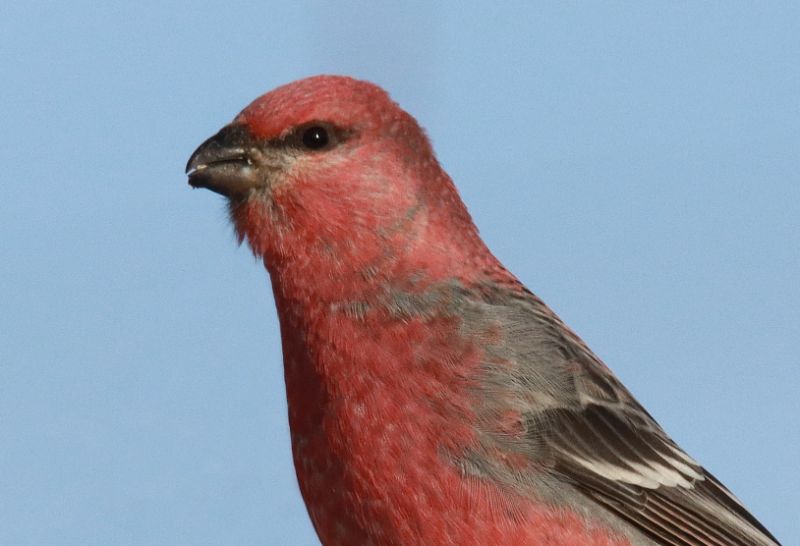
Upon reaching the Admiral Road feeding station, I joined a group of birders intent on the chance to see an irregularly appearing Boreal Chickadee and an even more irregular Pine Martin. But immediate birds on hand included a trio of Canada Jays, another trio of Pine Grosbeaks, a gang of Black-capped Chickadees, and an occasional woodpecker – both Hairys and Downys. The Boreal Chickadee did appear before my camera lens, but like the Black-caps it was seriously quick as it stole bites of peanut butter and only provided a few documentary photos for me – other birders fared better. But it was the Grosbeaks that lured me into the frozen wildlands of northeast Minnesota, and it was the grosbeaks that fulfilled my every wish and hope as they provided a multitude of photos of these exceptional finches!
Article and Photographs by Paul Konrad
You can keep updated about the birds being seen and photographed in The Bog at Bird Report : Friends of Sax-Zim Bog, and you can share your bird photos and birding experiences at editorstbw2@gmail.com