
It happens every fall in my neighborhood of Dakotaland; thousands of geese populate nearby lakes and adjacent harvested cornfields for the weeks before the Big Freeze, a time of plenty for birders like me to enjoy the remarkable numbers and variety of waterfowl and other birds. This year the late season was extended about 2 weeks beyond the norm, always a joy, but inevitably an ultra-cold Alberta clipper storm system blows in from the northwest and overnight we get a blizzard that defines the beginning of winter. And that happened last Tuesday as I was in the process of publishing last week’s issue of The Birding Wire.
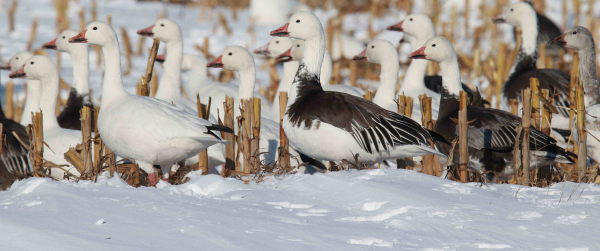
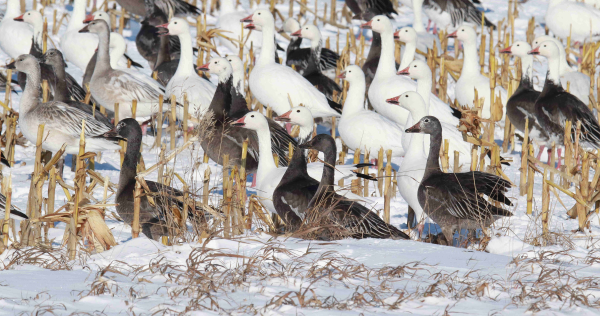
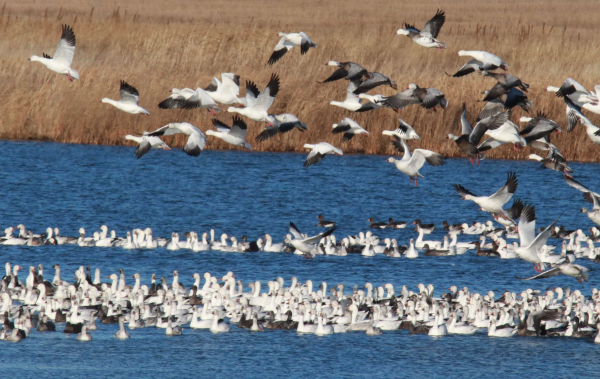
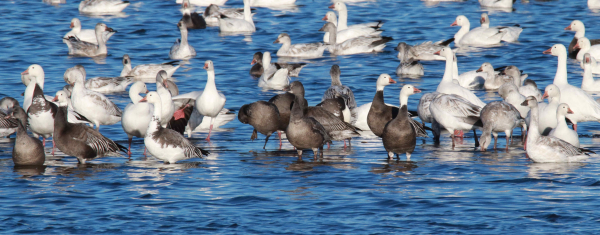
Extremes of deep snow and frozen wetlands pushed the geese south in an abrupt and hurried fashion. It’s an interesting period to witness, and like all things where extreme weather and birds interplay, the results are different every year. Now, a week later, after the last flocks of Snow Geese were migrating high overhead in a due south direction, I want to share a few of the photos I took of flocks of geese on both sides of that very immediate and extreme weather transition, after the snowfall and deep freeze, and before the defining blizzard.
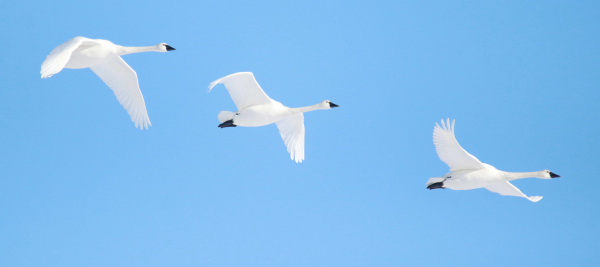
Late Sunday morning, the last big lake that still had sections of open water was mostly covered with ice, and to my surprise it was primarily populated by swans, standing on the ice or swimming behind a light veil of rising steam, with their unique calls emanating lightly from within. From that ethereal view flew small flocks of the big white swans, catching the morning light and surrounded by the brightest light-blue sky. A significant flock of Tundra Swans flew directly toward me before swinging broadside above my standing position in the crisp 6 degree morning freeze. Almost 40 Tundra Swans swept their wings as elegantly as only swans can in a performance of beauty and splendor, as if to mark the last day of open water in my memory. The first day of December would find the lake’s surface closed for swimming by a cover of ice – and the last swans escaped via the winter-blue sky.
Article and Photographs by Paul Konrad
Share your bird photos and birding experiences at editorstbw2@gmail.com