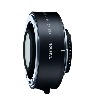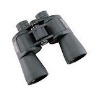
Ideal for getting an extra-close image of exciting birds beyond the normal capability of your telephoto or zoom lens, a converter, sometimes called a teleconverter, magnifies your lens another 40 percent with a 1.4x converter, or it doubles the magnification of your lens with a 2x converter. Hence, it will turn your 300mm telephoto lens into an equivalency of a 420mm lens using a 1.4x converter, or a 600mm lens using a 2x converter.
OPTICS
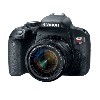
The quality of today’s digital cameras is downright amazing, and the quality of the photos they produce is most impressive. But beyond photo quality, there are many important features to keep in mind when you’re selecting or assessing a camera. In short, they are all great. But the one most important feature of any camera, is the photo quality it provides – and that is indicated by the Megs, or Megapixels, any camera sensor provides.
In addition to your binocular case and backpack, there are a few things you can do when you’re still shopping for binoculars to ensure your binoculars are protected from the elements, bumps and bangs, and even a drop or two. How are the binoculars you are using water-proofed? Do they have a protective armor-coating? Are you using lens caps or an alternate cover to protect your binocular lenses? You can do a lot to make sure your binoculars are protected – before you buy, and after you’ve hit the field.
Celestron Granite 8x42 Binoculars are made with extra-low dispersion ED glass for enhanced resolution, maximum color fidelity, and reduced chromatic aberration. The 8x42 Granite ED binocular has a large 426-foot field of view at 1000 yards, and a 6.5-foot minimum close focus. Granite ED binoculars feature phase and dielectric coatings on their BaK-4 glass prisms plus fully multi-coated optics, providing the maximum light transmission and razor-sharp image quality. Despite full rubber-armoring, the Celestraon 8x42 Granite ED binocular weighs just 24 ounces, and with its ergonomic open bridge design, it’s very comfortable to use.
Considering that he just spent a week surrounded by considerable numbers of birders from across the country, and from the heartland of the Midwest, we thought it would be interesting to ask our Editor, Paul Konrad, what appeared to be the most popular optics among birders attending The Biggest Week in American Birding Festival, especially including the people birding around the infamous Magee Marsh boardwalk during the peak of spring migration.
Backyard Birding is always better when you have binoculars within reach to get a better look at a bird, or to verify a sighting of a species you rarely see at your feeding station or among your landscaping. Spring is the best time to use binoculars for that very reason. Lower magnification, wider field of view, close focus – these are all features you will want to emphasize when assessing binoculars for birding out your window at home or your office, or from your patio or deck.
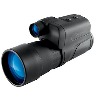
Ready for some nocturnal birding? It’s different; it’s unusual; but it’s interesting, and it may open a new option for a little birding by moonlight. But night vision binoculars might be helpful when you’re in the field in the early morning, waiting for the light to break; or when checking on the nighttime behavior of some birds of interest, perhaps at a night roost site or at a lake holding a migrating flock of waterfowl. You may even be interested in checking an owl nest site, or a nest box used by an owl; or perhaps you are interested in seeing what animals are checking out your feeding station under the cover of darkness.
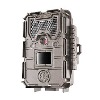
Have some extra fun and cover all the bases with a versatile trail camera or two. Monitor your big nest box, or bluebird trail houses; record at a favorite warbler migration site, a local marsh, or monitor your feeding station while you’re gone. A trail cam doesn’t provide a live feed, but it does provide an opportunity to check when migrating songbirds arrive at your May hotspot, or if your nest box is being used by a secretive screech owl that you don’t see during the day. There are plenty of trail cams on the market, so give one a try, and you may find remote cameras provide a new wrinkle in your birding activities.
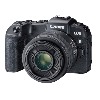
Responding to the demand from amateur and advanced amateur photographers for an entry-level, full-frame mirrorless camera, Canon USA has released the second camera in its EOS R lineup, the EOS RP. Full-frame digital cameras are relatively new for many birders, but they provide important added qualities, including increased digital image quality. The new Canon EOS RP full-frame mirrorless camera features a 26 megapixel CMOS sensor that is powered by the company’s DIGIC 8 image processor, which provides users with high-image quality with outstanding operation and functionality.
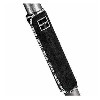
Many birders appreciate having leg wraps on their tripods. Leg wraps may be one of those accessories that you don’t appreciate until after you’ve used them; then you appreciate what valuable additions they are when using your tripod for bird photography or when birding with your spotting scope. Leg wraps pad your tripod, keeping metal legs warmer during chilling weather, and softening the load when you’re carrying your tripod on your shoulder as we often find ourselves doing. Leg wraps also protect your tripod legs – and they are very economical to add and easy to install. No-brainer, right?
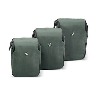
Some binoculars come with a case, some don’t; some cases are flimsy and inadequate – or not very field worthy. Are you looking for a better quality case, or maybe a more versatile carrier that will accommodate a field guide and cellphone with your binoculars? If you are searching for a new option for protecting your binoculars when they’re not in use, or to carry when you’re hiking, walking, or biking, there are some great options available. You may opt for a universal case or carrying bag, or a model-specific protective case from Swarovski, Zeiss, Steiner, Vortex, and other brand name companies.
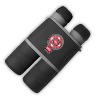
Although there is a product description of the ATN BinoX-HD Binoculars in the Gear & Products section of this issue of The Birding Wire, we were so intrigued by these seemingly super-hero smart binoculars that we wanted to address their many options a little closer. These “binoculars” are computerized with so many options beyond magnifying subjects that you might say the ATN BinoXs (pronounced binocs) are to binoculars what a cellphone is to telephones. They look like binoculars, but beyond that the term Smart Binocular gets ultra-high tech.
There was a time when the a rule of thumb was that the weight of a given binocular provided a level of insight into the quality of the glass used – better quality glass was heavier, hence a better quality binocular was a bit heavier. But today’s glass and other construction materials are lighter and stronger than ever before. Today, the bottom line about binocular weight is that it is one of the most over-rated of all binocular specs. Today's construction materials are lighter and stronger than ever before. With some mid-priced, full-sized, bright, quality 10x50 binoculars weighing less than 30 ounces, any adult should be able to handle them easily.
Birding is greatly enhanced by optics. What would we do without binoculars? And for that matter, what would we do without our camera and spotting scope? As our interest in birding increases and our enthusiasm expands, we find ourselves missing an opportunity to verify a quick sighting because we didn’t have our binocular or camera within reach. That’s when something clicks: “I’m not going to miss any more sightings; I’m going to take my optics with me, where ever I go.” So you make it easy; put your optics in a simple backpack so you can ‘grab it and go.’ Always have it with you in your vehicle. Keep an alternative compact binocular in your briefcase, tool box or purse.
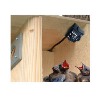
Viewing a live feed from a miniature camera that’s positioned inside a favorite nest box (bird house) is an exciting way of monitoring the nesting activities of cavity nesting birds. Some cameras provide still photos, most provide video recordings or live camera feed. Nest cams are most commonly installed in larger nest boxes, including those used by Wood Ducks, kestrels, screech owls, or Barn Owls, but almost any bird house can be fitted with a mini-cam so you can photograph, take videos, or view the nesting activities of birds you attract to your property, including bluebirds, wrens, and chickadees.
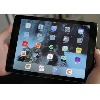
Optics is a broad term, and usually birding optics includes binoculars, spotting scopes, cameras and lenses, and accessories for all those products. This week let’s expand the description of birding optics to include computers and, specifically, tablets. Tablets provide a much-enlarged version of a cellphone’s viewing and computer capabilities, minus the phone. They provide a more manageable version of a computer that helps us better share our field notes and rare bird reports from the field; and they are undeniably easier to use to check ID and range information about different species. Tablets are clearly useful at home too, as well as at work or school, for birding activities and all the other computer options.
There are two primary types of binocular models – porro prism binoculars and roof prism binos. The objective lenses in porro prism binoculars are offset from the eyepieces – which gives them an angular, broader profile. The objective lenses in roof prism binoculars are straight in line with the eyepieces. Both types provide similar quality of viewing, so the ultimate questions may be: How do they feel in your hands? How does the balance feel? Can you comfortably reach and use the focus knob? How do they look? Today, many birders seem to prefer the sleek look and feel of roof prism binoculars.
Eye relief is a simple optics term that can be checked, and possibly improved, in a few moments by checking your binocular and your spotting scope eyepieces to assess the field of view you see. Most eye relief problems are reserved for birders who wear eyeglasses when birding. But there is a simple way of getting a full look at your entire field of view through the eyepieces of binoculars and spotting scopes. Today’s optics have a most effective way of preserving a full field of view – just by adjusting the eyecups that you can easily and quickly adjust for the best possible views.
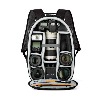
Birders are mobile, so we’re always looking for ways to help us get our gear from place to place, while also providing a central location to keep our gear. Photo backpacks are a must to protect your valuable photography equipment, to keep it within reach, and to fit into a plane’s luggage bin. Photo backpacks are just plain cool, with the options they provide for customizing the interior with padded section dividers, and plenty of pockets for with a variety of equipment ranging from photo cards and batteries to a small laptop.
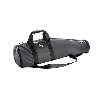
If you have a tripod, you probably have a carrying case. If not, you probably need one. Anyone with a tripod can appreciate how helpful a tripod carrying case can be. There are times when a tripod can be just plain cumbersome, and you really appreciate a carrying case when traveling. Helpful features to consider include padding, carrying handles, a shoulder strap and additional storage pockets. We spend a lot of money on our tripod, so it’s only right that we protect it – and benefit from better portability.